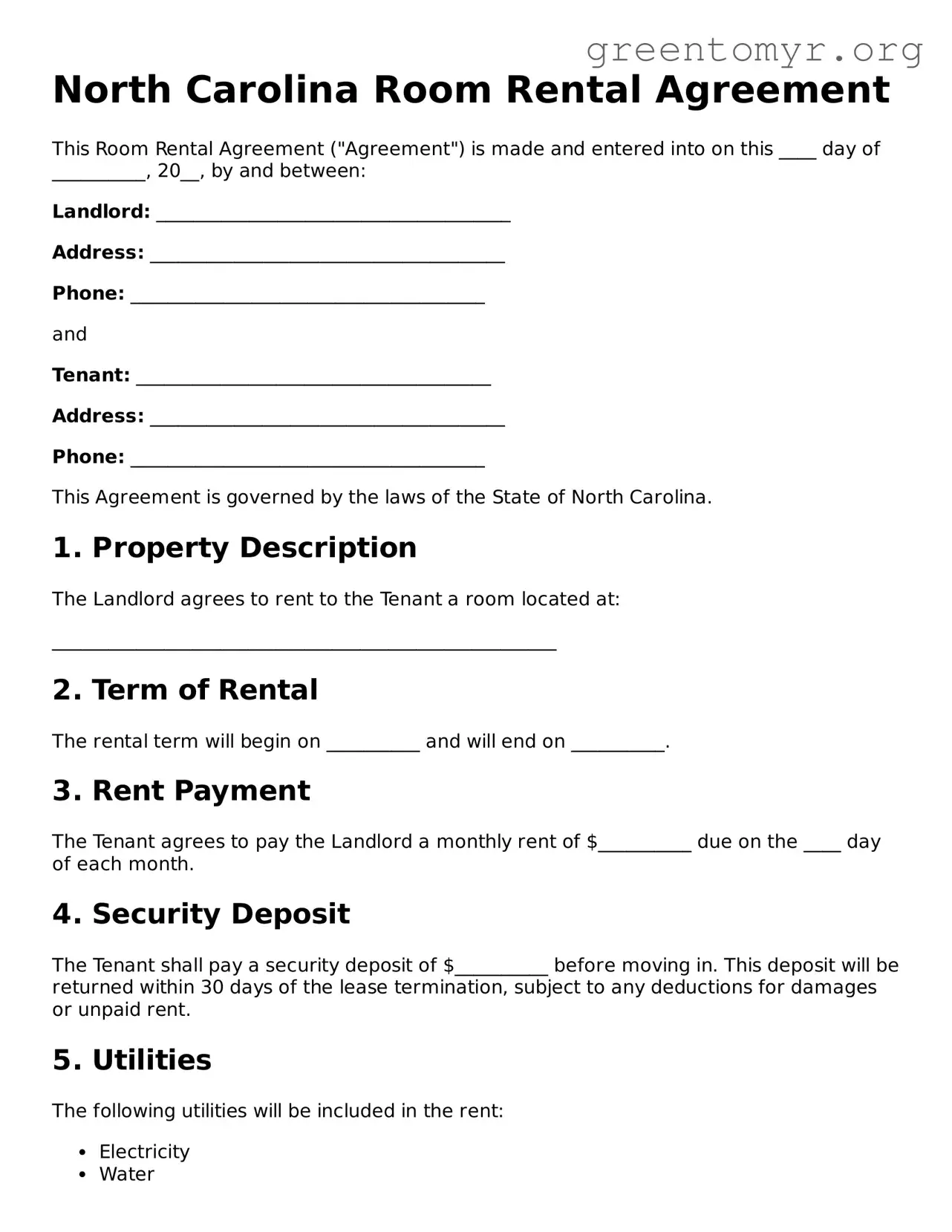
When renting a room in North Carolina, having a clear and comprehensive Room Rental Agreement is essential for both landlords and tenants. This document serves as a mutual understanding of the terms and conditions surrounding the rental arrangement, ensuring that both parties are aware of their rights and responsibilities. Key aspects of the agreement typically include the rental amount, payment schedule, and duration of the lease. It also outlines important details such as security deposits, maintenance responsibilities, and rules regarding the use of shared spaces. By addressing these crucial elements, the Room Rental Agreement helps to prevent misunderstandings and disputes, creating a more harmonious living environment. Additionally, it may cover provisions related to termination of the agreement, notice periods, and any specific policies regarding pets or guests. Overall, this form is not just a legal document; it is a foundational tool that fosters clear communication and sets the stage for a positive landlord-tenant relationship.
North Carolina Room Rental Agreement
This Room Rental Agreement ("Agreement") is made and entered into on this ____ day of __________, 20__, by and between:
Landlord: ______________________________________
Address: ______________________________________
Phone: ______________________________________
and
Tenant: ______________________________________
Address: ______________________________________
Phone: ______________________________________
This Agreement is governed by the laws of the State of North Carolina.
1. Property Description
The Landlord agrees to rent to the Tenant a room located at:
______________________________________________________
2. Term of Rental
The rental term will begin on __________ and will end on __________.
3. Rent Payment
The Tenant agrees to pay the Landlord a monthly rent of $__________ due on the ____ day of each month.
4. Security Deposit
The Tenant shall pay a security deposit of $__________ before moving in. This deposit will be returned within 30 days of the lease termination, subject to any deductions for damages or unpaid rent.
5. Utilities
The following utilities will be included in the rent:
6. Maintenance and Repairs
The Tenant agrees to keep the room in good condition. Any repairs needed must be reported to the Landlord promptly.
7. Termination
Either party may terminate this Agreement by providing a written notice of ____ days.
8. Governing Law
This Agreement shall be governed by the laws of the State of North Carolina.
9. Signatures
By signing below, both parties agree to the terms outlined in this Agreement.
Landlord Signature: ___________________________ Date: __________
Tenant Signature: ___________________________ Date: __________
| Fact Name | Description |
|---|---|
| Purpose | The North Carolina Room Rental Agreement is used to outline the terms and conditions for renting a room in a residential property. |
| Parties Involved | The agreement typically involves a landlord and a tenant, both of whom must sign the document to make it legally binding. |
| Duration | The rental period can vary, but it is often specified as either a fixed term or a month-to-month arrangement. |
| Governing Law | This agreement is governed by the North Carolina General Statutes, particularly Chapter 42, which deals with landlord-tenant law. |
| Security Deposit | The form should outline the amount of the security deposit, the conditions for its return, and any deductions that may apply. |
| Rent Payment | The agreement specifies the rent amount, payment due date, and acceptable payment methods. |
| Maintenance Responsibilities | Responsibilities for maintenance and repairs should be clearly defined to avoid disputes between parties. |
| Termination Conditions | The document outlines the conditions under which either party may terminate the agreement, including notice requirements. |
| Additional Terms | Any additional terms or rules, such as pet policies or restrictions on subletting, can be included in the agreement. |
To fill out the North Carolina Room Rental Agreement form, you'll need to gather some information about the rental property and the parties involved. Make sure you have the details ready before you begin. The following steps will guide you through the process of completing the form accurately.
The North Carolina Room Rental Agreement form is a legal document used to outline the terms and conditions under which a property owner or landlord rents a room to a tenant. This agreement helps protect the rights of both parties by clearly stating expectations, responsibilities, and obligations related to the rental arrangement.
The agreement usually contains several key details, including:
The rental period can vary based on the specific agreement between the landlord and tenant. It may be a month-to-month arrangement, which allows for flexibility, or it could be for a fixed term, such as six months or a year. It is important for both parties to agree on the duration before signing the document.
If a tenant wishes to terminate the agreement early, they must review the terms outlined in the contract. Most agreements include a notice period that the tenant must follow, which could range from 30 to 60 days. Early termination may also involve forfeiting the security deposit or paying a penalty fee, depending on the terms agreed upon.
Filling out the North Carolina Room Rental Agreement form can be straightforward, but many individuals make common mistakes that can lead to complications later. One frequent error is failing to provide accurate personal information. This includes names, addresses, and contact details. Inaccurate information can lead to miscommunication and potential legal issues.
Another mistake involves neglecting to specify the rental term clearly. Whether it's a month-to-month agreement or a fixed-term lease, clarity is essential. Without this detail, both parties may have different expectations about the duration of the rental, which can cause disputes.
Many people overlook the importance of including the rental amount and payment schedule. Clearly stating the rent amount, due dates, and acceptable payment methods helps avoid confusion. If this information is missing, it can lead to misunderstandings about when and how much to pay.
Additionally, failing to outline the security deposit terms is a common oversight. The agreement should specify the amount of the security deposit, the conditions under which it may be withheld, and the timeline for its return. Not addressing these points can result in disputes at the end of the rental period.
Another area where mistakes often occur is in the section regarding maintenance responsibilities. It is crucial to clarify who is responsible for repairs and maintenance. If these responsibilities are not clearly defined, tenants and landlords may find themselves in conflict over who should handle specific issues.
Many individuals also forget to include any additional terms or conditions that may apply. This could include pet policies, smoking regulations, or guest restrictions. Omitting these details can lead to misunderstandings and potential violations of the agreement.
Lastly, neglecting to sign and date the agreement is a critical error. An unsigned contract may not hold up in legal situations. Both parties should ensure that the agreement is properly executed to protect their interests.
In addition to the North Carolina Room Rental Agreement form, several other documents may be relevant when entering into a rental arrangement. These documents help clarify the terms of the rental, protect the rights of both parties, and ensure a smooth rental experience.
These documents play a crucial role in the rental process. They help establish clear expectations and protect both the landlord's and tenant's interests. Being informed about these forms can lead to a more successful rental experience.
When filling out the North Carolina Room Rental Agreement form, it’s important to approach the task thoughtfully. Here are some guidelines to help you navigate the process smoothly.
By following these dos and don’ts, you can help ensure that your Room Rental Agreement is filled out correctly and effectively. This will contribute to a smoother rental experience for everyone involved.
When it comes to the North Carolina Room Rental Agreement form, several misconceptions often arise. These misunderstandings can lead to confusion for both landlords and tenants. Here are five common misconceptions, along with clarifications to help clarify the situation.
While both documents govern the rental of property, a Room Rental Agreement is typically more flexible and may cover shorter-term arrangements. In contrast, a lease agreement usually pertains to longer-term rentals.
Many people believe that verbal agreements are sufficient. However, having a written agreement is crucial as it provides clear terms and protects both parties in case of disputes.
While many terms can be negotiated, some aspects, such as security deposit limits and certain legal requirements, are dictated by state law and cannot be altered.
Landlords must provide reasonable notice before entering a tenant's room, except in emergencies. This right to privacy is a fundamental aspect of tenant rights.
Unless explicitly stated in the agreement, a Room Rental Agreement does not automatically renew. Tenants and landlords should be aware of the terms regarding renewal or termination.
Understanding these misconceptions can help both landlords and tenants navigate their rights and responsibilities more effectively.
When it comes to renting a room in North Carolina, having a clear and comprehensive Room Rental Agreement is essential. Here are some key takeaways to consider when filling out and using this important document:
Taking the time to carefully fill out the Room Rental Agreement can help create a positive rental experience for both parties involved. Clarity and communication are key!