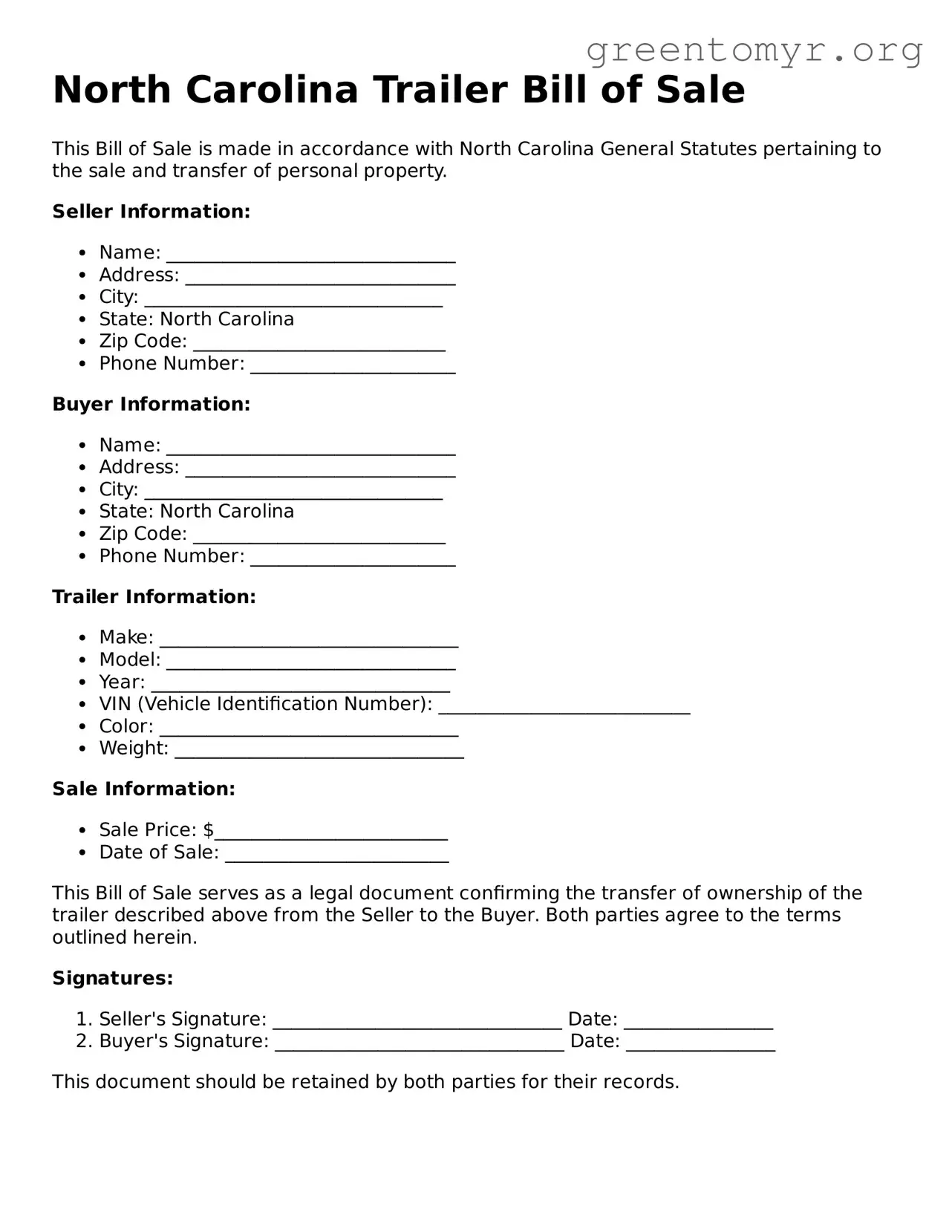
The North Carolina Trailer Bill of Sale form serves as a crucial document for individuals involved in the buying or selling of trailers within the state. This form provides essential details about the transaction, including the names and addresses of both the buyer and seller, a description of the trailer being sold, and the sale price. It also includes spaces for signatures, which are vital for validating the agreement. By documenting the sale, this form helps protect the interests of both parties and ensures a clear record of ownership transfer. Additionally, it may be required for registration purposes with the North Carolina Division of Motor Vehicles, making it an indispensable part of the trailer sale process. Understanding the components and importance of this form can help facilitate a smooth transaction and avoid potential disputes in the future.
North Carolina Trailer Bill of Sale
This Bill of Sale is made in accordance with North Carolina General Statutes pertaining to the sale and transfer of personal property.
Seller Information:
Buyer Information:
Trailer Information:
Sale Information:
This Bill of Sale serves as a legal document confirming the transfer of ownership of the trailer described above from the Seller to the Buyer. Both parties agree to the terms outlined herein.
Signatures:
This document should be retained by both parties for their records.
| Fact Name | Description |
|---|---|
| Purpose | The North Carolina Trailer Bill of Sale form is used to document the sale of a trailer between a seller and a buyer. |
| Governing Law | This form is governed by North Carolina General Statutes, specifically G.S. 20-4.01 and G.S. 20-72. |
| Required Information | The form requires details such as the buyer's and seller's names, addresses, trailer description, and sale price. |
| Signature Requirement | Both the seller and buyer must sign the form to validate the transaction. |
| Record Keeping | It is advisable for both parties to keep a copy of the completed Bill of Sale for their records. |
Once you have the North Carolina Trailer Bill of Sale form ready, it's time to fill it out accurately. This document is essential for transferring ownership of a trailer. Follow the steps below to ensure all necessary information is included.
Once completed, keep a copy for your records and provide the original to the buyer. This will facilitate a smooth transfer of ownership and ensure compliance with state regulations.
A North Carolina Trailer Bill of Sale is a legal document that records the sale of a trailer between a seller and a buyer. This form provides essential information about the transaction, including details about the trailer, the parties involved, and the sale price. It serves as proof of ownership transfer and is often required for registration purposes.
A Bill of Sale is important for several reasons:
The North Carolina Trailer Bill of Sale typically includes the following information:
Yes, in North Carolina, a Bill of Sale is generally required for registering a trailer. The DMV uses this document to verify the transfer of ownership and ensure that the new owner is legally entitled to register the trailer. Without it, you may face difficulties in the registration process.
Yes, you can create your own Bill of Sale as long as it includes all the necessary information. However, using a standardized form can help ensure that you do not miss any important details. Many online resources provide templates specifically for North Carolina trailers, making it easier to comply with state requirements.
After completing the Bill of Sale, both the buyer and seller should keep a copy for their records. The buyer should then take the document to the DMV to register the trailer in their name. It's also advisable for the seller to notify their insurance company about the sale and cancel any insurance coverage on the trailer.
Filling out the North Carolina Trailer Bill of Sale form can seem straightforward, but many people make common mistakes that can lead to complications. One frequent error is not including all required information. Buyers and sellers must provide their names, addresses, and signatures. Omitting any of this vital information can render the document invalid.
Another mistake is failing to accurately describe the trailer. This includes not only the make and model but also the Vehicle Identification Number (VIN). The VIN is crucial for identifying the trailer and ensuring that it is not stolen. Leaving this out can create problems when registering the trailer with the DMV.
People often overlook the importance of the sale price. Some individuals forget to write down the agreed-upon amount or mistakenly write it in the wrong place. This can lead to disputes later on and may complicate tax reporting for both parties.
Signing the form incorrectly is another common pitfall. Both the buyer and seller must sign the document. Sometimes, people forget to sign or think that one signature is enough. This can invalidate the sale and create confusion about ownership.
Not having a witness or notary present can also be a mistake. While it’s not always required, having a witness can help verify the transaction took place. This can be especially useful if disputes arise in the future.
Many individuals fail to keep a copy of the completed Bill of Sale. After the transaction, both parties should retain a copy for their records. This documentation can be essential for future reference, particularly if questions about ownership or sale terms arise.
Another issue is not checking for accuracy after filling out the form. Simple typos or errors can lead to significant problems. Taking a moment to review the form can prevent headaches down the line.
Some people neglect to include the date of the sale. This is important for both parties, as it establishes when the transaction occurred. Without a date, it can be difficult to resolve any future disputes regarding the sale.
Lastly, many individuals do not understand the implications of the Bill of Sale. It is not just a receipt; it serves as a legal document that transfers ownership. Understanding this can help both buyers and sellers take the transaction more seriously and ensure all details are correct.
When buying or selling a trailer in North Carolina, several documents may accompany the Trailer Bill of Sale. These documents help ensure a smooth transaction and provide necessary information for both parties. Below is a list of common forms and documents that are often used in conjunction with the Trailer Bill of Sale.
Having these documents prepared and organized can help facilitate a successful trailer sale or purchase. Ensuring that all necessary paperwork is completed correctly will provide peace of mind and protect both parties involved in the transaction.
Vehicle Bill of Sale: This document serves a similar purpose by transferring ownership of a vehicle from one party to another. It includes details about the vehicle, buyer, and seller, ensuring both parties have a record of the transaction.
Boat Bill of Sale: Like the Trailer Bill of Sale, this form is used for the sale of boats. It outlines the specifics of the boat, including its identification number, and confirms the transfer of ownership.
Motorcycle Bill of Sale: This document is used when selling a motorcycle. It captures essential information about the motorcycle and the parties involved, ensuring a clear transfer of ownership.
RV Bill of Sale: Similar to the Trailer Bill of Sale, this form is for recreational vehicles. It details the RV's information and confirms the sale, protecting both the buyer and seller.
Mobile Home Bill of Sale: This document is used when selling a mobile home. It includes important details about the mobile home and the transaction, ensuring a smooth transfer of ownership.
When filling out the North Carolina Trailer Bill of Sale form, it's important to follow certain guidelines to ensure the document is completed correctly. Here are some key do's and don'ts to keep in mind:
Following these guidelines will help ensure that the sale of your trailer goes smoothly and that all necessary information is documented properly.
The North Carolina Trailer Bill of Sale form is an important document for anyone buying or selling a trailer in the state. However, there are several misconceptions surrounding this form. Below is a list of common misunderstandings along with clarifications.
Many people believe that a verbal agreement is sufficient for buying or selling a trailer. However, having a written bill of sale is essential for legal protection and to establish ownership.
While it is possible to create a handwritten document, using a standardized form is recommended. This ensures that all necessary information is included and reduces the risk of errors.
The Trailer Bill of Sale is required for both new and used trailers. Regardless of the trailer's age, proper documentation is crucial for the transfer of ownership.
It is essential to include the Vehicle Identification Number (VIN) on the bill of sale. This number uniquely identifies the trailer and helps prevent fraud.
While it is ideal for both the buyer and seller to be present, it is not a strict requirement. One party can complete the form on behalf of the other, provided both agree to the terms.
Notarization is not required for the Trailer Bill of Sale in North Carolina. However, having the document notarized can add an extra layer of authenticity and security.
Each type of trailer may have specific requirements. It is best to use the appropriate bill of sale form designed for the particular type of trailer being sold.
While signing the bill of sale is a crucial step, the buyer must also register the trailer with the DMV to complete the ownership transfer legally.
When dealing with the North Carolina Trailer Bill of Sale form, there are several important points to keep in mind to ensure a smooth transaction. Here are some key takeaways: