In North Carolina, planning for the future often involves making decisions about how to pass on property to loved ones. One effective tool for this purpose is the Transfer-on-Death (TOD) Deed form, which allows property owners to designate beneficiaries who will automatically inherit their real estate upon their death. This form provides a straightforward way to transfer ownership without the complications of probate, streamlining the process for families during a difficult time. By filling out and recording a TOD deed, property owners can maintain control of their property during their lifetime while ensuring a smooth transition of ownership after they pass away. Importantly, the form must be executed with specific legal requirements to be valid, including the need for the property owner's signature and notarization. Additionally, understanding how to revoke or update a TOD deed is crucial, as life circumstances can change. This article will explore the ins and outs of the North Carolina Transfer-on-Death Deed form, guiding you through its major aspects and helping you make informed decisions about your estate planning needs.
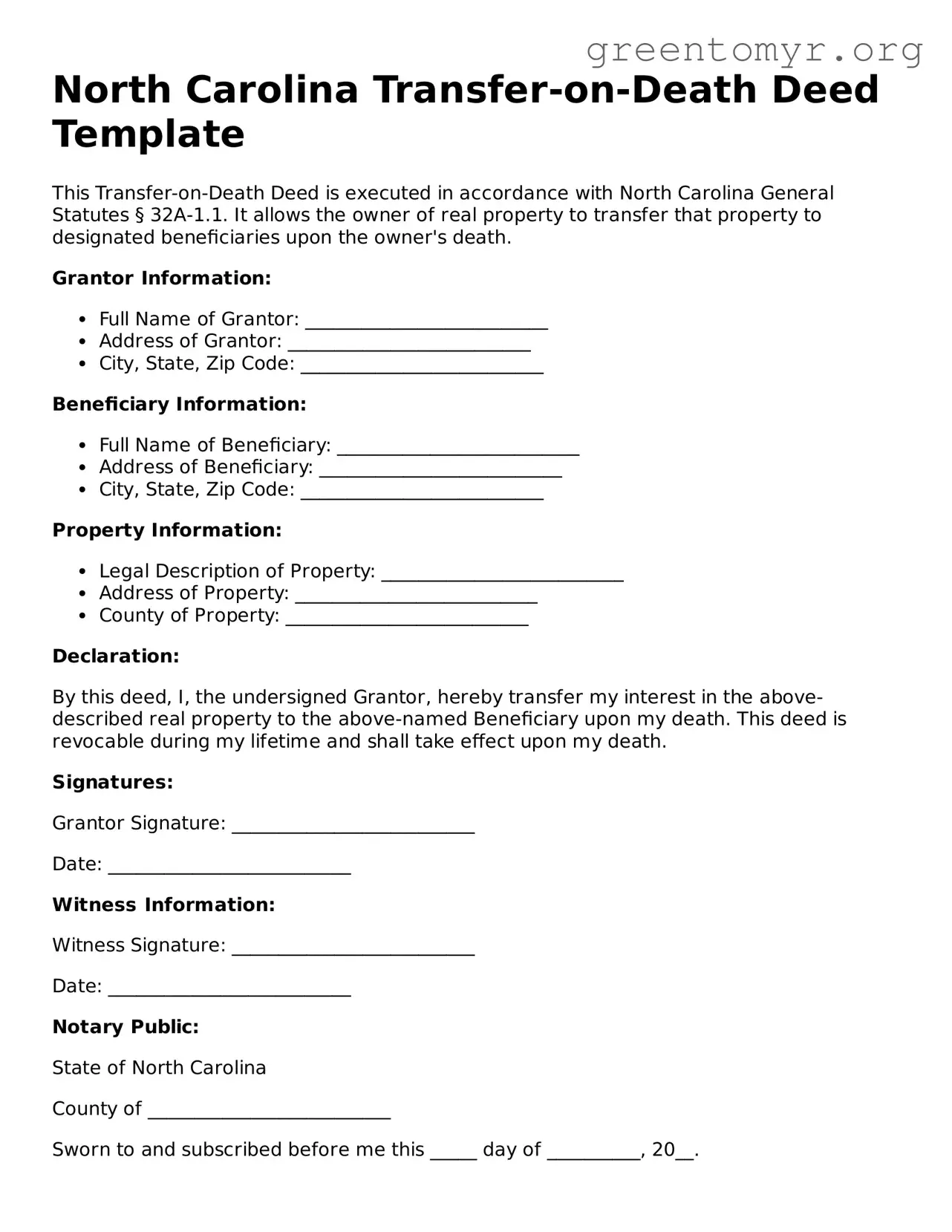
North Carolina Transfer-on-Death Deed Template
This Transfer-on-Death Deed is executed in accordance with North Carolina General Statutes § 32A-1.1. It allows the owner of real property to transfer that property to designated beneficiaries upon the owner's death.
Grantor Information:
Beneficiary Information:
Property Information:
Declaration:
By this deed, I, the undersigned Grantor, hereby transfer my interest in the above-described real property to the above-named Beneficiary upon my death. This deed is revocable during my lifetime and shall take effect upon my death.
Signatures:
Grantor Signature: __________________________
Date: __________________________
Witness Information:
Witness Signature: __________________________
Date: __________________________
Notary Public:
State of North Carolina
County of __________________________
Sworn to and subscribed before me this _____ day of __________, 20__.
Notary Public Signature: __________________________
My Commission Expires: __________________________
| Fact Name | Details |
|---|---|
| Definition | A Transfer-on-Death Deed allows property owners in North Carolina to transfer real estate to beneficiaries upon their death without going through probate. |
| Governing Law | The Transfer-on-Death Deed is governed by North Carolina General Statutes, specifically N.C. Gen. Stat. § 32A-1.1. |
| Execution Requirements | The deed must be signed by the property owner and witnessed by at least two individuals who are not beneficiaries. |
| Recording | To be effective, the deed must be recorded with the register of deeds in the county where the property is located prior to the owner's death. |
| Revocation | The property owner can revoke the Transfer-on-Death Deed at any time before their death, ensuring flexibility in estate planning. |
Once you have the North Carolina Transfer-on-Death Deed form ready, you will need to complete it accurately to ensure that your wishes are clearly expressed. After filling out the form, you will need to sign it in front of a notary public and then file it with the appropriate county register of deeds.
A Transfer-on-Death Deed (TOD Deed) is a legal document that allows property owners in North Carolina to designate beneficiaries who will receive their real estate upon their death. This deed enables the transfer of property without the need for probate, simplifying the process for heirs. The property owner retains full control over the property during their lifetime, including the right to sell or mortgage it. Only upon the owner's death does the property automatically transfer to the designated beneficiaries.
Creating a Transfer-on-Death Deed involves several steps:
Yes, you can change or revoke a Transfer-on-Death Deed at any time during your lifetime. To do so, you will need to create a new deed that explicitly revokes the previous one or modify the existing deed to reflect your new wishes. It’s important to follow the same recording process to ensure that the changes are legally recognized. Always keep copies of the original and any amended deeds for your records.
If you do not name a beneficiary or if the named beneficiary predeceases you, the property will not transfer as intended. Instead, it will become part of your estate and will be distributed according to your will, or if you do not have a will, according to North Carolina’s intestacy laws. This could lead to complications and potential disputes among heirs, so it’s advisable to carefully consider your beneficiary designations.
Generally, there are no immediate tax implications when you create a Transfer-on-Death Deed. The property remains part of your estate until your death, so you continue to be responsible for property taxes and any other obligations. However, beneficiaries may face capital gains taxes when they sell the property after inheriting it. It's wise to consult with a tax advisor to understand any potential tax consequences based on your specific situation.
When filling out the North Carolina Transfer-on-Death Deed form, many individuals make common mistakes that can lead to complications later on. One frequent error is failing to properly identify the property. It is essential to provide a clear and accurate legal description of the property being transferred. Omitting details or using vague language can create confusion and may even invalidate the deed.
Another mistake often seen is not including all necessary parties. The form requires the names of both the grantor and the beneficiary. If a beneficiary is left out or incorrectly named, it can result in disputes or delays in the transfer process. Ensuring that all parties are correctly identified is crucial for a smooth transition of property ownership.
People sometimes overlook the importance of notarization. The Transfer-on-Death Deed must be signed in the presence of a notary public. Failing to have the document notarized can render it ineffective. This step is not just a formality; it serves to authenticate the signatures and confirm that the deed was executed voluntarily.
Additionally, many individuals neglect to record the deed with the appropriate county office. After the form is completed and notarized, it must be filed with the Register of Deeds in the county where the property is located. Without this step, the deed will not be recognized legally, and the intended transfer may not take place.
Lastly, some people may not consider the implications of their decisions regarding beneficiaries. It is important to think carefully about who will inherit the property and how that may affect family dynamics. Choosing a beneficiary without considering these factors can lead to unexpected conflicts or issues down the line. Thoughtful planning can help ensure that the transfer aligns with one’s wishes.
The North Carolina Transfer-on-Death Deed is a valuable tool for individuals looking to transfer property upon death without the need for probate. However, several other documents may be necessary to ensure the smooth execution of this transfer. Below is a list of forms and documents commonly used in conjunction with the Transfer-on-Death Deed.
Incorporating these documents can help clarify intentions and streamline the process of transferring property upon death. Each document serves a unique purpose and contributes to a comprehensive estate plan.
The Transfer-on-Death Deed (TODD) serves a unique purpose in estate planning, allowing individuals to transfer property directly to beneficiaries upon their death, bypassing probate. Several other documents share similarities with the TODD in terms of their function and intent. Below is a list of nine such documents:
When filling out the North Carolina Transfer-on-Death Deed form, it’s essential to approach the process with care. Here are five important do's and don'ts to keep in mind:
The Transfer-on-Death Deed (TODD) form in North Carolina is a useful estate planning tool, but several misconceptions surround its use. Understanding these misconceptions can help individuals make informed decisions about their property and estate planning. Below are eight common misconceptions about the North Carolina Transfer-on-Death Deed form.
By dispelling these misconceptions, individuals can better understand the role of the Transfer-on-Death Deed in their estate planning strategy.
When considering the North Carolina Transfer-on-Death Deed form, it is essential to understand its implications and the process involved. Here are five key takeaways to keep in mind:
Understanding these points can help ensure a smoother transition of property and provide peace of mind for both property owners and their beneficiaries.