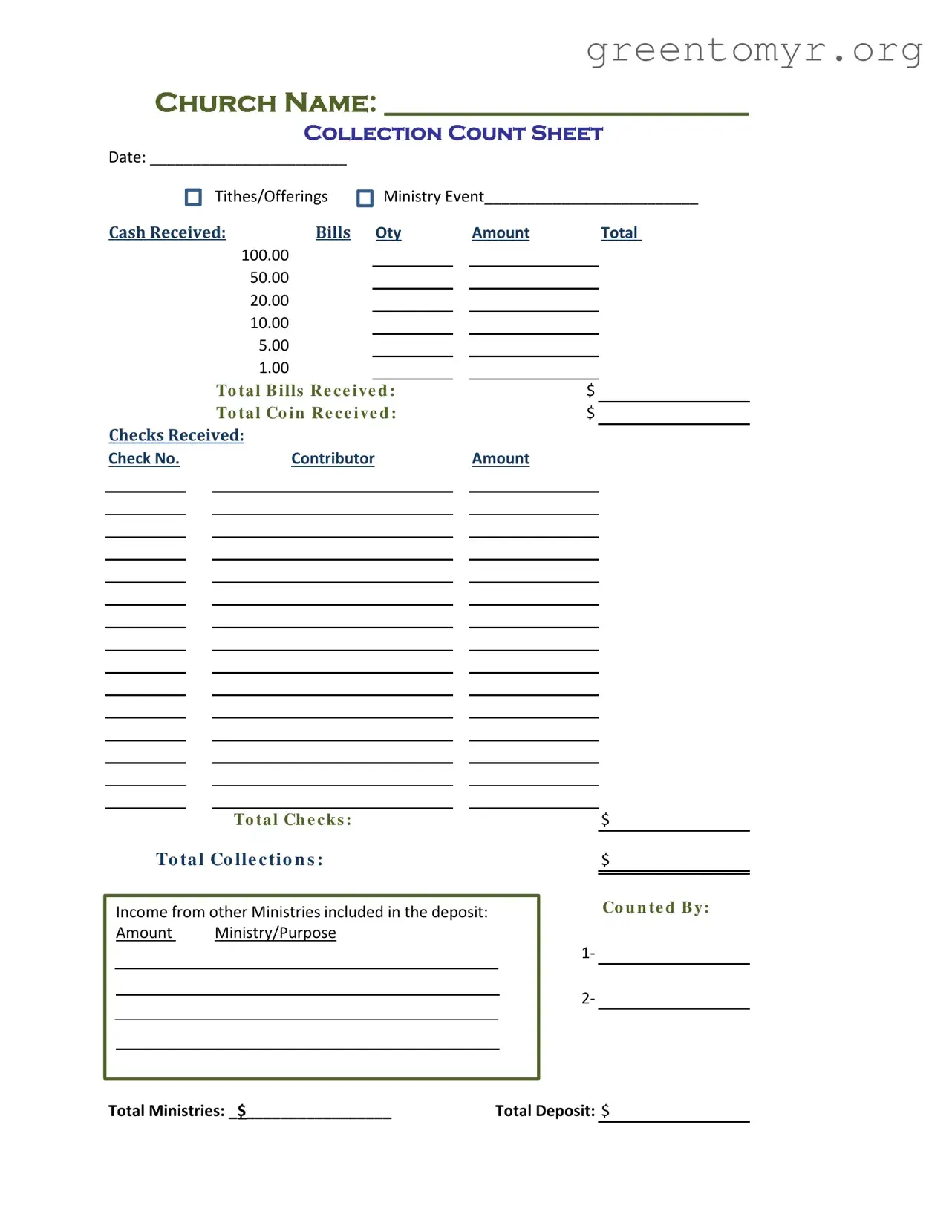
The Offer Report form is an essential tool for churches to accurately document and manage their financial contributions. This form captures vital information, including the church name, date of collection, and the source of tithes and offerings. It provides a detailed breakdown of cash received, listing denominations such as bills and coins, along with the total amounts for each category. Additionally, the form includes a section for checks received, requiring details like check numbers and contributor amounts, ensuring transparency in financial reporting. Income from other ministries can also be recorded, allowing for a comprehensive view of total collections. The form concludes with spaces for the counters’ signatures and the total deposit amount, reinforcing accountability and accuracy in financial transactions. By utilizing the Offer Report form, churches can maintain clear records and foster trust within their communities.

CHURCH NAME: __________________________
COLLECTION COUNT SHEET
Date: _______________________ |
|
|
|
|
|
|
||||
|
|
Tithes/Offerings |
Ministry Event_________________________ |
|||||||
CASH RECEIVED: |
BILLS |
Oty |
|
Amount |
|
|
Total |
|||
100.00 |
|
|
|
|
|
|
|
|
||
50.00 |
|
|
|
|
|
|
|
|
||
|
|
|
|
|
|
|
|
|||
20.00 |
|
|
|
|
|
|
|
|
||
|
|
|
|
|
|
|
|
|||
10.00 |
|
|
|
|
|
|
|
|
||
5.00 |
|
|
|
|
|
|
|
|
||
|
|
|
|
|
|
|
|
|||
1.00 |
|
|
|
|
|
|
|
|
||
|
|
|
|
|
|
|
|
|||
|
|
To ta l B i lls R e c e i ve d : |
|
|
$ |
|
|
|||
|
|
To ta l Co i n R e c e i ve d : |
|
|
$ |
|
|
|||
CHECKS RECEIVED: |
|
|
|
|
|
|
|
|
||
Check No. |
Contributor |
|
|
Amount |
|
|
|
|||
|
|
|
|
|
|
|
|
|
|
|
|
|
|
|
|
|
|
|
|
|
|
|
|
|
|
|
|
|
|
|
|
|
|
|
|
|
|
|
|
|
|
|
|
|
|
|
|
|
|
|
|
|
|
|
|
|
|
|
|
|
|
|
|
|
|
|
|
|
|
|
|
|
|
|
|
|
|
|
|
|
|
|
|
|
|
|
|
|
|
|
|
|
|
|
|
|
|
|
|
|
|
|
|
|
|
|
|
|
|
|
|
|
|
|
|
|
|
|
|
|
|
|
|
|
|
|
|
|
|
|
|
|
|
|
|
|
|
|
|
|
|
|
|
|
|
|
|
|
|
|
|
|
|
|
|
|
|
|
|
|
|
|
|
|
To ta l Ch e c k s :
To ta l Co lle c ti o n s :
Income from other Ministries included in the deposit:
Amount Ministry/Purpose
$
$
Co u n te d B y:
1‐
2‐
Total Ministries: _$_________________ |
Total Deposit: $ |
|
|
|
|
| Fact Name | Description |
|---|---|
| Church Name | The form requires the church's name to identify the source of the collection. |
| Collection Count Sheet | This form serves as a record of all cash and checks received during a specific event. |
| Date | The date field is essential for tracking when the collections took place. |
| Cash Received | Details about cash received are organized by denomination and total amounts. |
| Checks Received | Each check is recorded with the check number, contributor, and amount for transparency. |
| Governing Law | This form is governed by state laws regarding charitable contributions and financial reporting. |
After completing the Offer Report form, you will have a comprehensive record of the tithes and offerings collected during your ministry event. This information is crucial for maintaining accurate financial records and ensuring transparency within your organization.
The Offer Report form is designed to provide a detailed account of the tithes and offerings collected during a specific event or service at a church. It helps ensure transparency and accuracy in financial reporting, allowing the church to track donations and manage funds effectively.
The form requires several key pieces of information:
Cash received should be recorded by listing the quantity of each denomination in the designated section of the form. For example, if you received ten $100 bills, you would note '10' in the quantity column next to the $100 denomination. The total cash amount will be calculated automatically based on these entries.
If contributions from other ministries are included in the deposit, you should list each ministry or purpose along with the corresponding amount. This allows for a comprehensive view of where the funds originated and ensures accurate tracking for future reference.
The responsibility for completing the Offer Report form typically falls to the individual or team in charge of collecting the tithes and offerings. It is crucial that the person filling out the form is diligent and accurate to maintain the integrity of the financial records.
Once the Offer Report form is completed, it should be submitted to the church’s financial department or treasurer. This ensures that the information is recorded in the church's financial system and that proper accounting procedures are followed.
Yes, it is important to submit the Offer Report form as soon as possible after the collection event. Prompt submission helps maintain accurate financial records and allows for timely reporting of the church’s financial status.
Filling out the Offer Report form is a crucial task for any church, as it helps track donations and manage finances. However, mistakes can easily occur during this process. One common error is neglecting to fill in the church name at the top of the form. This simple oversight can lead to confusion, especially if multiple reports are being processed simultaneously.
Another frequent mistake is failing to include the date on the form. The date is essential for record-keeping and helps in tracking financial trends over time. Without it, the report may lose its context, making it difficult to reference in the future.
Some individuals forget to specify the ministry event associated with the tithes and offerings. This information is vital as it connects the donations to specific activities or campaigns within the church. Omitting this detail can hinder transparency and accountability.
When it comes to the cash received section, many people overlook the importance of accurately counting the bills and coins. It’s easy to miscount or forget to total the amounts correctly. Errors in this area can lead to discrepancies in the total collections, which can affect budgeting and financial planning.
In the checks received section, some individuals may fail to record the check numbers or the contributors. This information is crucial for tracking donations and acknowledging contributors. Without these details, it becomes challenging to maintain good relationships with donors.
Another common mistake is not including the total collections at the end of the form. This total is essential for summarizing the financial contributions and providing a clear picture of the church's income. Missing this figure can lead to confusion when reviewing financial reports.
Additionally, some people forget to note any income from other ministries included in the deposit. This information is important for understanding the complete financial picture and ensuring that all contributions are accounted for. Leaving this out can misrepresent the church's overall financial health.
Finally, the section for the person who counted the funds is sometimes left blank. This oversight can create accountability issues. Knowing who counted the funds can help address any questions or concerns about the report later on. Proper documentation is key to maintaining trust within the church community.
The Offer Report form is a crucial document for churches and ministries to track the financial contributions received during services or events. It provides a detailed account of cash and checks collected, helping to ensure transparency and accountability in financial reporting. Along with this form, several other documents are commonly utilized to support the overall financial management process.
Utilizing these forms in conjunction with the Offer Report enhances the financial management of a church, ensuring that all contributions are accurately recorded and reported. This practice fosters trust and accountability within the community.
The Offer Report form serves a specific purpose in documenting the collection of tithes and offerings for a church. However, it shares similarities with several other important documents. Here’s a list of nine documents that are comparable to the Offer Report form, each fulfilling a unique role in financial tracking and reporting.
Understanding these documents and their similarities helps organizations maintain clear financial records and ensures accountability in managing funds.
When filling out the Offer Report form, consider these important do's and don'ts to ensure accuracy and clarity.
Misconceptions about the Offer Report form can lead to confusion and errors in financial reporting. Below are six common misconceptions along with clarifications.
Understanding these misconceptions can help ensure accurate and effective use of the Offer Report form in managing church finances.
Filling out the Offer Report form accurately is essential for maintaining clear financial records. Here are some key takeaways to consider:
By following these guidelines, the Offer Report form can serve as an effective tool for managing church finances.