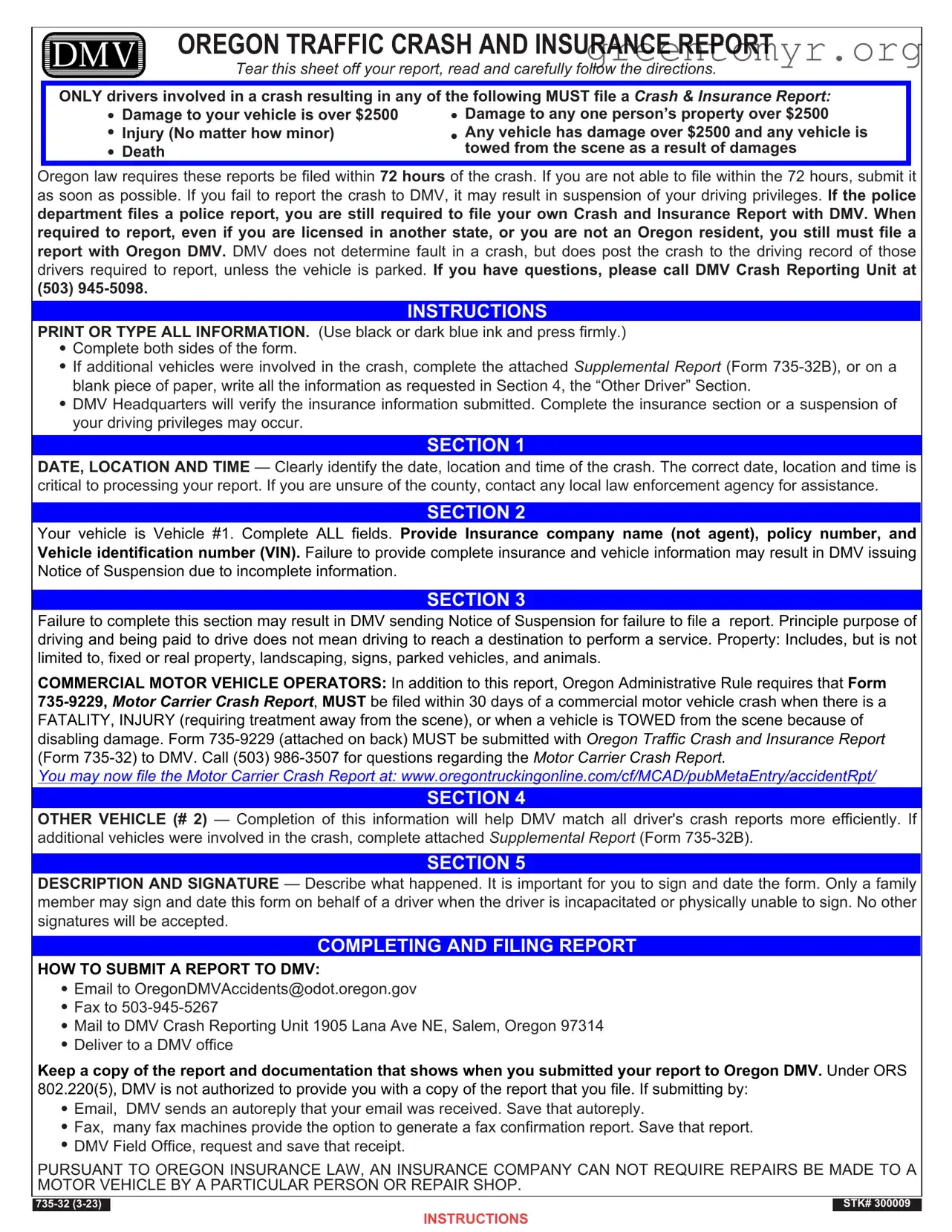
When you're involved in a car accident in Oregon, understanding the importance of the Oregon DMV Accident Report form is crucial. This form, officially known as the Oregon Traffic Crash and Insurance Report, serves as a vital tool for documenting the details of the incident. If your accident resulted in damage exceeding $2,500, injuries, or if a vehicle was towed from the scene, you're legally required to file this report within 72 hours. Failing to do so could lead to suspension of your driving privileges. The form requires you to provide essential information, such as the date, time, and location of the crash, as well as details about the vehicles and insurance coverage involved. You’ll need to complete both sides of the form and ensure that all fields are filled out accurately to avoid any complications. If multiple vehicles were involved, additional forms may be necessary to capture all pertinent information. Remember, even if a police report is filed, you must still submit your own report to the DMV. Understanding these requirements can help streamline the process and ensure compliance with Oregon law.

OREGON TRAFFIC CRASH AND INSURANCE REPORT
Tear this sheet off your report, read and carefully follow the directions.
ONLY drivers involved in a crash resulting in any of the following MUST file a Crash & Insurance Report: |
|||
• |
Damage to your vehicle is over $2500 |
• |
Damage to any one person’s property over $2500 |
• |
Injury (No matter how minor) |
• |
Any vehicle has damage over $2500 and any vehicle is |
• |
Death |
towed from the scene as a result of damages |
|
Oregon law requires these reports be filed within 72 hours of the crash. If you are not able to file within the 72 hours, submit it as soon as possible. If you fail to report the crash to DMV, it may result in suspension of your driving privileges. If the police department files a police report, you are still required to file your own Crash and Insurance Report with DMV. When required to report, even if you are licensed in another state, or you are not an Oregon resident, you still must file a report with Oregon DMV. DMV does not determine fault in a crash, but does post the crash to the driving record of those drivers required to report, unless the vehicle is parked. If you have questions, please call DMV Crash Reporting Unit at (503)
INSTRUCTIONS
PRINT OR TYPE ALL INFORMATION. (Use black or dark blue ink and press firmly.)
• Complete both sides of the form.
• If additional vehicles were involved in the crash, complete the attached Supplemental Report (Form
• DMV Headquarters will verify the insurance information submitted. Complete the insurance section or a suspension of your driving privileges may occur.
SECTION 1
DATE, LOCATION AND TIME — Clearly identify the date, location and time of the crash. The correct date, location and time is critical to processing your report. If you are unsure of the county, contact any local law enforcement agency for assistance.
SECTION 2
Your vehicle is Vehicle #1. Complete ALL fields. Provide Insurance company name (not agent), policy number, and Vehicle identification number (VIN). Failure to provide complete insurance and vehicle information may result in DMV issuing Notice of Suspension due to incomplete information.
SECTION 3
Failure to complete this section may result in DMV sending Notice of Suspension for failure to file a report. Principle purpose of driving and being paid to drive does not mean driving to reach a destination to perform a service. Property: Includes, but is not limited to, fixed or real property, landscaping, signs, parked vehicles, and animals.
COMMERCIAL MOTOR VEHICLE OPERATORS: In addition to this report, Oregon Administrative Rule requires that Form
You may now file the Motor Carrier Crash Report at: www.oregontruckingonline.com/cf/MCAD/pubMetaEntry/accidentRpt/
SECTION 4
OTHER VEHICLE (# 2) — Completion of this information will help DMV match all driver's crash reports more efficiently. If additional vehicles were involved in the crash, complete attached Supplemental Report (Form
SECTION 5
DESCRIPTION AND SIGNATURE — Describe what happened. It is important for you to sign and date the form. Only a family member may sign and date this form on behalf of a driver when the driver is incapacitated or physically unable to sign. No other signatures will be accepted.
COMPLETING AND FILING REPORT
HOW TO SUBMIT A REPORT TO DMV:
•Email to [email protected]
•Fax to
•Mail to DMV Crash Reporting Unit 1905 Lana Ave NE, Salem, Oregon 97314
•Deliver to a DMV office
Keep a copy of the report and documentation that shows when you submitted your report to Oregon DMV. Under ORS 802.220(5), DMV is not authorized to provide you with a copy of the report that you file. If submitting by:
•Email, DMV sends an autoreply that your email was received. Save that autoreply.
•Fax, many fax machines provide the option to generate a fax confirmation report. Save that report.
•DMV Field Office, request and save that receipt.
PURSUANT TO OREGON INSURANCE LAW, AN INSURANCE COMPANY CAN NOT REQUIRE REPAIRS BE MADE TO A MOTOR VEHICLE BY A PARTICULAR PERSON OR REPAIR SHOP.
STK# 300009 |
INSTRUCTIONS

TOTALED VEHICLE NOTICE
DEFINITIONS AND INSTRUCTIONS FOR TOTALED VEHICLES
IF YOUR CRASH HAS RESULTED IN A “TOTALED” VEHICLE, YOU ARE REQUIRED BY LAW TO
FOLLOW APPROPRIATE INSTRUCTIONS IN THIS NOTICE.
DEFINITION OF “TOTALED” VEHICLE
“Totaled Vehicle” or “Totaled” as defined in Oregon law (ORS 801.527) means:
•A vehicle that is declared a total loss by an insurer who is obligated to cover the loss or a vehicle that the insurer takes possession of or title to.
•A vehicle that has sustained damage that is not covered by an insurer and the estimated cost to repair the vehicle is equal to at least 80% of the retail market value prior to the damage. “Retail market value” is defined as the amount shown in publications used by financial institutions (banks or lenders) in this state.
•A vehicle that is stolen, if it is not recovered within 30 days of theft and the loss is not covered by an insurer. In this situation, you must notify DMV within 60 days of the theft.
▼ FOLLOW THESE INSTRUCTIONS IF YOUR VEHICLE IS TOTALED ▼
If your vehicle is totaled, in addition to completing the crash report, follow the instruction that is applicable to your case. Either:
1.SURRENDER the title to the insurer if the damage is covered by an insurer who declares the vehicle to be a “total loss,” and the insurer takes possession of the vehicle; or
2.SURRENDER the title to DMV and apply for salvage title if the damage is covered by an insurer who declares the vehicle to be a “total loss,” but you keep possession of the vehicle; or
3.SURRENDER the title to DMV and apply for salvage title if the damage was not covered by an insurer and the estimated cost of repair is at least 80% of the retail market value of the vehicle before the damage; or
4.NOTIFY DMV that your vehicle has been totaled if, for some reason, you are unable to obtain the title for surrender. You must provide DMV with a signed statement which includes:
•A description of the vehicle which includes the year model, make, plate number and vehicle identification number.
•A statement indicating the vehicle has been totaled.
•A statement that you are unable to obtain the title and why.
DO NOT SUBMIT THE TITLE WITH THE CRASH REPORT. You can obtain the Application for Salvage Title (Form
NOTE: It is a Class A misdemeanor with a penalty of imprisonment and/or fine if you fail to comply with the above requirements. (ORS 819.012)
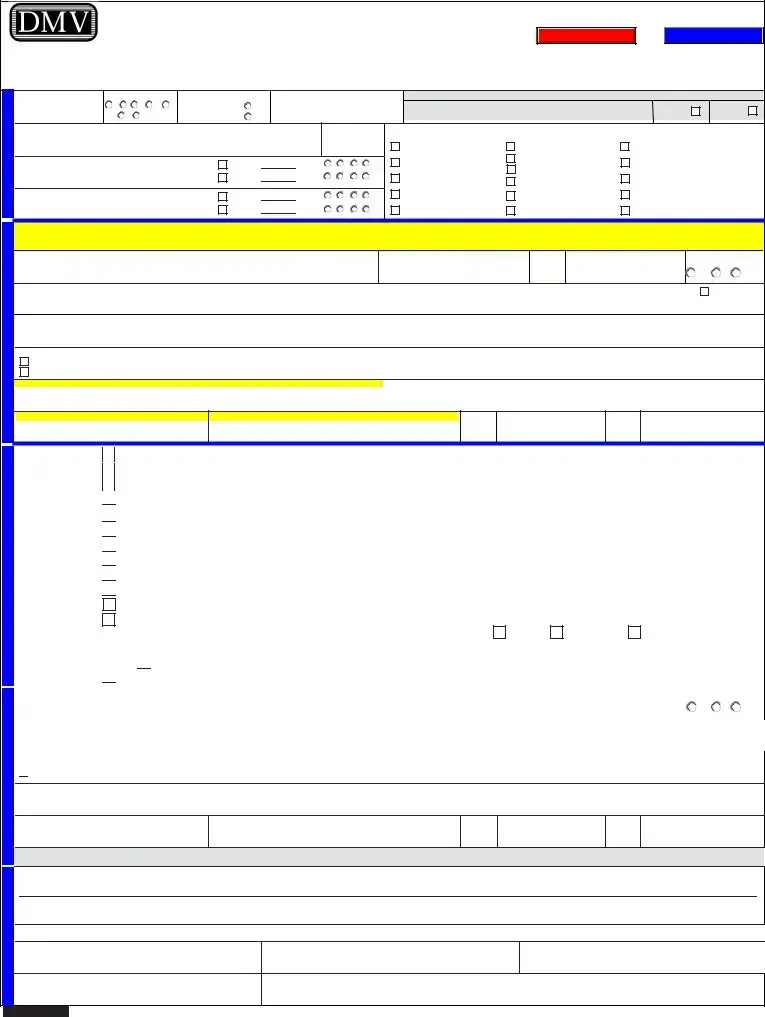
OREGON TRAFFIC CRASH AND INSURANCE REPORT
COMPLETE BOTH SIDES
Print Form
Reset Form
Complete this form if the traffic crash occurred on a highway or premise open to the public and meets at least one of the reporting requirements outlined in Section 3. Failure to report when required may result in DMV issuing Notice of Suspension. Call
SECTION 1
CRASH DATE |
DAY OF WEEK TIME OF DAY |
|
COUNTY |
|
|
|
|
|
DMV USE ONLY |
|
|
|
|
M T W TH F |
AM |
|
|
|
|
|
CRASH REF # _________________________________ ALIR |
INS CO |
|||
|
S SN |
PM |
|
|
|
|
|
|||||
ROAD ON WHICH CRASH OCCURRED (Name of street, road or route ) |
MILE POST |
|
TYPE OF CRASH - The crash involved one or more of the following: |
(Mark all that apply) |
||||||||
|
|
|
|
|
|
|
|
Two vehicles |
ATV / Snowmobile |
Parked vehicle |
||
NAME OF NEAREST INTERSECTING ROAD |
WITHIN |
FEET |
N |
S |
E |
W |
More than two vehicles |
Motorcycle |
Overturned vehicle |
|||
Motor Home / RV |
||||||||||||
|
|
NEAR |
MILES |
N |
S |
E |
W |
Fatality |
Animal |
|
||
|
|
Motorized Scooter |
|
|||||||||
NAME OF NEAREST CITY / TOWN |
WITHIN |
FEET |
N |
S |
E |
W |
Bicycle |
Personal (assisted) |
Fixed object / property |
|||
|
|
NEAR |
MILES |
N |
S |
E |
W |
Pedestrian |
mobility device |
Other ____________________ |
||
|
|
Train |
||||||||||
SECTION 2 (YOUR INFORMATION)
Complete ALL fields. Failure to provide complete information may result in DMV issuing Notice of Suspension.
DRIVER’S LAST NAME |
FIRST NAME |
MIDDLE NAME |
DRIVER’S LICENSE NUMBER |
STATE DATE OF BIRTH |
GENDER |
|
|
|
M |
F |
X |
DRIVER’S RESIDENCE ADDRESS |
CITY |
STATE |
ZIP CODE |
CHECK BOX |
|
|
|
|
|
IF ADDRESS |
|
MAILING ADDRESS (IF DIFFERENT THAN RESIDENCE) |
CITY |
STATE |
ZIP CODE |
CHANGE |
|
|
|
||||
VEHICLE OWNER’S NAME AND ADDRESS |
|
CITY |
STATE |
ZIP CODE |
SAME |
|
|
|
|
RENTAL? |
|
|
|
|
INSURANCE COMPANY NAME (NOT AGENT) AND ADDRESS |
CITY |
STATE |
ZIP CODE |
|
POLICY NUMBER |
VEHICLE IDENTIFICATION NUMBER |
|
STATE VEHICLE PLATE NUMBER |
YEAR MAKE & MODEL |
Check all statements that apply:
SECTION 3
Damage to your vehicle was more than $2500.
Damage to any one person’s property (other than vehicle) was more than $2500.
Your vehicle was towed from the scene as a result of damages.
You or passengers in your vehicle were injured.
Collision with a parked vehicle.
The crash occurred while you were driving your employer’s vehicle.
You were driving on your job and being paid for the principal purpose of driving.
You were being paid to drive and/or deliver persons or property.
You were operating a government owned vehicle marked for transporting mail in accordance with government rules. You were operating an authorized emergency vehicle.
The crash occurred in a work or maintenance zone. ORS 811.230 |
|
|
|
A police officer came to the scene. |
City |
County |
State Police |
Name of police department: __________________________ |
You were operating a commercial motor vehicle requiring you to have a commercial driver license. You were transporting hazardous material.
A citation was issued to you. The citation was: ________________________________________________________
SECTION 4 (OTHER VEHICLE # 2)
DRIVER’S NAME (LAST, FIRST, MIDDLE) |
DRIVER’S LICENSE NUMBER |
STATE |
DATE OF BIRTH |
GENDER |
|
|
|
|
|
|
M F X |
|
|
|
|
|
|
DRIVER’S ADDRESS |
CITY |
|
STATE |
ZIP CODE |
|
|
|
|
|
|
|
VEHICLE OWNER’S NAME AND ADDRESS |
CITY |
|
STATE |
ZIP CODE |
|
SAME
INSURANCE COMPANY NAME (NOT AGENT) AND ADDRESS |
|
|
POLICY NUMBER |
VEHICLE IDENTIFICATION NUMBER |
STATE VEHICLE PLATE NUMBER YEAR MAKE & MODEL |
IF ADDITIONAL VEHICLES WERE INVOLVED IN THE CRASH, USE ATTACHED SUPPLEMENTAL REPORT (Form
DESCRIBE WHAT HAPPENED: (IF MORE SPACE IS NEEDED, SUBMIT ADDITIONAL PAGE)
5 |
|
|
SECTION |
I certify all information given on this report is true and accurate to the best of my knowledge. |
|
|
||
|
SIGNATURE OF PERSON MAKING REPORT |
PRINTED NAME OF PERSON MAKING REPORT |
|
X |
REASON DRIVER IS UNABLE TO SIGN REPORT |
|
IF NOT DRIVER’S SIGNATURE, STATE RELATIONSHIP |
|
DMV COPY
DAYTIME PHONE # |
|
DATE SIGNED |
|||
|
|||||
( |
) |
|
|
|
|
|
|
PHONE NUMBER OF DRIVER |
|||
|
|
( |
) |
|
|
|
|
|
|
|
|
|
|
|
|
|
STK# 300009 |
| Fact Name | Description |
|---|---|
| Filing Requirement | Drivers must file a Crash & Insurance Report if damages exceed $2,500, there is an injury, or a vehicle is towed from the scene. |
| Deadline for Submission | Reports must be filed within 72 hours of the crash. If unable to meet this deadline, submit the report as soon as possible. |
| Consequences of Non-Reporting | Failing to report a crash may lead to suspension of driving privileges. This applies even if a police report has been filed. |
| Insurance Information | Complete insurance details are required. Incomplete information may result in a Notice of Suspension from DMV. |
| Commercial Vehicle Reporting | Commercial motor vehicle operators must also file Form 735-9229 within 30 days for specific incidents, including fatalities or injuries. |
| Governing Law | The requirements for filing are governed by Oregon Revised Statutes (ORS), including ORS 802.220(5) and ORS 801.527. |
Filling out the Oregon DMV Accident Report form is essential after a crash that meets specific criteria. This process ensures that the necessary information is documented and submitted in a timely manner. Below are the steps to guide you through completing the form accurately.
Once you've completed the form, make sure to submit it within the required 72-hour window. If you have any questions, don't hesitate to reach out to the DMV Crash Reporting Unit for assistance.
The Oregon DMV Accident Report form is a document required by law for drivers involved in a crash that meets specific criteria. You must file this report if:
It’s essential to file this report within 72 hours of the crash. Failure to do so may result in suspension of your driving privileges.
When completing the Accident Report, ensure that you provide all requested information. This includes:
Completing all sections accurately is crucial to avoid potential suspension of your driving privileges.
Even if a police report has been filed, you are still required to submit your own Crash and Insurance Report to the DMV. The police report does not replace your obligation to file the DMV report, so make sure to complete and submit your form as required.
You have several options for submitting your Accident Report:
Be sure to keep a copy of the report and any documentation that shows when you submitted it. If you submit via email or fax, save any confirmation you receive as proof of submission.
Failing to file the Accident Report when required can lead to serious consequences, including the suspension of your driving privileges. The DMV takes these requirements seriously, so it’s important to adhere to the 72-hour deadline for filing.
If your vehicle is declared “totaled,” you need to follow specific steps in addition to filing the Accident Report. Depending on your situation, you may need to surrender the title to your insurance company or apply for a salvage title with the DMV. If you cannot obtain the title, you must notify the DMV with a signed statement detailing the vehicle's condition and your inability to surrender the title.
Filling out the Oregon DMV Accident Report form can be a straightforward process, but many people make common mistakes that can lead to complications. One of the most frequent errors is failing to provide complete information. Each section of the form must be filled out entirely. Omitting details such as the driver's license number, insurance company name, or vehicle identification number can result in a Notice of Suspension from the DMV.
Another mistake involves misunderstanding the reporting requirements. Many individuals are unaware that they must file a report even if the police have already done so. If a crash results in damages exceeding $2,500 or involves any injuries, it is essential to submit your own Crash and Insurance Report to the DMV within the required timeframe.
People often neglect to clearly identify the date, location, and time of the crash. This information is critical for processing the report. If unsure about the county, it is advisable to contact local law enforcement for assistance. Inaccurate or vague information can lead to delays or additional complications.
Additionally, some individuals mistakenly believe that they can use any color of ink when filling out the form. The instructions specify using black or dark blue ink only. This detail may seem minor, but it can affect the legibility of the report and may lead to processing issues.
Another common oversight is not completing the insurance section properly. Providing the name of the insurance company and the policy number is crucial. If this information is incomplete, it could result in a suspension of driving privileges. It is vital to ensure that this section is filled out accurately to avoid unnecessary complications.
Moreover, some people fail to sign and date the form. This step is essential, as only a family member may sign on behalf of an incapacitated driver. Not adhering to this requirement can render the report invalid, leading to further issues.
Another mistake occurs when individuals do not keep a copy of the report and proof of submission. It is important to retain documentation that shows when and how the report was submitted. This can be crucial if there are any disputes or questions regarding the filing.
Lastly, some individuals overlook the need to complete the "Other Vehicle" section if multiple vehicles were involved in the crash. Providing this information helps the DMV match all drivers' reports efficiently. Failure to do so can lead to confusion and delays in processing the report.
When involved in a vehicle accident in Oregon, it is essential to complete the Oregon DMV Accident Report form. However, there are several other forms and documents that may also be required or helpful in the aftermath of a crash. Understanding these documents can facilitate a smoother process for reporting and resolving any issues that arise from the incident.
Being aware of these additional documents can help ensure that all necessary information is collected and submitted in a timely manner. This proactive approach can alleviate some of the stress associated with the aftermath of an accident and assist in navigating the complexities of insurance and legal requirements.
When filling out the Oregon DMV Accident Report form, there are important guidelines to follow. Here’s a list of what you should and shouldn't do:
Misconception 1: Only Oregon residents need to file the report.
Many people believe that only residents of Oregon are required to file an accident report with the DMV. In reality, anyone involved in a crash in Oregon must file, regardless of their residency status. This includes drivers from other states.
Misconception 2: You do not need to file a report if the police are involved.
Some individuals think that if a police report is filed, they are exempt from submitting their own accident report. This is incorrect. Even if law enforcement files a report, drivers are still required to complete and submit their own Crash and Insurance Report.
Misconception 3: The DMV determines who is at fault in an accident.
There is a common belief that the DMV decides who is at fault in an accident. However, the DMV does not make determinations of fault. Instead, they simply record the accident in the driving records of those required to report.
Misconception 4: You have unlimited time to file the report after an accident.
Some people think they can take their time when filing the accident report. In fact, Oregon law mandates that reports must be filed within 72 hours of the crash. Failing to do so may lead to a suspension of driving privileges.
Misconception 5: The report can be submitted in any format.
There is a misconception that the accident report can be submitted in any way. However, the DMV specifies certain methods for submission, including email, fax, mail, or in-person delivery. Following these guidelines is essential to ensure proper processing of the report.
Filling out the Oregon DMV Accident Report form is crucial for drivers involved in a crash. Here are some key takeaways to keep in mind:
Remember, being thorough and timely with your report can help you avoid complications down the road.