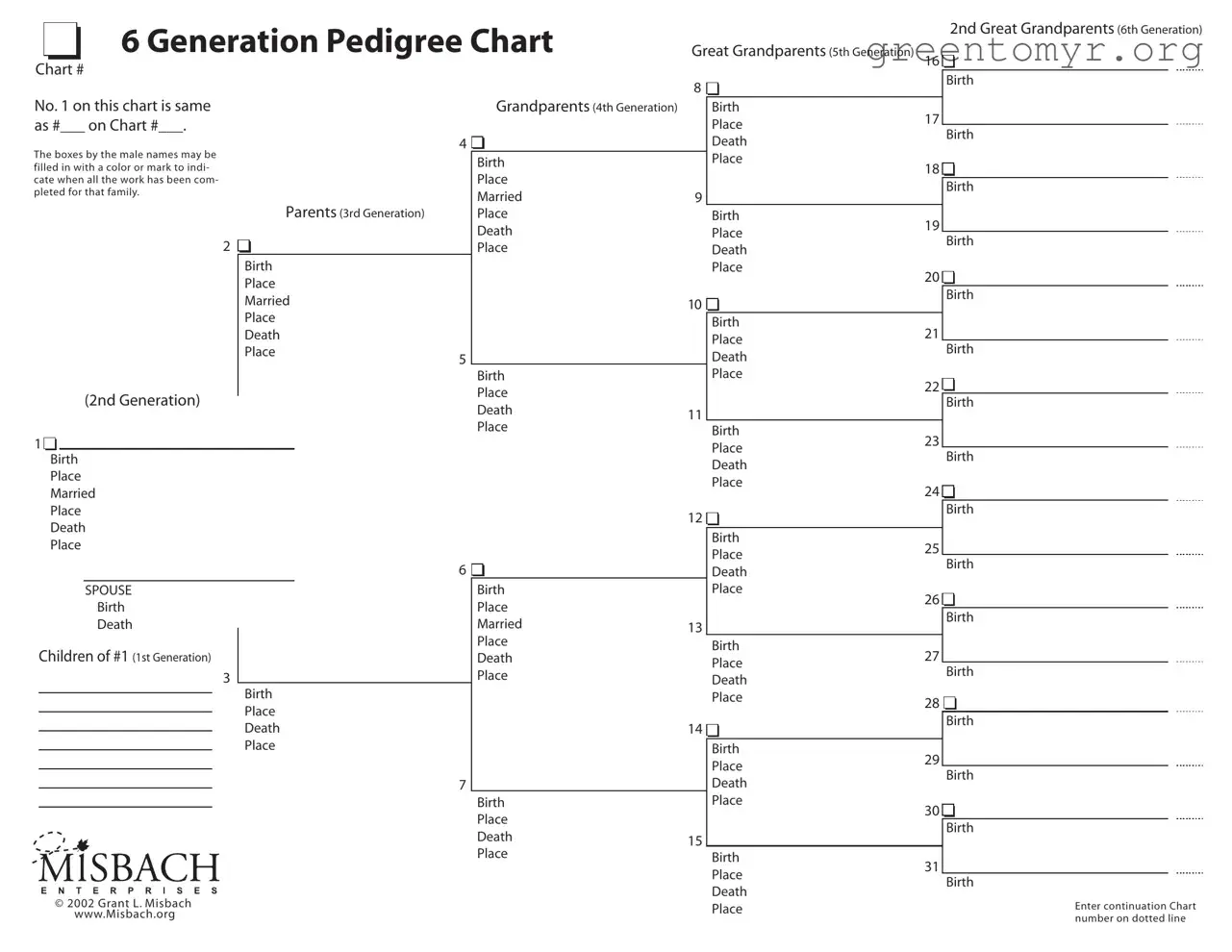
The Pedigree Chart form serves as a vital tool for individuals and families seeking to document their lineage and understand their genetic heritage. This form captures essential information about family members across multiple generations, including names, birth dates, and relationships, thereby creating a visual representation of ancestry. By outlining connections between relatives, the chart helps identify hereditary patterns and potential health risks that may be passed down through generations. It often includes symbols and notations to denote various familial relationships, such as marriages and divorces, as well as the presence of any genetic conditions. Utilizing this form can facilitate discussions around family history, promote awareness of inherited traits, and assist in genealogical research. Ultimately, the Pedigree Chart form is not just a record; it is a comprehensive snapshot of a family's story, revealing the intricate web of connections that shape individual identities.
|
|
|
|
|
6 Generation Pedigree Chart |
Great Grandparents (5th Generation) |
|
|
2nd Great Grandparents (6th Generation) |
||||||||||
|
|
|
|
|
|||||||||||||||
|
|
|
|
|
16 □ |
||||||||||||||
Chart # |
|||||||||||||||||||
|
|
|
|
|
|
|
|
|
|
|
|
Birth |
|
||||||
|
|
□ |
|
|
|
|
|
|
|
|
8 |
□ |
|
|
|||||
No. 1 on this chart is same |
|
|
Grandparents (4th Generation) |
|
|
|
|
||||||||||||
|
|
|
Birth |
17 |
|
|
|
||||||||||||
as #___ on Chart #___. |
|
|
|
|
Place |
|
|
|
|||||||||||
|
|
|
|
|
|
Birth |
|||||||||||||
|
|
|
|
|
|
|
|
|
|
4 |
|
□ |
|
Death |
|
|
|||
The boxes by the male names may be |
|
|
|
|
|
|
|||||||||||||
|
|
Place |
|
|
|
|
|||||||||||||
|
|
Birth |
|
18 |
|
|
|
||||||||||||
filled in with a color or mark to indi- |
|
|
|
|
|
□ |
|
||||||||||||
|
|
Place |
|
|
|
|
|||||||||||||
cate when all the work has been com- |
|
|
|
|
|
|
|||||||||||||
|
|
|
|
|
|||||||||||||||
pleted for that family. |
|
|
Married |
9 |
|
|
|
Birth |
|||||||||||
|
|
|
|
|
|
|
|||||||||||||
|
|
|
|
|
|
|
|
Parents (3rd Generation) |
|
|
|
|
|
|
|
||||
|
|
|
|
|
|
|
|
|
|
Place |
|
Birth |
19 |
|
|
|
|||
|
|
|
|
|
|
|
|
|
|
|
|
Death |
|
Place |
|
|
|
||
|
|
|
|
|
|
2 |
|
□ |
|
|
|
|
|
Birth |
|||||
|
|
|
|
|
|
|
|
|
Place |
|
Death |
|
|
||||||
|
|
|
|
|
|
|
|
|
|
|
|
|
|
||||||
|
|
|
|
|
|
|
|
|
|
|
|
|
|
||||||
|
|
|
|
|
|
|
|
Birth |
|
|
|
|
Place |
20 |
|
□ |
|
||
|
|
|
|
|
|
|
|
Place |
|
|
|
|
|
|
|
||||
|
|
|
|
|
|
|
|
Married |
|
|
|
10 |
□ |
|
|
Birth |
|||
|
|
|
|
|
|
|
|
|
|
|
|
|
|
|
|||||
|
|
|
|
|
|
|
|
Place |
|
|
|
|
|
|
|
||||
|
|
|
|
|
|
|
|
|
|
|
|
Birth |
|
|
|
|
|||
|
|
|
|
|
|
|
|
Death |
|
|
|
|
21 |
|
|
|
|||
|
|
|
|
|
|
|
|
|
|
|
|
Place |
|
|
|
||||
|
|
|
|
|
|
|
|
Place |
|
|
|
|
|
|
Birth |
||||
|
|
|
|
|
|
|
|
5 |
|
|
|
Death |
|
|
|||||
|
|
|
|
|
|
|
|
|
|
|
|
|
|
|
|
|
|||
|
|
|
|
|
|
|
|
|
|
|
|
Birth |
|
Place |
22 |
|
□ |
|
|
|
|
|
|
|
|
|
|
|
|
|
|
Place |
|
|
|
|
|||
|
|
|
|
|
(2nd Generation) |
|
|
|
|
|
Birth |
||||||||
|
|
|
|
|
|
|
Death |
11 |
|
|
|
||||||||
|
|
|
|
|
|
|
|
|
|
|
|
|
|
|
|
|
|||
1 |
|
|
|
|
|
|
|
|
|
|
Place |
|
Birth |
23 |
|
|
|
||
|
|
|
|
|
|
|
|
|
|
|
|
|
|
|
|||||
|
|
|
|
|
|
|
|
|
|
|
|
Place |
|
|
|
||||
□Birth |
|
|
|
|
|
|
|
|
|
|
Birth |
||||||||
|
|
|
|
|
|
|
|
|
|
|
Death |
|
|
||||||
|
|
Place |
|
|
|
|
|
|
|
|
|
|
|
|
|
||||
|
|
|
|
|
|
|
|
|
|
|
Place |
24 |
|
|
|
||||
|
|
Married |
|
|
|
|
|
□ |
|
||||||||||
|
|
|
|
|
|
|
|
|
|||||||||||
|
|
Place |
|
|
|
|
|
|
|
|
12 |
□ |
|
|
Birth |
||||
|
|
Death |
|
|
|
|
|
|
|
||||||||||
|
|
|
|
|
|
|
|
|
|
||||||||||
|
|
Place |
|
|
|
|
|
|
|
|
|
Birth |
25 |
|
|
|
|||
|
|
|
|
|
|
|
|
|
|
|
Place |
|
|
|
|||||
|
|
|
|
|
|
|
|
|
|
6 |
|
□ |
|
|
|
Birth |
|||
|
|
|
|
|
|
|
|
|
|
|
|
Death |
|
|
|||||
|
|
|
|
|
|
|
|
|
|
|
|
|
|
|
|
||||
|
|
|
|
|
|
|
|
|
|
|
|
|
|
|
|
|
|||
|
|
|
|
|
SPOUSE |
|
|
Birth |
|
Place |
26 |
|
□ |
|
|||||
|
|
|
|
|
Birth |
|
|
Place |
|
|
|
|
|||||||
|
|
|
|
|
|
|
|
|
|
||||||||||
|
|
|
|
|
Death |
|
|
|
|
|
Married |
13 |
|
|
|
Birth |
|||
|
|
|
|
|
|
|
|
|
|
|
|
|
|
||||||
Children of #1 (1st Generation) |
|
|
|
|
|
Place |
|
Birth |
27 |
|
|
|
|||||||
|
|
|
|
|
Death |
|
|
|
|
||||||||||
|
|
|
|
|
Place |
|
|
|
|||||||||||
|
|
|
|
|
|
|
Birth |
||||||||||||
|
|
|
|
|
3 |
|
|
|
|
|
Place |
|
|
|
|||||
|
|
|
|
|
|
|
|
|
|
|
Death |
|
|
||||||
|
|
|
|
|
|
|
|
|
|
|
|
|
|
|
|||||
|
|
|
|
|
|
Birth |
|
|
|
|
|
|
|
||||||
|
|
|
|
|
|
|
|
|
|
|
|
Place |
28 |
|
□ |
|
|||
|
|
|
|
|
|
|
|
|
|
|
|||||||||
|
|
|
|
|
|
|
|
Place |
|
|
|
|
|
|
|
||||
|
|
|
|
|
|
|
|
|
|
|
|
|
|
Birth |
|||||
|
|
|
|
|
|
|
|
Death |
|
|
|
14 |
□ |
|
|
||||
|
|
|
|
|
|
|
|
|
|
|
|
|
|
|
|||||
|
|
|
|
|
|
|
|
Place |
|
|
|
|
Birth |
29 |
|
|
|
||
|
|
|
|
|
|
|
|
|
|
|
|
||||||||
|
|
|
|
|
|
|
|
|
|
|
|
|
|
Place |
|
|
|
||
|
|
|
|
|
|
|
|
|
|
|
|
|
|
|
|
Birth |
|||
|
|
|
|
|
|
|
|
|
|
|
|
|
|
|
|||||
|
|
|
|
|
|
|
|
|
|
7 |
|
|
|
Death |
|
|
|||
|
|
|
|
|
|
|
|
|
|
|
|
|
|
|
|
|
|||
|
|
|
|
|
|
|
|
|
|
|
|
|
|
|
|
||||
|
|
|
|
|
|
|
|
|
|
|
|
Birth |
|
Place |
30 |
|
□ |
|
|
|
|
|
|
|
|
|
|
|
|
|
|
Place |
|
|
|
|
|||
|
|
|
|
|
|
|
|
|
|
|
|
|
|
|
Birth |
||||
|
|
|
|
|
|
|
|
|
|
|
|
Death |
15 |
|
|
|
|||
|
|
|
|
|
|
|
|
|
|
|
|
|
|
|
|
|
|||
|
|
|
|
|
|
|
|
|
|
|
|
Place |
|
Birth |
31 |
|
|
|
|
|
|
|
|
|
|
|
|
|
|
|
|
|
|
|
|
|
|||
|
|
|
|
|
|
|
|
|
|
|
|
|
|
Place |
|
|
|
||
|
|
|
|
|
|
|
|
|
|
|
|
|
|
|
|
Birth |
|||
|
ENTERPRISES |
|
|
|
|
Death |
|
|
|||||||||||
|
|
|
|
|
|
|
|
|
|||||||||||
|
|
© 2002 Grant L. Misbach |
|
|
|
|
Place |
|
|
Enter continuation Chart |
|||||||||
|
|
|
www.Misbach.org |
|
|
|
|
|
|
||||||||||
|
|
|
|
|
|
|
|
|
|
number on dotted line |
|||||||||
|
|
|
|
|
|
|
|
|
|
|
|
|
|
|
|
|
|||
| Fact Name | Description |
|---|---|
| Purpose | A Pedigree Chart form is used to document the lineage and relationships within a family tree. |
| Structure | The chart typically displays multiple generations, showing direct ancestors and their connections. |
| State-Specific Forms | Some states may have specific requirements for pedigree charts, governed by local laws. |
| Legal Use | These charts can be used in legal contexts, such as inheritance claims or custody cases. |
| Accessibility | Pedigree Chart forms are often available online through state health departments or genealogy websites. |
To fill out the Pedigree Chart form, gather all necessary information about your family members. This includes names, dates of birth, and relationships. Make sure to have accurate details ready before starting the form.
A Pedigree Chart form is a visual representation of an individual's ancestry. It shows the relationships between family members across generations. This chart can help in understanding genetic traits, health history, and family connections.
There are several reasons to use a Pedigree Chart:
Filling out the Pedigree Chart form is straightforward. Start with yourself at the bottom. Then, add your parents above you. Continue to add grandparents, great-grandparents, and so on. Make sure to include:
Be as detailed as possible to create a comprehensive chart.
Yes, the Pedigree Chart is designed to represent multiple generations. You can extend it as far back as you have information. Typically, it includes at least three generations, but you can add more if needed.
It's okay if you don't have complete information. Start with what you know and fill in details as you find them. You can always update the chart later as you gather more information about your family.
While there isn't a strict format, most Pedigree Charts follow a standard layout. Individuals are usually represented by symbols, such as squares for males and circles for females. Lines connect family members to show relationships. You can find templates online or create your own based on your preferences.
The information gathered from the Pedigree Chart can be used in various ways:
It serves as a valuable tool for both personal and medical insights.
Filling out a Pedigree Chart form can be a straightforward process, but several common mistakes can lead to inaccuracies. One frequent error is not including all relevant family members. It is essential to capture the complete family tree, including parents, grandparents, and siblings. Omitting any individual can result in an incomplete picture of genetic history.
Another mistake is mislabeling relationships. Clearly identifying the relationship of each person to the subject is crucial. For instance, confusing a maternal uncle with a paternal uncle can lead to misunderstandings about genetic connections.
People often overlook the importance of accurate dates. Birth and death dates should be recorded carefully. Incorrect dates can skew the timeline of family history and may affect inheritance patterns.
Inconsistent formatting is also a common issue. When filling out the form, maintaining a consistent style for names and dates is important. For example, using different formats for dates (MM/DD/YYYY vs. DD/MM/YYYY) can create confusion.
Another mistake is failing to update the chart as new information becomes available. Family trees are dynamic, and new births, marriages, or deaths should be documented promptly to ensure the chart remains accurate.
Some individuals neglect to verify the information provided by family members. Relying solely on memory can lead to errors. Cross-checking details with multiple sources can help ensure accuracy.
Finally, not reviewing the completed form before submission can result in overlooked mistakes. Taking the time to double-check entries can prevent potential issues and ensure that the Pedigree Chart accurately reflects family history.
The Pedigree Chart form is a valuable tool for documenting family relationships and lineage. However, several other forms and documents complement it, providing additional context and information about an individual's ancestry. Below is a list of these related documents, each serving a unique purpose in genealogy research.
Each of these documents plays a crucial role in piecing together family histories. Together with the Pedigree Chart form, they create a more comprehensive picture of ancestry and heritage, enabling individuals to better understand their roots and familial connections.
When filling out the Pedigree Chart form, it's essential to follow certain guidelines to ensure accuracy and clarity. Below is a list of things you should and shouldn't do.
By adhering to these guidelines, you will create a comprehensive and accurate Pedigree Chart that can serve as a valuable resource for future reference.
Here are four common misconceptions about the Pedigree Chart form:
Many people believe that pedigree charts are solely used to track genetic disorders. In reality, they can also illustrate family relationships, inheritance patterns, and lineage for various purposes, not just medical ones.
While healthcare providers often use pedigree charts, anyone can create one. Individuals can document their family history and relationships, making it a useful tool for genealogical research.
Some think that these charts are overly complex. However, they can be straightforward and easy to read, especially when using clear symbols and a simple layout.
Many assume that pedigree charts only show direct ancestors, like parents and grandparents. In fact, they can include extended family members, providing a broader view of familial connections.
Filling out and using a Pedigree Chart form can be an essential step in understanding family history and genetic traits. Here are some key takeaways to keep in mind: