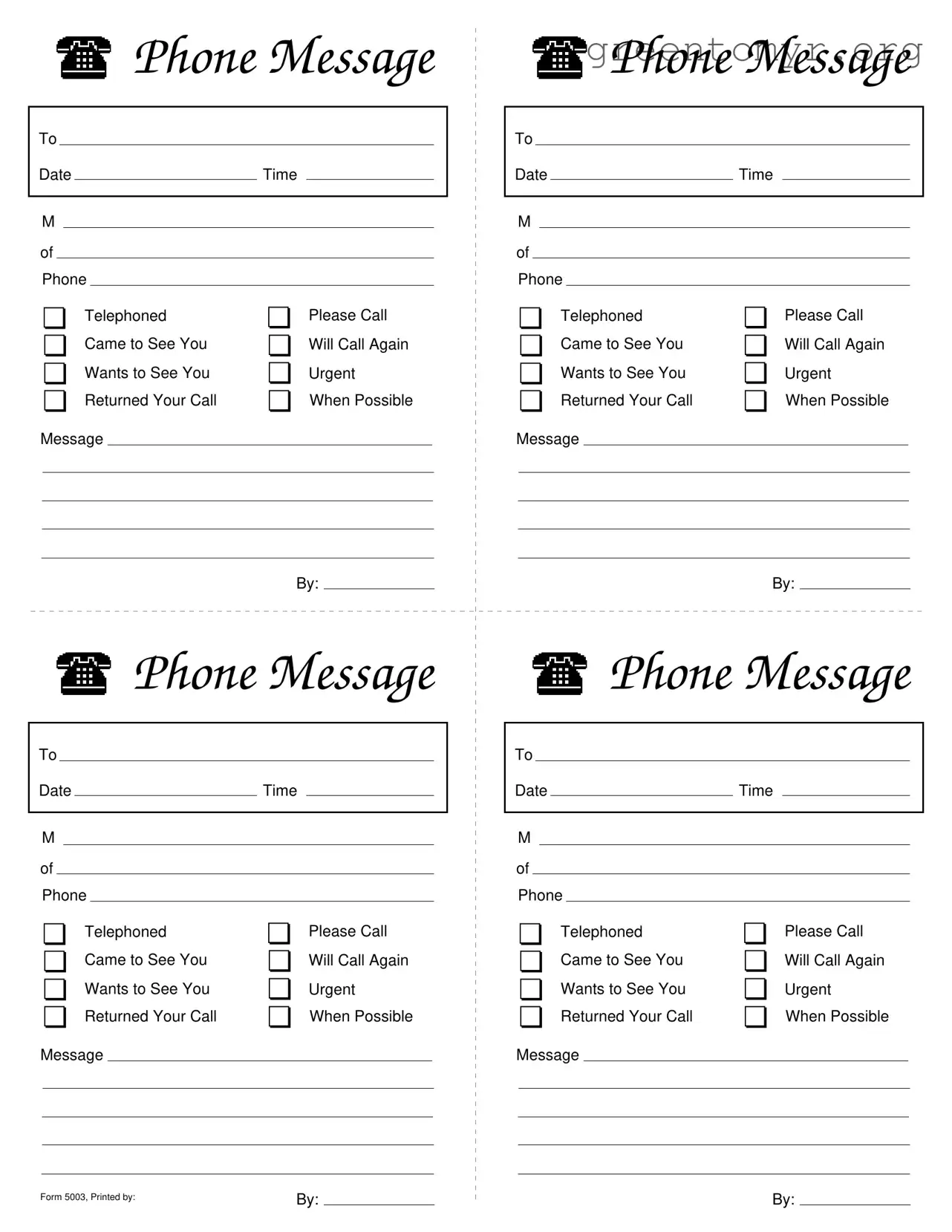
In the fast-paced environment of a legal office, effective communication is essential, and the Phone Message Slips form plays a crucial role in ensuring that important messages are conveyed accurately and promptly. This form is designed to capture vital details about phone interactions, allowing staff to document who called, the purpose of the call, and any urgent requests that may require immediate attention. Each slip includes sections for the date, time, and the method of communication, providing a clear record for future reference. Options such as "Telephoned," "Please Call," and "Urgent" help categorize the nature of the message, ensuring that nothing falls through the cracks. Additionally, the form allows for personalized notes, enabling staff to relay specific information or instructions. With its structured layout, the Phone Message Slips form not only enhances organization but also fosters a culture of accountability within the office, making it an indispensable tool for maintaining effective communication in a busy legal setting.
|
|
|
|
|
Phone Message |
||||
|
|
|
|
|
|
|
|
|
|
To |
|
|
|
|
|
||||
Date |
|
|
Time |
|
|
|
|||
|
|
|
|
|
|
|
|
|
|
M |
|
|
|
|
|
||||
of |
|
|
|
|
|
||||
Phone |
|
|
|
|
|
||||
❏ Telephoned |
❏ Please Call |
||||||||
❏ Came to See You |
❏ Will Call Again |
||||||||
❏ Wants to See You |
❏ Urgent |
||||||||
❏ Returned Your Call |
❏ When Possible |
||||||||
Message
|
|
|
|
|
|
By: |
|
|
|
|
|
|
|
|
|
Phone Message |
|
||||
|
|
|
|
|
|
|
|
|
|
|
To |
|
|
|
|
|
|
||||
Date |
|
|
Time |
|
|
|
||||
|
|
|
|
|
|
|
|
|
|
|
M |
|
|
|
|
|
|
||||
of |
|
|
|
|
|
|
||||
Phone |
|
|
|
|
|
|
||||
❏ Telephoned |
❏ Please Call |
|
||||||||
❏ Came to See You |
❏ Will Call Again |
|
||||||||
❏ Wants to See You |
❏ Urgent |
|
||||||||
❏ Returned Your Call |
❏ When Possible |
|
||||||||
Message
|
|
|
|
|
Phone Message |
||||
|
|
|
|
|
|
|
|
|
|
To |
|
|
|
|
|
||||
Date |
|
|
Time |
|
|
|
|||
|
|
|
|
|
|
|
|
|
|
M |
|
|
|
|
|
||||
of |
|
|
|
|
|
|
|||
Phone |
|
|
|
|
|
||||
❏ Telephoned |
❏ Please Call |
||||||||
❏ Came to See You |
❏ Will Call Again |
||||||||
❏ Wants to See You |
❏ Urgent |
||||||||
❏ Returned Your Call |
❏ When Possible |
||||||||
Message
|
|
|
|
|
|
By: |
|
|
|
|
|
|
|
|
|
Phone Message |
|
||||
|
|
|
|
|
|
|
|
|
|
|
To |
|
|
|
|
|
|
||||
Date |
|
|
Time |
|
|
|
||||
|
|
|
|
|
|
|
|
|
|
|
M |
|
|
|
|
|
|
||||
of |
|
|
|
|
|
|
||||
Phone |
|
|
|
|
|
|
||||
❏ Telephoned |
❏ Please Call |
|
||||||||
❏ Came to See You |
❏ Will Call Again |
|
||||||||
❏ Wants to See You |
❏ Urgent |
|
||||||||
❏ Returned Your Call |
❏ When Possible |
|
||||||||
Message
Form 5003, Printed by: |
By: |
|
By: |
|
|
|
| Fact Name | Details |
|---|---|
| Purpose | The Phone Message Slips form is designed to record and communicate phone messages effectively. |
| Format | The form includes fields for the date, time, and method of contact, ensuring all necessary information is captured. |
| Contact Methods | Options provided include telephoned, please call, came to see you, and will call again, among others. |
| Urgency Indicator | An urgent option allows the message recipient to prioritize their response appropriately. |
| Message Origin | The form includes a section to note who the message is from, ensuring clarity in communication. |
| Form Number | This specific form is identified as Form 5003, which helps in organizing and referencing it accurately. |
| Reusability | Multiple copies of the form can be printed, making it easy to have on hand for various situations. |
| State-Specific Regulations | In some states, such as California, the use of phone message slips may be governed by specific business communication laws. |
| Accessibility | The form is designed to be user-friendly, ensuring that anyone can fill it out without difficulty. |
| Record Keeping | Using this form can aid in maintaining accurate records of communications, which is important for accountability. |
Filling out the Phone Message Slips form is straightforward. Each section is designed to capture essential information about the call or visit. Follow these steps to ensure all necessary details are recorded accurately.
The Phone Message Slips form is designed to help you document important communications. It allows you to record details about phone calls, visits, and messages from clients or colleagues. This ensures that nothing falls through the cracks and that you can follow up appropriately. Keeping accurate records is essential for effective communication and helps maintain professionalism.
When completing the Phone Message Slips form, you will need to provide the following information:
By filling out this information, you create a clear record of communications that can be referenced later.
Urgent messages should be prioritized immediately. If you mark a message as urgent, take action as soon as possible. This may involve returning a phone call or addressing a client's needs directly. It’s crucial to ensure that urgent matters are resolved quickly to maintain trust and satisfaction.
Yes, the form can be used for multiple messages. However, it is best to keep each message distinct and clear. If you have several messages to record, consider using a new form for each one. This helps avoid confusion and ensures that each communication is documented properly. Keeping organized records is vital for effective follow-up.
Filling out a Phone Message Slips form may seem straightforward, but there are common mistakes that can lead to confusion or miscommunication. One frequent error is neglecting to include the date and time of the call or visit. Without this information, it becomes challenging for the recipient to understand the urgency or context of the message.
Another common mistake is failing to clearly identify the person the message is for. If the recipient's name is not specified, the message may be misdirected or overlooked entirely. It is essential to ensure that the intended recipient is clearly marked to avoid any misunderstandings.
People often forget to check the appropriate box indicating the nature of the contact. Whether it was a phone call, a visit, or a request for a call back, this detail helps in prioritizing the message. Omitting this information can lead to delays in response or action.
In addition, some individuals may write vague or incomplete messages. A message should be concise yet informative. Providing clear details about the purpose of the call or visit is crucial. Ambiguity can lead to confusion and may require follow-up communication to clarify.
Another mistake is using unclear handwriting. If the message is difficult to read, it can result in misinterpretation of important details. Taking the time to write legibly can prevent unnecessary issues and ensure that the message is understood correctly.
Moreover, people sometimes forget to include their own name in the message by section. This omission can leave the recipient unsure about who to contact for further information. Including your name fosters better communication and accountability.
Some may also overlook the importance of marking a message as urgent when necessary. If a situation requires immediate attention, failing to indicate urgency can result in delays that could have been avoided.
Lastly, failing to double-check the completed form can lead to several of these mistakes going unnoticed. A quick review before submission can catch errors and ensure that all necessary information is included. Taking this small step can significantly enhance the clarity and effectiveness of the communication.
When managing communications in a professional setting, several documents complement the Phone Message Slips form. Each of these forms serves a unique purpose, streamlining communication and ensuring that important information is recorded and shared effectively.
Utilizing these documents alongside the Phone Message Slips form can significantly enhance communication efficiency. By keeping accurate records and ensuring that everyone is informed, organizations can foster a more organized and productive work environment.
The Phone Message Slips form is a useful tool for recording important communications. Here are seven other documents that are similar in purpose and function:
When filling out the Phone Message Slips form, there are important practices to follow. Here are four things you should and shouldn't do:
Misconceptions about the Phone Message Slips form can lead to confusion and miscommunication. Here are four common misunderstandings:
Filling out and using the Phone Message Slips form can streamline communication and ensure important messages are conveyed effectively. Here are key takeaways to consider: