Content Navigation

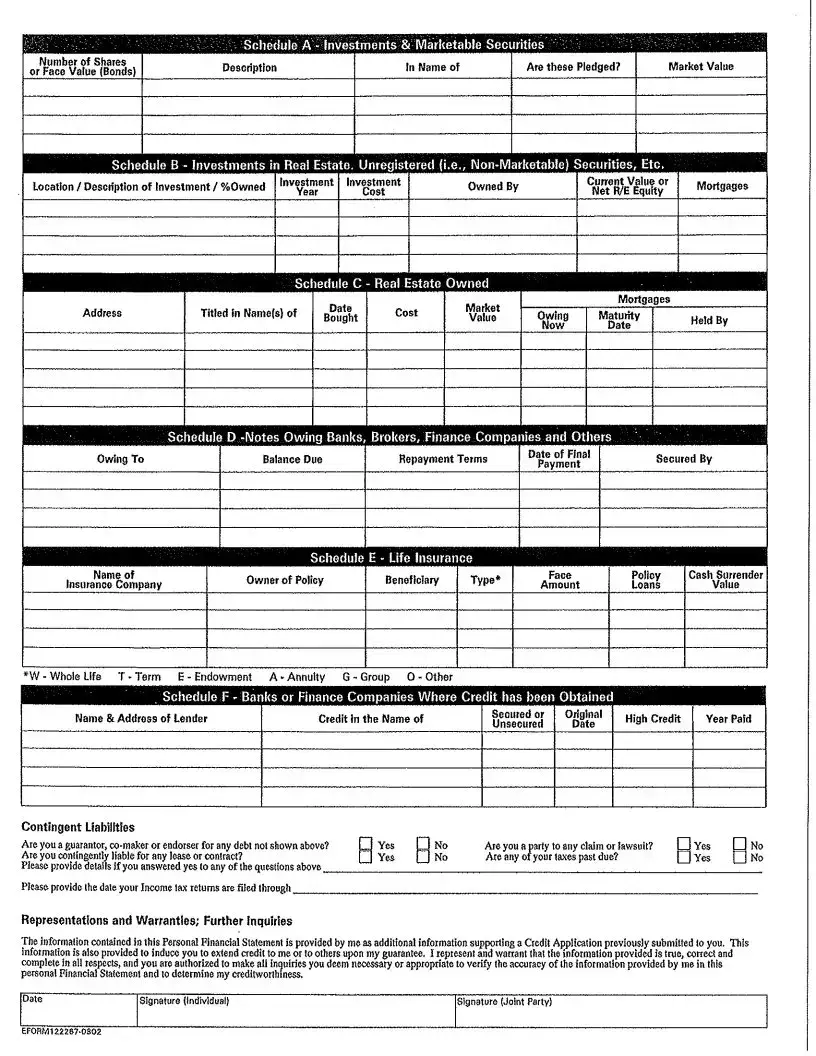
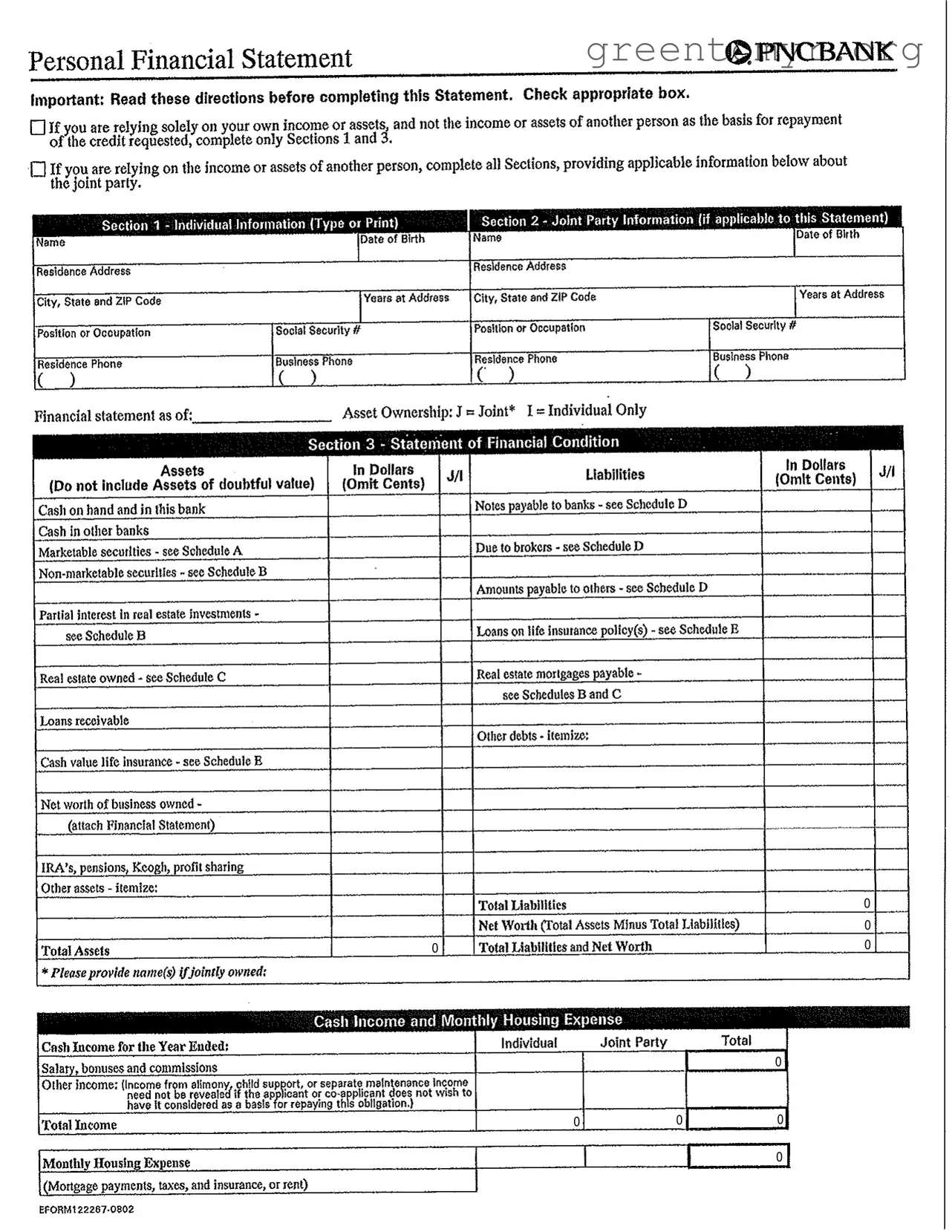
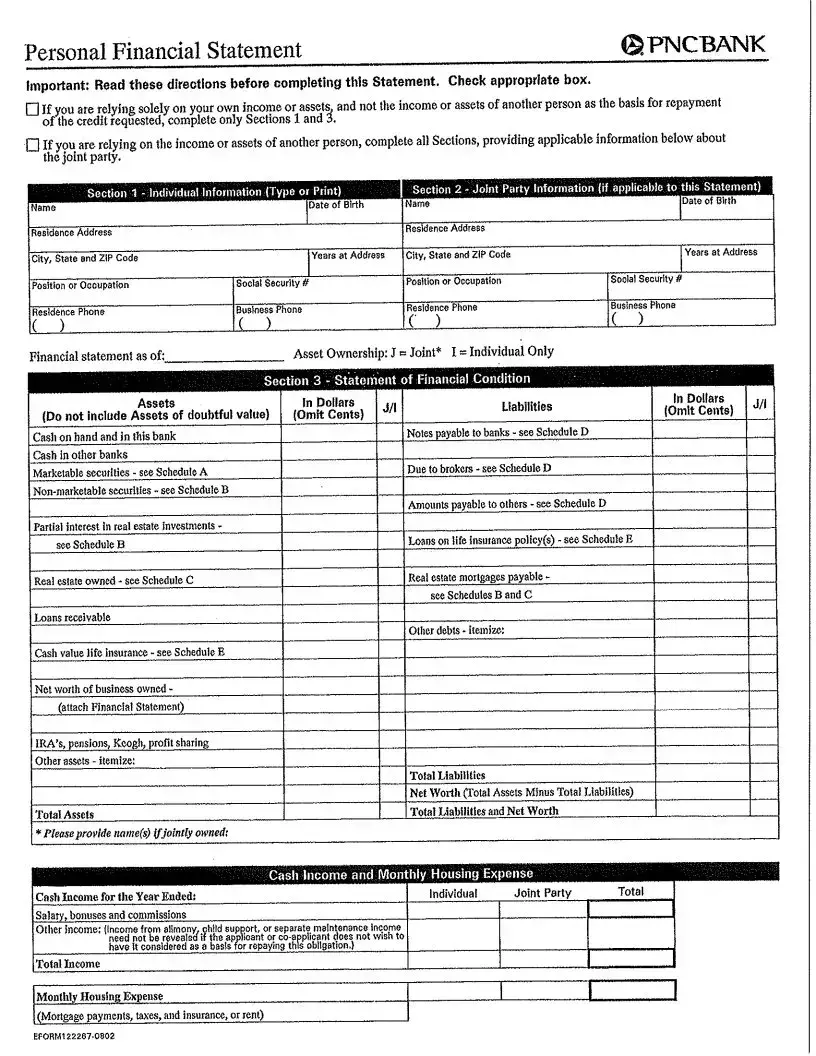
The PNC Bank Statement form serves as a crucial document for individuals seeking to provide a comprehensive overview of their financial status, particularly when applying for credit. This form requires users to check specific boxes based on their financial circumstances, indicating whether they are relying solely on their own income or also on that of another person. It is divided into several sections, including individual information, joint party information, and a detailed statement of financial condition. Users must list their assets and liabilities, ensuring that all figures are accurate and complete. Additionally, the form includes schedules for various investments, real estate, and outstanding debts, which provide a clearer picture of one’s financial health. The final sections address contingent liabilities and any ongoing legal matters, ensuring that the bank has all relevant information to assess creditworthiness. Accurate completion of this form is essential, as it not only supports credit applications but also serves as a declaration of the truthfulness of the provided information.
Pnc Bank Statement Example

0

0

0

0

0

0

0

0

0

File Breakdown

Fact Name Description
Purpose The PNC Bank Statement form is used to provide a detailed overview of an individual's financial condition.
Sections The form consists of three main sections: Individual Information, Joint Party Information (if applicable), and Statement of Financial Condition.
Asset and Liability Reporting Users must report both assets and liabilities, ensuring that assets of doubtful value are not included.
Income Disclosure Applicants must disclose their income, including salary, bonuses, and any other sources, while optional income types can be excluded.
Joint Party Information If relying on another person's income or assets, complete all sections and provide details about the joint party.
Schedule Requirements Various schedules (A to E) are included for detailed reporting of investments, real estate, notes owing, and life insurance.
Verification The information provided is subject to verification by PNC Bank to assess creditworthiness.
Governing Law This form is governed by the laws of the state where the application is submitted, typically the state of residence of the applicant.
Signature Requirement The form must be signed by both the individual and any joint party to validate the information provided.
Confidentiality All information submitted is treated as confidential and used solely for credit evaluation purposes.

Guide to Using Pnc Bank Statement

Completing the PNC Bank Statement form is a straightforward process. It requires personal and financial information that will help in assessing creditworthiness. Gather all necessary documents and information before you start. This will make the process smoother and ensure accuracy.

  1. Begin by checking the appropriate box at the top of the form to indicate whether you are relying solely on your own income or assets or if you are including another person's information.
  2. Fill out Section 1 with your individual information. Include your name, residence address, city, state, ZIP code, position or occupation, residence phone number, and date of birth.
  3. If applicable, complete Section 2 with the joint party's information. Provide their name, residence address, city, state, ZIP code, position or occupation, residence phone number, date of birth, and years at the address.
  4. In Section 3, list your assets and liabilities in dollars. Be sure to omit cents. Include cash on hand, bank accounts, marketable securities, real estate, and any other assets you own. Also, list any debts, such as loans and mortgages.
  5. Calculate your total assets and total liabilities. Subtract total liabilities from total assets to determine your net worth.
  6. Report your cash income for the year, including salary, bonuses, and any other income sources. Provide this information for both yourself and the joint party, if applicable.
  7. Detail your monthly housing expenses, including mortgage payments, taxes, insurance, or rent.
  8. Complete the schedules for investments, real estate owned, notes owing, and life insurance as required. Ensure all information is accurate and complete.
  9. Answer the questions regarding contingent liabilities, claims, lawsuits, and any past-due taxes. If applicable, provide details for any affirmative answers.
  10. Finally, sign and date the form, confirming that the information provided is true and complete.

Get Answers on Pnc Bank Statement

What is the purpose of the PNC Bank Statement form?

The PNC Bank Statement form is used to provide a detailed overview of an individual's financial situation. This includes assets, liabilities, and income. It is often required when applying for credit, as it helps the bank assess the applicant's creditworthiness. By filling out this form, individuals can present a comprehensive picture of their financial status, which can aid in the approval process for loans or credit lines.

Who should complete the form?

Individuals applying for credit are required to complete the form. If the applicant is relying solely on their own income and assets, they should fill out only Sections 1 and 3. However, if they are considering the income or assets of another person, such as a spouse or partner, all sections must be completed. This ensures that the bank has all relevant information for both parties, which can be crucial in evaluating the application.

What information is needed to complete the form?

To complete the PNC Bank Statement form, the following information is typically required:

  • Personal details such as name, address, and contact information.
  • Financial information, including assets like cash, investments, and real estate.
  • Liabilities, which encompass any debts or loans.
  • Income details, including salary and any other sources of income.

Additionally, if applicable, information about a joint party's financial situation must also be included. It is important to provide accurate and complete information to avoid delays in the application process.

How is the information on the form verified?

The information provided on the PNC Bank Statement form is subject to verification by the bank. The bank may conduct inquiries to confirm the accuracy of the details submitted. This could include checking credit reports, contacting employers, or reviewing financial documents. It is essential for applicants to ensure that all information is truthful and complete, as discrepancies may affect their credit application negatively.

Common mistakes

Filling out the PNC Bank Statement form can be a straightforward task, but many individuals make common mistakes that can lead to delays or complications in the credit application process. One significant error is failing to read the instructions thoroughly. The form clearly states the requirements for completing sections based on whether you are relying solely on your income or also on another person's assets. Ignoring this guidance can result in incomplete submissions.

Another frequent mistake is not providing accurate or complete personal information. This includes details such as your residence address, social security number, and contact information. If any of these details are incorrect or missing, it can hinder the bank’s ability to process your application effectively. Double-checking this information before submission is crucial.

Many applicants also overlook the importance of itemizing assets and liabilities correctly. The form requests specific financial details, and omitting or inaccurately reporting these figures can lead to misunderstandings regarding your financial condition. It’s essential to provide a comprehensive overview of your financial situation, including all sources of income and outstanding debts.

Lastly, individuals often forget to sign and date the form. A missing signature can render the entire application invalid, causing unnecessary delays. Ensure that both the individual and any joint party sign the document where indicated. Taking the time to review these common pitfalls can make the process smoother and increase the likelihood of a successful credit application.

Documents used along the form

When preparing to submit a PNC Bank Statement form, you may also need several other documents to provide a complete financial picture. Each of these documents plays a crucial role in assessing your financial situation and creditworthiness. Here’s a list of commonly used forms that complement the PNC Bank Statement form.

  • Personal Financial Statement: This document outlines your financial position, including assets, liabilities, and net worth. It provides a snapshot of your overall financial health.
  • Tax Returns: Recent tax returns are often required to verify income and financial stability. They give lenders insight into your earnings and tax obligations.
  • Income Verification Form: This form confirms your current income sources, such as salary, bonuses, or other earnings. It helps lenders assess your ability to repay loans.
  • Credit Report: A credit report provides a detailed account of your credit history, including outstanding debts and payment history. Lenders use this to evaluate your creditworthiness.
  • Debt Schedule: This document lists all your current debts, including loans and credit card balances. It helps lenders understand your existing financial obligations.
  • Asset Documentation: Supporting documents for your assets, such as property deeds or investment statements, are essential for verifying ownership and value.
  • Loan Application: This form collects essential information about the loan you are seeking, including the amount and purpose. It is a key part of the lending process.
  • Employment Verification Letter: A letter from your employer confirming your position and salary can strengthen your application by validating your income.
  • Business Financial Statements (if applicable): If you own a business, providing its financial statements can demonstrate your income and financial stability.

Gathering these documents can streamline the application process and enhance your chances of securing the credit you need. Each form provides valuable information that lenders consider when making their decisions.

Similar forms

  • Personal Financial Statement: Similar to the PNC Bank Statement, this document provides a comprehensive overview of an individual's financial situation, including assets, liabilities, and income sources.
  • Credit Application: Like the PNC Bank Statement, this form requests detailed financial information to assess creditworthiness and eligibility for loans or credit lines.
  • Loan Agreement: This document outlines the terms of a loan, including repayment schedules and interest rates, similar to how the PNC Bank Statement details financial obligations.
  • Tax Return: A tax return provides a snapshot of an individual's income and financial status, paralleling the financial disclosures found in the PNC Bank Statement.
  • Net Worth Statement: This document calculates an individual's net worth by listing assets and liabilities, much like the PNC Bank Statement does.
  • Asset Inventory: An asset inventory details an individual's possessions and their values, similar to the asset section in the PNC Bank Statement.
  • Balance Sheet: A balance sheet summarizes assets, liabilities, and equity at a specific point in time, reflecting the financial condition outlined in the PNC Bank Statement.

Dos and Don'ts

When filling out the PNC Bank Statement form, there are important guidelines to follow to ensure accuracy and completeness. Below are four key do's and don'ts to consider.

  • Do check the appropriate box at the beginning of the form to indicate whether you are relying solely on your own income or assets or if you are including another person's information.
  • Do provide accurate and complete information in all relevant sections, especially in Sections 1 and 2, if applicable.
  • Don't leave any sections blank. Each section should be filled out to avoid delays in processing your application.
  • Don't include assets of doubtful value in the financial condition statement. Only list items that have clear value.

Misconceptions

Here are four common misconceptions about the PNC Bank Statement form:

  • Only one section needs to be completed. Many believe they only need to fill out one section of the form. However, if you are relying on another person's income or assets, you must complete all sections, including the joint party information.
  • All assets must be listed. Some think they need to include every asset they own. In reality, you should only list assets that are not of doubtful value. This helps keep the information clear and relevant.
  • Income from all sources must be disclosed. It is a common belief that all income must be reported. In fact, you do not have to reveal certain types of income, such as alimony or child support, if you don’t want them considered for repayment purposes.
  • Net worth is simply total assets minus total liabilities. While this is the basic calculation, it’s important to understand that the form requires specific details about each asset and liability. This ensures a comprehensive view of your financial condition.

Key takeaways

When filling out the PNC Bank Statement form, consider the following key takeaways:

  • Understand the Purpose: This form is used to assess financial conditions for credit applications.
  • Complete Relevant Sections: Fill out only Sections 1 and 3 if relying solely on personal income or assets.
  • Joint Applications: If relying on another person's income or assets, complete all sections and include their information.
  • Accurate Information: Ensure that all details provided are true and complete to avoid issues with credit approval.
  • Asset and Liability Reporting: List all assets and liabilities accurately, omitting cents, to reflect your financial condition.
  • Use Schedules Appropriately: Refer to the schedules for detailed information on investments, real estate, and loans.
  • Monthly Income and Expenses: Report total income and monthly housing expenses to give a clear picture of financial health.
  • Contingent Liabilities: Disclose any potential debts or liabilities, such as co-signing loans or being involved in lawsuits.
  • Signature Requirement: Sign and date the form to validate the information and authorize credit inquiries.