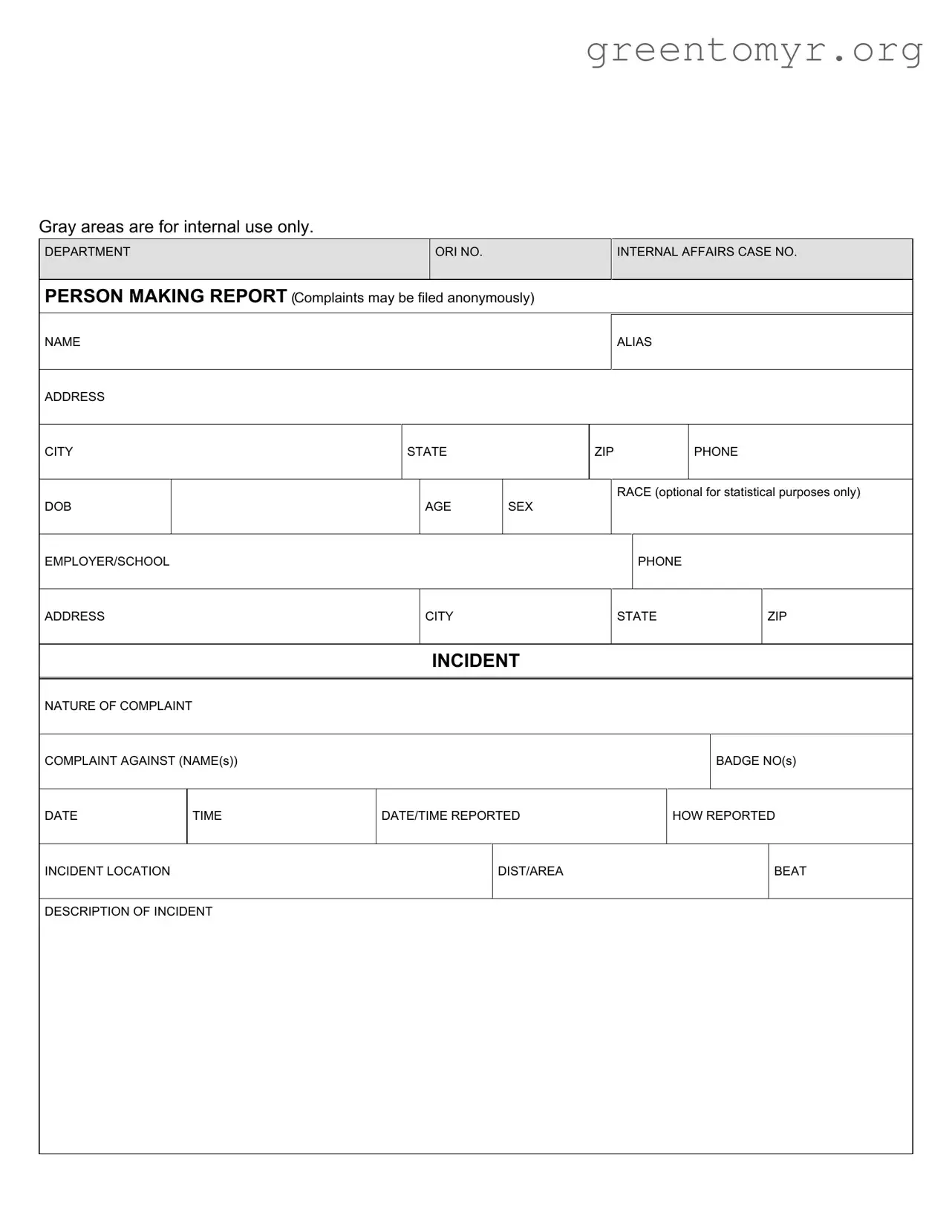
The Police Report form serves as a crucial tool for documenting incidents involving law enforcement, ensuring that complaints and reports are handled systematically and transparently. Within this form, individuals can provide essential information regarding their complaint, including their name, address, and contact details, although anonymity is an option for those who prefer it. It also captures the specifics of the incident, such as the nature of the complaint, the individuals involved, and any injuries sustained. Key fields include the date and time of the incident, the location, and how the report was made. Additionally, the form allows for the inclusion of medical treatment details, should injuries be present, along with space for comments from both the complainant and the reviewing officer. By requiring the signature of the complainant and the reviewing officer, the form ensures accountability and traceability throughout the complaint process. Overall, the Police Report form is designed to facilitate a thorough investigation while respecting the rights and privacy of those involved.

Gray areas are for internal use only.
DEPARTMENT
ORI NO.
INTERNAL AFFAIRS CASE NO.
PERSON MAKING REPORT (Complaints may be filed anonymously)
NAME
ALIAS
ADDRESS
CITY
DOB
STATE |
|
ZIP |
|
PHONE |
||
|
|
|
|
|
|
|
|
|
|
|
|
RACE (optional for statistical purposes only) |
|
|
AGE |
SEX |
|
|
|
|
|
|
|
|
|
|
|
EMPLOYER/SCHOOL
PHONE
ADDRESS
CITY
STATE
ZIP
INCIDENT
NATURE OF COMPLAINT
COMPLAINT AGAINST (NAME(s))
BADGE NO(s)
DATE
TIME
DATE/TIME REPORTED
HOW REPORTED
INCIDENT LOCATION |
DIST/AREA |
BEAT |
|
|
|
DESCRIPTION OF INCIDENT |
|
|

DESCRIPTION OF ANY INJURIES
PLACE OF |
DOCTOR’S |
DATE OF |
|
TREATMENT |
NAME |
TREATMENT |
|
|
|
|
|
SIGNATURE OF COMPLAINANT (Optional) |
|
|
DATE |
|
|
|
|
COMMENTS |
|
|
|
SIGNATURE
BADGE NO.
DATE RECEIVED
| Fact Name | Details |
|---|---|
| Form Title | Hanover Township Police Department Internal Affairs Complaint/Report Form |
| Applicable Jurisdiction | This form is applicable for any law enforcement agency in Morris County, including the Morris County Prosecutor’s Office. |
| Anonymous Reporting | Complaints may be filed anonymously, allowing individuals to report without disclosing their identity. |
| Information Fields | The form includes fields for personal information, incident details, and descriptions of the complaint. |
| Optional Demographics | Race is collected for statistical purposes only and is optional for the complainant. |
| Incident Reporting | Details such as the nature of the complaint, date, and time of the incident must be provided. |
| Injury Documentation | Complainants are required to describe any injuries and provide information about medical treatment received. |
| Signature Requirement | The complainant may sign the form, but this is optional. A signature from the receiving officer is also required. |
| Governing Law | The use of this form is governed by New Jersey state laws regarding police conduct and internal affairs investigations. |
Completing the Police Report form is a straightforward process that requires accurate information. This form is essential for documenting incidents and complaints. After filling it out, you will submit it to the appropriate authorities for review and action.
The Police Report form is designed to facilitate the filing of complaints or reports regarding any incidents involving law enforcement agencies in Morris County. It allows individuals to document their experiences and concerns, ensuring that their voices are heard. This form can be submitted anonymously if desired, providing a level of comfort for those who may be hesitant to come forward.
Anyone who has witnessed or experienced an incident involving law enforcement can file a complaint using this form. This includes members of the public, as well as individuals who may be involved in a specific incident. The form is accessible to all, and anonymity is an option for those who prefer it.
To complete the Police Report form, the following information is typically required:
Providing as much detail as possible will help ensure that your report is taken seriously and investigated thoroughly.
Yes, you can submit the Police Report form anonymously. There is a section for your name and contact details, but it is not mandatory. If you choose to remain anonymous, your complaint will still be recorded and investigated to the best of the department's ability.
Once your complaint is submitted, it will be reviewed by the Internal Affairs division. They will assess the details provided and determine the appropriate course of action. You may not receive immediate feedback, especially if you submitted the form anonymously, but rest assured that all complaints are taken seriously and investigated accordingly.
If you require assistance while completing the Police Report form, you can reach out to a trusted friend, family member, or an advocacy organization. Additionally, the police department may have personnel available to help guide you through the process. It’s important that you feel comfortable and supported while filing your report.
While there is no strict deadline for submitting the Police Report form, it is advisable to file your complaint as soon as possible after the incident occurs. Prompt reporting can help ensure that evidence is fresh and witnesses are available. If you have any concerns about timing, it is best to reach out to the department directly for guidance.
Filling out a Police Report form can seem straightforward, but many individuals make common mistakes that can hinder the process. One frequent error is failing to provide complete personal information. When individuals leave out crucial details such as their full name or address, it complicates the investigation. Law enforcement needs accurate data to follow up effectively.
Another mistake is neglecting to specify the nature of the complaint clearly. A vague description can lead to misunderstandings and misinterpretations. Providing a detailed account helps officers grasp the situation better and take appropriate action.
Many people also overlook the importance of including the date and time of the incident. This information is vital for establishing a timeline. Without it, officers may struggle to connect the dots or investigate other related incidents that may have occurred around the same time.
Some individuals fail to indicate how the incident was reported. Whether it was done in person, over the phone, or through another method, this detail can assist in tracking the case. It also provides context for how the police first became aware of the issue.
Additionally, people often forget to provide a thorough description of the incident. A lack of detail can lead to confusion and may prevent the police from fully understanding the circumstances. Describing what happened, who was involved, and any relevant actions taken can significantly enhance the report's effectiveness.
Another common oversight is not documenting any injuries sustained during the incident. If injuries occurred, detailing them is crucial. This information can impact the investigation and any potential legal proceedings that follow.
Some report filers fail to include the location of the incident accurately. The specific address or area is essential for police to respond appropriately and gather evidence. Without this information, valuable time may be wasted in locating the scene.
Individuals sometimes neglect to sign the report, even if the signature is optional. While it may seem trivial, a signature can lend credibility to the report. It indicates that the complainant stands by their account and is willing to cooperate with any follow-up.
Another error is providing incomplete or incorrect contact information. If the police cannot reach the complainant for further questions or clarification, it can stall the investigation. Ensuring that phone numbers and addresses are accurate is vital for effective communication.
Lastly, people may forget to review their report before submission. Taking a moment to check for errors or omissions can make a significant difference. A well-prepared report can expedite the investigation process and help law enforcement address the complaint more efficiently.
When filing a Police Report, several other forms and documents may be required to provide a comprehensive account of the incident. Each of these documents serves a specific purpose and helps ensure that all relevant information is captured accurately. Here are four commonly used forms alongside the Police Report form:
Each of these forms plays a crucial role in the investigative process. By ensuring that all necessary information is gathered, law enforcement can build a stronger case and provide the necessary support to those affected by the incident.
The Police Report form serves a specific purpose in documenting incidents and complaints related to law enforcement. Several other documents share similarities with the Police Report form in terms of structure, purpose, and information collected. Below is a list of ten such documents:
When filling out the Police Report form, keep these tips in mind:
Understanding the Police Report form is crucial for anyone involved in filing a complaint or report. However, several misconceptions can cloud this understanding. Here are four common misconceptions:
By dispelling these misconceptions, individuals can better navigate the process of reporting incidents and contribute to community safety and accountability.
When filling out the Police Report form, it's important to keep a few key points in mind. Here are some takeaways to help you navigate the process:
Using these guidelines can make the process smoother and more effective. Remember, your voice matters.