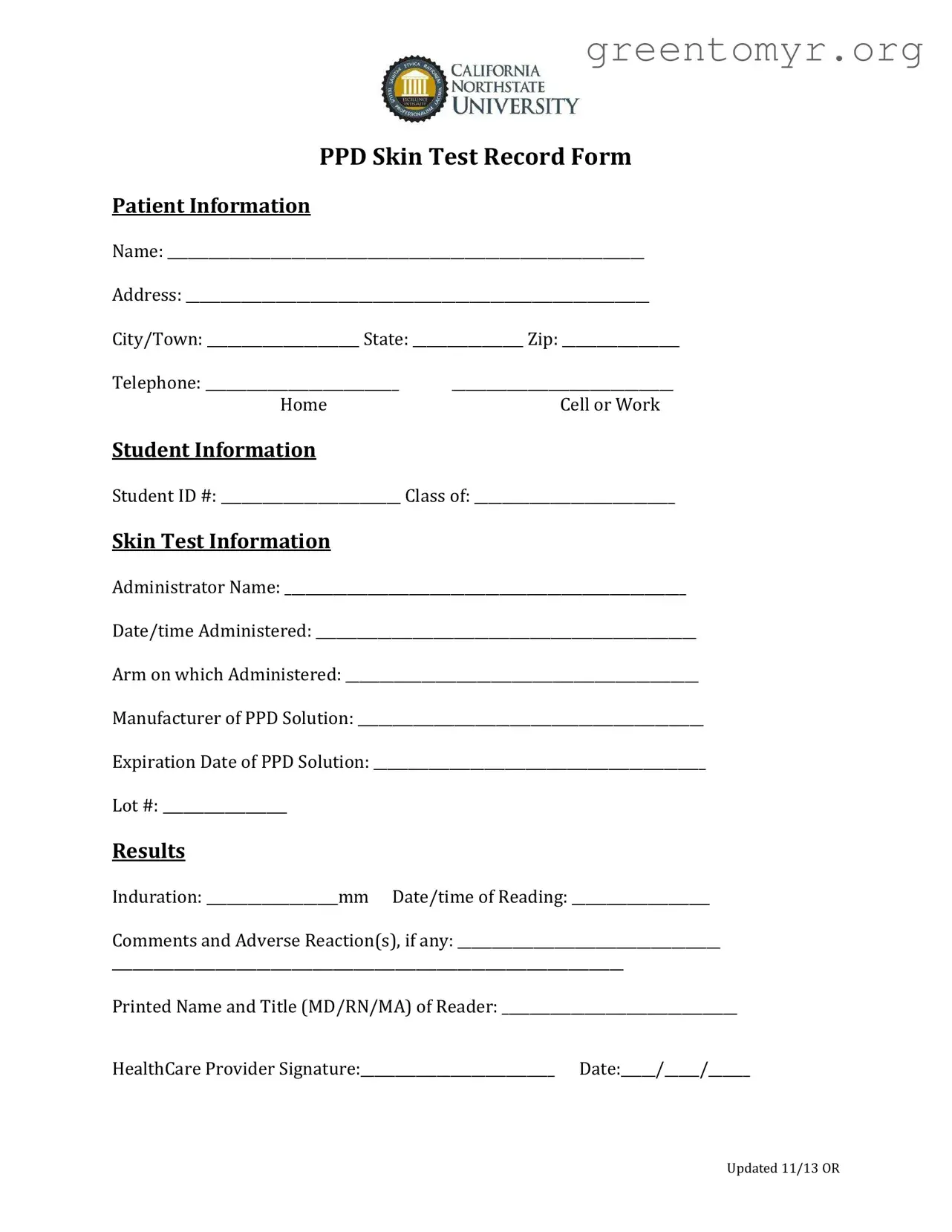
The PPD Skin Test form serves as a critical tool in the assessment of tuberculosis exposure. It captures essential patient information, including the individual's name, address, and contact details, ensuring accurate identification and follow-up. For students, the form also includes a section for Student ID and class year, linking test results to academic records. The skin test information section records the administrator's name, the date and time the test was administered, and specific details about the PPD solution used, such as the manufacturer, expiration date, and lot number. This information is vital for maintaining the integrity of the test and ensuring that the correct procedures are followed. Results are documented clearly, with a focus on the measurement of induration, the date and time of reading, and any comments or adverse reactions noted by the healthcare provider. Finally, the form requires the printed name and title of the reader, along with their signature, to authenticate the results and provide a clear chain of accountability. Each of these components plays a significant role in the overall effectiveness and reliability of the PPD skin testing process.

PPD SKIN TEST RECORD FORM
PATIENT INFORMATION
Name: _____________________________________________________________________
Address: ___________________________________________________________________
City/Town: ______________________ State: ________________ Zip: _________________
Telephone: ____________________________ |
________________________________ |
Home |
Cell or Work |
STUDENT INFORMATION
Student ID #: __________________________ Class of: _____________________________
SKIN TEST INFORMATION
Administrator Name: __________________________________________________________
Date/time Administered: _______________________________________________________
Arm on which Administered: ___________________________________________________
Manufacturer of PPD Solution: __________________________________________________
Expiration Date of PPD Solution: ________________________________________________
Lot #: __________________
RESULTS
Induration: ___________________mm Date/time of Reading: ____________________
Comments and Adverse Reaction(s), if any: ______________________________________
__________________________________________________________________________
Printed Name and Title (MD/RN/MA) of Reader: __________________________________
HealthCare Provider Signature:____________________________ Date:_____/_____/______
Updated 11/13 OR
| Fact Name | Description |
|---|---|
| Patient Information | This section requires the patient's name, address, city or town, state, zip code, and telephone numbers. Accurate information is essential for proper record-keeping and follow-up. |
| Student Information | For students, this section includes the student ID number and class year. This helps in identifying the individual within educational institutions, particularly in health-related programs. |
| Skin Test Administration | Details such as the administrator's name, date and time of administration, and specifics about the PPD solution, including the manufacturer, expiration date, and lot number, are recorded. This information ensures traceability and accountability in the testing process. |
| Results and Reader Information | The results section captures the induration measurement, date and time of reading, any comments or adverse reactions, and the printed name and title of the reader. A healthcare provider's signature is also required to validate the results. This section is critical for interpreting the test outcome and determining further action. |
After completing the PPD Skin Test form, the next steps involve submitting the form to the appropriate healthcare provider or institution. They will review the information and conduct the necessary assessments based on the results documented in the form.
A PPD skin test, also known as a tuberculin skin test, is a method used to determine if someone has been exposed to the bacteria that causes tuberculosis (TB). A small amount of PPD (purified protein derivative) is injected into the skin, usually on the forearm. After 48 to 72 hours, the injection site is examined for a reaction.
This test is crucial for identifying individuals who may have been infected with TB, even if they do not show symptoms. Early detection can lead to prompt treatment, which is vital for preventing the spread of TB to others.
The test is administered by a qualified healthcare professional. They will inject a small amount of PPD solution just beneath the skin's surface. After the injection, it is important to avoid scratching or covering the area to ensure accurate results.
After the test, you may not experience any immediate symptoms. However, it is essential to return to the healthcare provider within 48 to 72 hours for the reading. The healthcare provider will check for any swelling or induration at the injection site, which indicates a reaction.
Results are measured in millimeters of induration. A positive result typically indicates exposure to TB, while a negative result suggests no exposure. However, interpretation can vary based on individual risk factors, such as recent travel, health conditions, or previous TB vaccinations.
Generally, the PPD skin test is safe. Some individuals may experience mild side effects, such as redness or swelling at the injection site. In rare cases, more severe allergic reactions can occur. If you notice any unusual symptoms, contact your healthcare provider.
If your test result is positive, your healthcare provider will likely recommend further evaluation. This may include a chest X-ray or additional tests to determine if you have active TB disease or if you are simply carrying the bacteria without symptoms.
The frequency of testing depends on your risk factors and exposure to TB. For individuals in high-risk environments, such as healthcare workers or those living in crowded conditions, annual testing may be recommended. Consult your healthcare provider for personalized advice.
When filling out the PPD Skin Test form, individuals often overlook important details that can lead to delays or complications. One common mistake is failing to provide complete patient information. Omitting essential details, such as the patient's name, address, or telephone number, can create confusion and hinder proper communication. Always ensure that this section is filled out thoroughly to avoid any issues.
Another frequent error is neglecting to include the correct student information. For students, the Student ID number and class year are crucial for tracking and verification purposes. If this information is missing or incorrect, it may complicate record-keeping and lead to unnecessary follow-up.
Many people also make the mistake of not recording the administrator's name accurately. This is important not only for accountability but also for any future inquiries regarding the test. Double-check the spelling and ensure that the name is clearly written.
Additionally, some individuals forget to document the date and time when the test was administered. This information is vital for determining the appropriate timeframe for reading the results. Without it, there may be confusion about when to interpret the induration.
When it comes to the skin test information, a common oversight is failing to specify the arm on which the test was administered. This detail is crucial for accurate record-keeping and for any follow-up assessments. Always make sure to indicate this clearly.
Another mistake involves not including the manufacturer and expiration date of the PPD solution. This information is important for ensuring that the test is valid and reliable. If these details are missing, it could raise questions about the test's integrity.
People often overlook the results section, especially when it comes to recording the induration measurement. This value is critical for interpreting the test outcome. If it is left blank or inaccurately filled in, it can lead to misdiagnosis or mismanagement of potential tuberculosis exposure.
Lastly, individuals sometimes forget to have the healthcare provider sign the form. This signature serves as a confirmation of the test results and is necessary for the document to be considered complete. Without it, the form may not be accepted by schools or employers.
The PPD Skin Test is a crucial tool for assessing exposure to tuberculosis. When completing this test, several other forms and documents may be required to ensure comprehensive patient care and accurate record-keeping. Below is a list of common documents that often accompany the PPD Skin Test form, each serving a specific purpose in the process.
These documents collectively enhance the patient experience and ensure that all necessary information is available for effective healthcare delivery. By understanding the importance of each form, patients can feel more at ease during the testing process.
The PPD Skin Test form shares similarities with several other medical documents. Here are five such documents, along with their similarities:
When filling out the PPD Skin Test form, it’s important to ensure accuracy and clarity. Here are some guidelines to follow:
Understanding the PPD Skin Test form is crucial for accurate testing and reporting. Here are 10 common misconceptions about the form:
Being aware of these misconceptions can help ensure proper use and understanding of the PPD Skin Test form.
When it comes to filling out the PPD Skin Test form, there are several essential points to keep in mind. Understanding these key takeaways will help ensure that the process runs smoothly and effectively.
By following these key points, the PPD Skin Test form can be filled out effectively, leading to better patient care and accurate results.