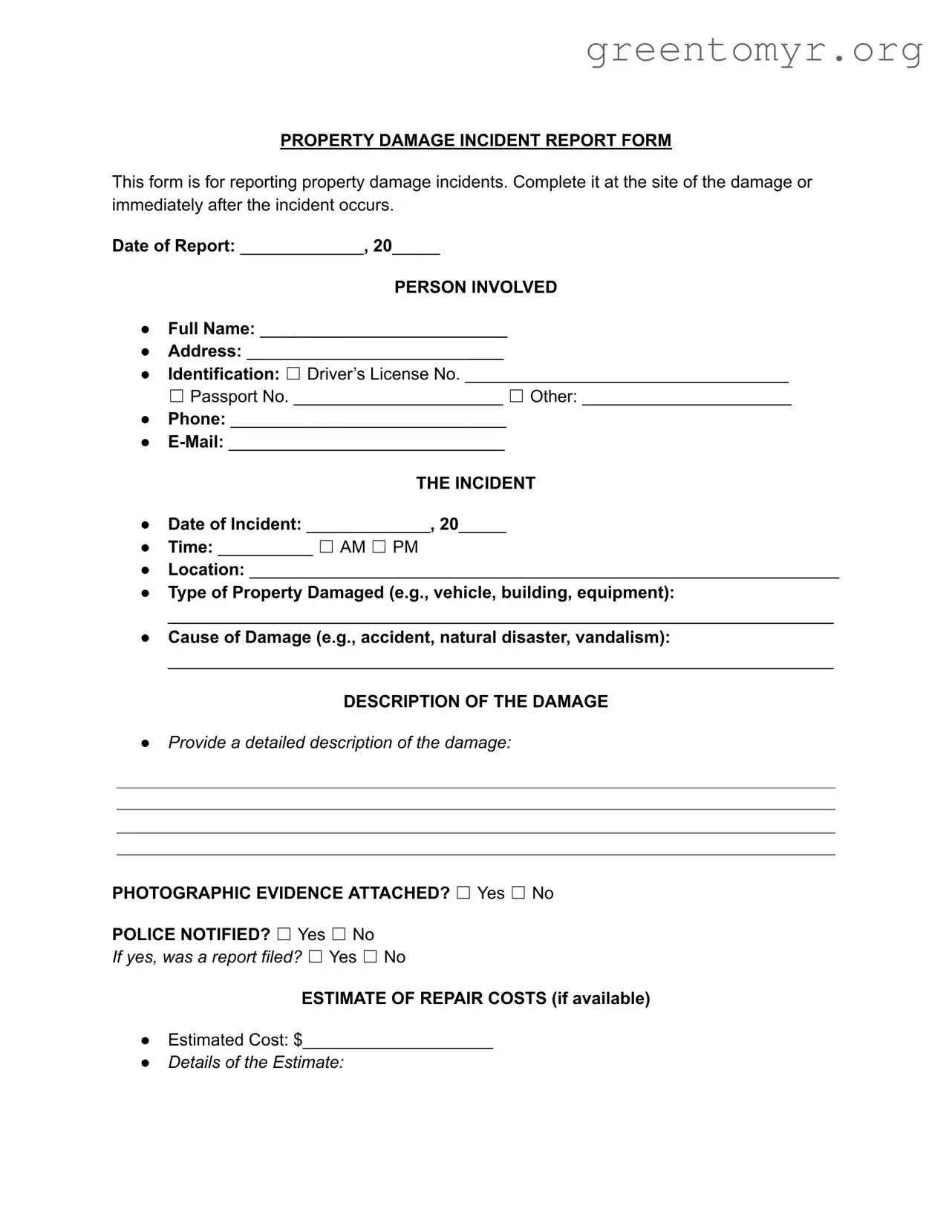
When an unexpected incident causes damage to property, having a clear and organized way to document the event is crucial. The Property Damage Incident Report form serves as an essential tool for individuals and businesses alike, allowing them to capture vital details about the incident. This form typically includes sections for identifying the parties involved, describing the nature of the damage, and noting the circumstances surrounding the event. By providing a structured format, it ensures that all necessary information is collected systematically, which can be invaluable for insurance claims or legal proceedings. Additionally, the form often prompts users to include photographs or diagrams, enhancing the clarity of the report. Understanding how to fill out this form correctly can make a significant difference in the resolution process, whether you are dealing with a minor mishap or a more serious situation.

PROPERTY DAMAGE INCIDENT REPORT FORM
This form is for reporting property damage incidents. Complete it at the site of the damage or immediately after the incident occurs.
Date of Report: _____________, 20_____
PERSON INVOLVED
●Full Name: __________________________
●Address: ___________________________
●Identification: ☐ Driver’s License No. __________________________________
☐ Passport No. ______________________ ☐ Other: ______________________
●Phone: _____________________________
●
THE INCIDENT
●Date of Incident: _____________, 20_____
●Time: __________ ☐ AM ☐ PM
●Location: ______________________________________________________________
●Type of Property Damaged (e.g., vehicle, building, equipment):
______________________________________________________________________
●Cause of Damage (e.g., accident, natural disaster, vandalism):
______________________________________________________________________
DESCRIPTION OF THE DAMAGE
●Provide a detailed description of the damage:
PHOTOGRAPHIC EVIDENCE ATTACHED? ☐ Yes ☐ No
POLICE NOTIFIED? ☐ Yes ☐ No
If yes, was a report filed? ☐ Yes ☐ No
ESTIMATE OF REPAIR COSTS (if available)
●Estimated Cost: $____________________
●Details of the Estimate:

WITNESSES
●Were there witnesses to the incident? ☐ Yes ☐ No
●If yes, enter the witnesses’ names and contact info:
1.Full Name: ________________________
Phone: ___________________________
2.Full Name: ________________________
Phone: ___________________________
3.Full Name: ________________________
Phone: ___________________________
INSURANCE INFORMATION (if applicable)
●Insurance Provider: ________________________
●Policy Number: ___________________________
PERSON FILING REPORT
●Full Name: _____________________________
●Title/Role: ______________________________
●Signature: ______________________________
OFFICE USE ONLY
●Report received by: __________________________
●Date: _____________, 20_____
●
| Fact Name | Description |
|---|---|
| Purpose | The Property Damage Incident Report form is used to document incidents that cause damage to property, ensuring a clear record for insurance and legal purposes. |
| Who Uses It? | This form is typically used by property owners, tenants, or anyone involved in an incident that results in property damage. |
| Governing Law | In many states, the governing law for property damage claims is based on tort law, which varies by state. For example, in California, the relevant statutes can be found in the California Civil Code. |
| Information Required | The form usually requires details such as the date and time of the incident, location, description of the damage, and any involved parties. |
| Submission Process | Once completed, the form may need to be submitted to an insurance company or a local government agency, depending on the nature of the incident. |
| Legal Implications | Filing this report can have legal implications, as it serves as a formal record that may be referenced in future disputes or claims. |
| Deadline | Many states have specific deadlines for submitting property damage reports, which can affect the ability to file a claim. |
| Importance of Accuracy | Accuracy is crucial when filling out the form. Inaccurate or incomplete information can lead to delays or denial of claims. |
| Availability | The form is often available online through state or local government websites, as well as through insurance providers. |
Filling out the Property Damage Incident Report form is straightforward. After completing the form, you will submit it to the relevant party, such as your insurance company or property management. Be sure to keep a copy for your records.
The Property Damage Incident Report form is a document used to record details about an incident that caused damage to property. This form serves as an official record and can be used for insurance claims, legal proceedings, or internal investigations. It captures essential information such as the date, time, location, and nature of the damage, as well as any parties involved.
You should use the Property Damage Incident Report form whenever property damage occurs, whether it’s residential, commercial, or vehicular. It’s particularly important to fill out this form if:
The form should be completed by the person who witnessed the incident or the individual responsible for the property. This could be a property owner, tenant, or employee. If multiple parties are involved, it may be beneficial for each party to submit their own report to ensure all perspectives are documented.
When filling out the Property Damage Incident Report form, you’ll need to include:
Yes, many organizations allow for electronic submissions of the Property Damage Incident Report form. Check with your insurance provider or relevant authority to see if they accept digital forms. Ensure that you keep a copy for your records, regardless of the submission method.
After submitting the Property Damage Incident Report form, the relevant parties will review the information. If an insurance claim is involved, an adjuster may contact you for further details. In legal situations, the report may be used as evidence. Be prepared to answer any follow-up questions and provide additional documentation if necessary.
While there is no universal deadline for submitting a Property Damage Incident Report, it’s best to do so as soon as possible after the incident. Many insurance companies require reports to be filed within a specific timeframe to process claims efficiently. Check with your insurance provider or local regulations to ensure compliance.
When filling out the Property Damage Incident Report form, many individuals make common mistakes that can hinder the processing of their claims. One frequent error is failing to provide complete contact information. It’s essential to include your full name, address, phone number, and email address. Incomplete contact details can lead to delays in communication and resolution.
Another mistake involves not describing the incident in enough detail. People often assume that a brief explanation suffices. However, providing a thorough account of what happened, including the date, time, and location, is crucial. A detailed description helps insurance companies and other parties understand the context and severity of the damage.
Additionally, some individuals neglect to document the damage adequately. Photographs or sketches can be invaluable in illustrating the extent of the property damage. Without visual evidence, it may be challenging for the reviewing party to assess the situation accurately. Taking the time to capture clear images can support your report significantly.
Lastly, overlooking the importance of signatures is a common oversight. Many people forget to sign and date the form, which can render the report invalid. A signature confirms that the information provided is accurate and that the individual submitting the report takes responsibility for its contents. Always double-check that the form is signed before submission.
When dealing with property damage incidents, it's essential to have a comprehensive set of documents to ensure everything is properly recorded and managed. Below is a list of forms and documents that often accompany the Property Damage Incident Report form, each serving a unique purpose in the process.
Having these documents on hand can streamline the process of resolving property damage incidents. Each form plays a vital role in ensuring that all aspects of the situation are thoroughly addressed, leading to a more efficient resolution.
When filling out a Property Damage Incident Report form, it's important to be thorough and accurate. Here are some dos and don'ts to keep in mind:
By following these guidelines, you can ensure that your report is effective and helpful in addressing the property damage issue.
Understanding the Property Damage Incident Report form is crucial for effective communication and resolution of issues. Here are six common misconceptions about this form:
Many believe that the form is only necessary for significant property damage. However, even minor incidents should be reported to maintain accurate records and ensure proper follow-up.
Some individuals think that completing the form is not mandatory. In reality, it is essential for documenting incidents and protecting all parties involved.
There is a misconception that timing does not matter. In fact, submitting the report promptly is vital for accurate recollection of events and for facilitating a swift resolution.
While property owners often complete the form, anyone involved in the incident can provide their account. This helps gather a complete picture of the situation.
Although insurance companies may require the form, it serves multiple purposes, including internal record-keeping and compliance with safety regulations.
Some believe that the report is final once submitted. However, amendments can often be made if new information comes to light or if errors are identified.
By clarifying these misconceptions, individuals can better navigate the reporting process and ensure that all incidents are handled appropriately.
When filling out and using the Property Damage Incident Report form, keep the following key takeaways in mind: