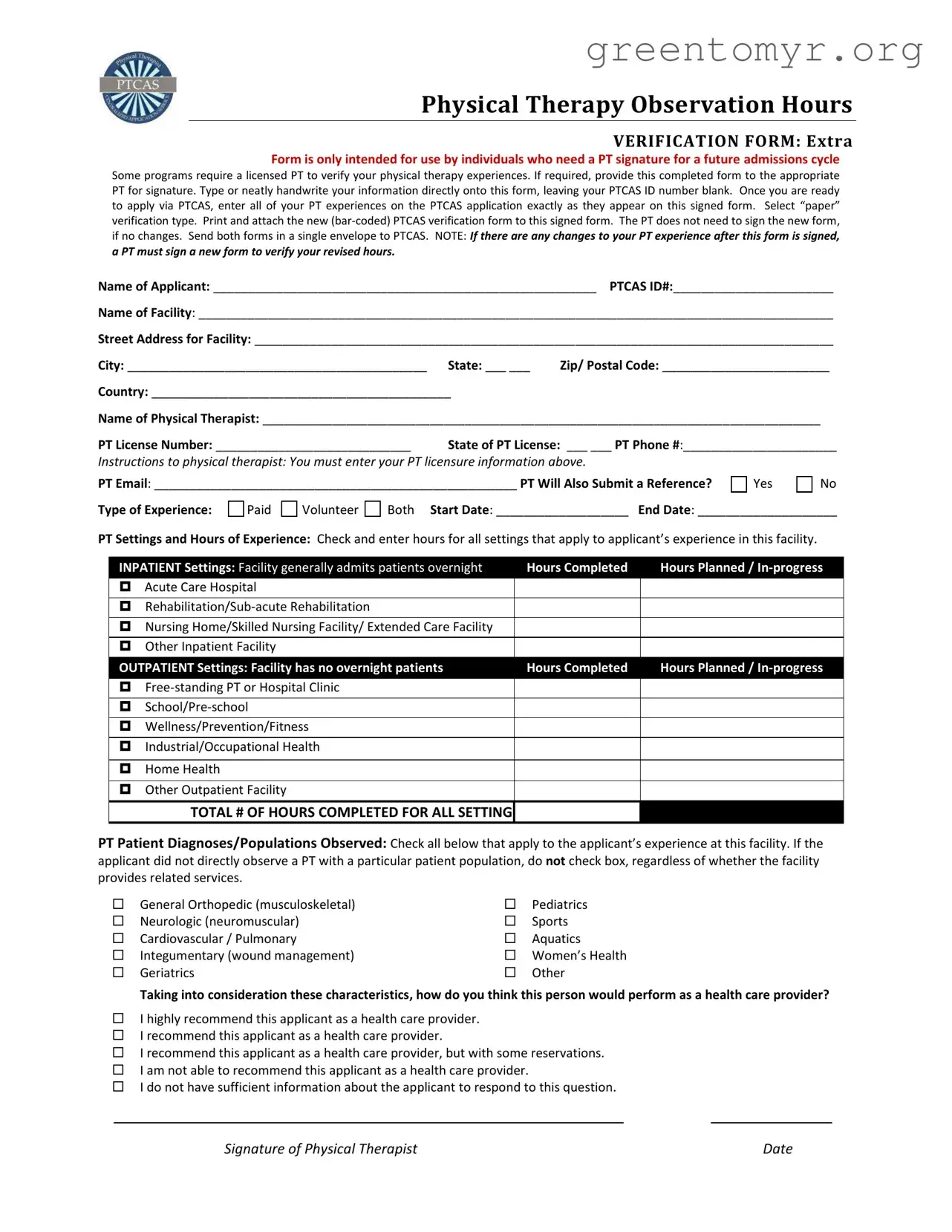
When preparing for a career in physical therapy, the PTCAS form plays a crucial role in the application process. This form is particularly important for applicants who need to document their physical therapy observation hours. Some programs require a licensed physical therapist (PT) to verify these experiences, ensuring that the applicant has gained adequate exposure to the field. To complete this process, you will fill out the Physical Therapy Observation Hours Verification Form, which includes essential details such as your name, PTCAS ID, and the facility where you gained your experience. It is important to provide accurate information, as this will be the basis for your application. The form also requires the PT to confirm your hours and settings, whether inpatient or outpatient, along with the types of diagnoses observed. Once the PT signs the form, you will need to keep it safe, as it must accompany your PTCAS application when you apply. If there are any changes to your hours after the PT has signed, a new form will be necessary to ensure that your application reflects your most current experience. Completing this form correctly can significantly enhance your chances of gaining admission to a physical therapy program.

Physical Therapy Observation Hours
VERIFICATION FORM: Extra
Form is only intended for use by individuals who need a PT signature for a future admissions cycle Some programs require a licensed PT to verify your physical therapy experiences. If required, provide this completed form to the appropriate PT for signature. Type or neatly handwrite your information directly onto this form, leaving your PTCAS ID number blank. Once you are ready to apply via PTCAS, enter all of your PT experiences on the PTCAS application exactly as they appear on this signed form. Select paper verification type. Print and attach the new
Name of Applicant: _______________________________________________________ PTCAS ID#:_______________________
Name of Facility: ___________________________________________________________________________________________
Street Address for Facility: ___________________________________________________________________________________
City: ___________________________________________ |
State: ___ ___ |
Zip/ Postal Code: ________________________ |
Country: ___________________________________________ |
|
|
Name of Physical Therapist: ________________________________________________________________________________
PT License Number: ____________________________ State of PT License: ___ ___ PT Phone #:______________________
Instructions to physical therapist: You must enter your PT licensure information above.
PT Email: ____________________________________________________ PT Will Also Submit a Reference? |
Yes |
No |
||||||||||||
Type of Experience: |
Paid |
Volunteer |
Both Start Date: ___________________ |
End Date: ____________________ |
||||||||||
PT Settings and Hours of Experience: Check and enter hours for all settings that apply to applica t’s experience in this facility. |
|
|
||||||||||||
|
|
|
|
|
|
|
|
|
|
|||||
|
|
INPATIENT Settings: Facility generally admits patients overnight |
|
|
Hours Completed |
|
|
Hours Planned / |
|
|||||
|
|
Acute Care Hospital |
|
|
|
|
|
|
|
|
|
|
|
|
|
|
|
|
|
|
|
|
|
|
|
|
|
||
|
|
|
|
|
|
|
|
|
|
|
|
|
||
|
|
|
|
|
|
|
|
|
|
|
||||
|
|
Nursing Home/Skilled Nursing Facility/ Extended Care Facility |
|
|
|
|
|
|
|
|
||||
|
|
|
|
|
|
|
|
|
|
|
|
|
|
|
|
|
Other Inpatient Facility |
|
|
|
|
|
|
|
|
|
|
|
|
|
|
|
|
|
|
|
|
|
||||||
|
|
OUTPATIENT Settings: Facility has no overnight patients |
|
|
Hours Completed |
|
|
Hours Planned / |
|
|||||
|
|
|
|
|
|
|
|
|
|
|
|
|
||
|
|
|
|
|
|
|
|
|
|
|
|
|
||
|
|
|
|
|
|
|
|
|
|
|
|
|
|
|
|
|
|
|
|
|
|
|
|
|
|
|
|
|
|
|
|
|
|
|
|
|
|
|
|
|
|
|
||
|
|
Wellness/Prevention/Fitness |
|
|
|
|
|
|
|
|
|
|
||
|
|
|
|
|
|
|
|
|
|
|
|
|
||
|
|
Industrial/Occupational Health |
|
|
|
|
|
|
|
|
|
|
||
|
|
|
|
|
|
|
|
|
|
|
|
|
|
|
|
|
Home Health |
|
|
|
|
|
|
|
|
|
|
|
|
|
|
|
|
|
|
|
|
|
|
|
|
|
|
|
|
|
Other Outpatient Facility |
|
|
|
|
|
|
|
|
|
|
|
|
|
|
|
|
|
|
|
|
|
|
|
||||
|
|
TOTAL # OF HOURS COMPLETED FOR ALL SETTING |
|
|
|
|
|
|
|
|
||||
PT Patient Diagnoses/Populations Observed: Check all below that apply to the applica t’s experience at this facility. If the applicant did not directly observe a PT with a particular patient population, do not check box, regardless of whether the facility provides related services.
|
General Orthopedic (musculoskeletal) |
|
Pediatrics |
|
Neurologic (neuromuscular) |
|
Sports |
|
Cardiovascular / Pulmonary |
|
Aquatics |
|
Integumentary (wound management) |
|
Wo e ’s Health |
|
Geriatrics |
|
Other |
Taking into consideration these characteristics, how do you think this person would perform as a health care provider?
I highly recommend this applicant as a health care provider.
I recommend this applicant as a health care provider.
I recommend this applicant as a health care provider, but with some reservations.
I am not able to recommend this applicant as a health care provider.
I do not have sufficient information about the applicant to respond to this question.
Signature of Physical Therapist |
Date |
| Fact Name | Description |
|---|---|
| Purpose | The PTCAS form is designed for applicants who need verification of their physical therapy observation hours by a licensed physical therapist for admissions to physical therapy programs. |
| Signature Requirement | A licensed physical therapist must sign the form to verify the applicant's physical therapy experiences. If any changes occur after signing, a new form with a PT's signature is required. |
| Submission Process | Applicants must send the signed verification form along with the new PTCAS verification form in a single envelope to PTCAS. The PT does not need to sign the new form if there are no changes. |
| State-Specific Requirements | Each state may have specific laws governing the practice of physical therapy. Applicants should ensure compliance with their state’s regulations regarding PT licensure and verification processes. |
Filling out the PTCAS form requires careful attention to detail. Each section must be completed accurately to ensure a smooth application process. Follow these steps to fill out the form correctly.
Once the form is completed, ensure that the PT signs it. If any changes occur after signing, a new verification form will be necessary. Attach the new PTCAS verification form and send both documents in one envelope to PTCAS for processing.
The PTCAS form is designed to collect and verify the physical therapy observation hours of applicants seeking admission to physical therapy programs. It ensures that candidates have documented their experiences under the supervision of a licensed physical therapist.
This form is required for individuals applying to programs that mandate verification of physical therapy experiences by a licensed physical therapist. If your chosen program requires this verification, you must provide the completed form to the appropriate PT for signature.
Applicants should type or neatly handwrite their information directly onto the form. It is important to leave the PTCAS ID number blank. Ensure that all details about your physical therapy experiences are accurate and match what will be entered in the PTCAS application.
If there are any changes to your physical therapy experience after the form is signed, you must have a physical therapist sign a new verification form to confirm the revised hours. This is crucial to maintain the accuracy of your application.
Yes, when you are ready to apply via PTCAS, you must print and attach the new bar-coded PTCAS verification form to the signed Physical Therapy Observation Hours Verification Form. The PT does not need to sign the new form if there are no changes to your experience.
The physical therapist must provide their name, license number, state of licensure, and contact information. Additionally, they must indicate whether they will also submit a reference for the applicant.
Both the signed Physical Therapy Observation Hours Verification Form and the new bar-coded PTCAS verification form should be sent together in a single envelope to PTCAS. Ensure that all information is accurate and complete before submission to avoid delays in processing.
Filling out the PTCAS form can be a daunting task for many applicants. Mistakes made during this process can lead to delays or complications in the admissions cycle. Here are ten common mistakes to avoid when completing the PTCAS form.
One frequent error is leaving the PTCAS ID number blank. This number is essential for tracking your application. Ensure that you enter it correctly once you have it. Additionally, some applicants forget to provide a clear and legible signature from the physical therapist. The verification form must be signed to validate the experience, so double-check this requirement.
Another common mistake involves inaccurately reporting the physical therapy hours. Applicants should ensure that the hours listed on the PTCAS application match exactly with those on the signed verification form. Any discrepancies can lead to questions from the admissions committee. Furthermore, failing to select the correct type of experience—whether paid, volunteer, or both—can misrepresent your qualifications.
Many applicants overlook the importance of providing complete contact information for the physical therapist. This includes the PT’s phone number and email address. Incomplete information can hinder communication and verification of your hours. Moreover, applicants sometimes neglect to indicate whether the PT will also submit a reference, which is an important aspect of the application process.
It is also vital to accurately check all applicable settings and enter the correct hours for each. Misrepresenting the settings where experience was gained can lead to misunderstandings about your qualifications. Additionally, applicants may forget to include all patient diagnoses or populations observed. Only check the boxes for those you directly observed to maintain integrity in your application.
Lastly, some applicants do not take the time to review their completed forms before submission. Errors in spelling, dates, or other details can create a negative impression. It is advisable to carefully proofread the entire form. Taking these steps can significantly enhance the quality of your application and help avoid unnecessary complications.
When applying to physical therapy programs, the PTCAS form is just one piece of the puzzle. Along with it, several other documents may be required to strengthen your application. Below is a list of common forms and documents that applicants often use alongside the PTCAS form.
Gathering these documents can seem overwhelming, but each one plays a vital role in showcasing your qualifications and passion for physical therapy. Make sure to check the specific requirements of each program to ensure you have everything you need for a successful application.
When filling out the PTCAS form, attention to detail is crucial. Here are five important guidelines to follow, along with some common pitfalls to avoid:
By adhering to these guidelines, you can help ensure a smoother application process. Taking the time to fill out the PTCAS form correctly can make a significant difference in your journey toward becoming a physical therapist.
Understanding the PTCAS form can be overwhelming, especially with all the details involved. Here are ten common misconceptions that applicants may have about the form, along with clarifications to help you navigate the process more smoothly.
By understanding these misconceptions, you can approach the PTCAS form with greater confidence. Take your time to ensure all information is accurate and complete, and don’t hesitate to reach out for assistance if needed.
When filling out and using the PTCAS form, consider the following key takeaways: