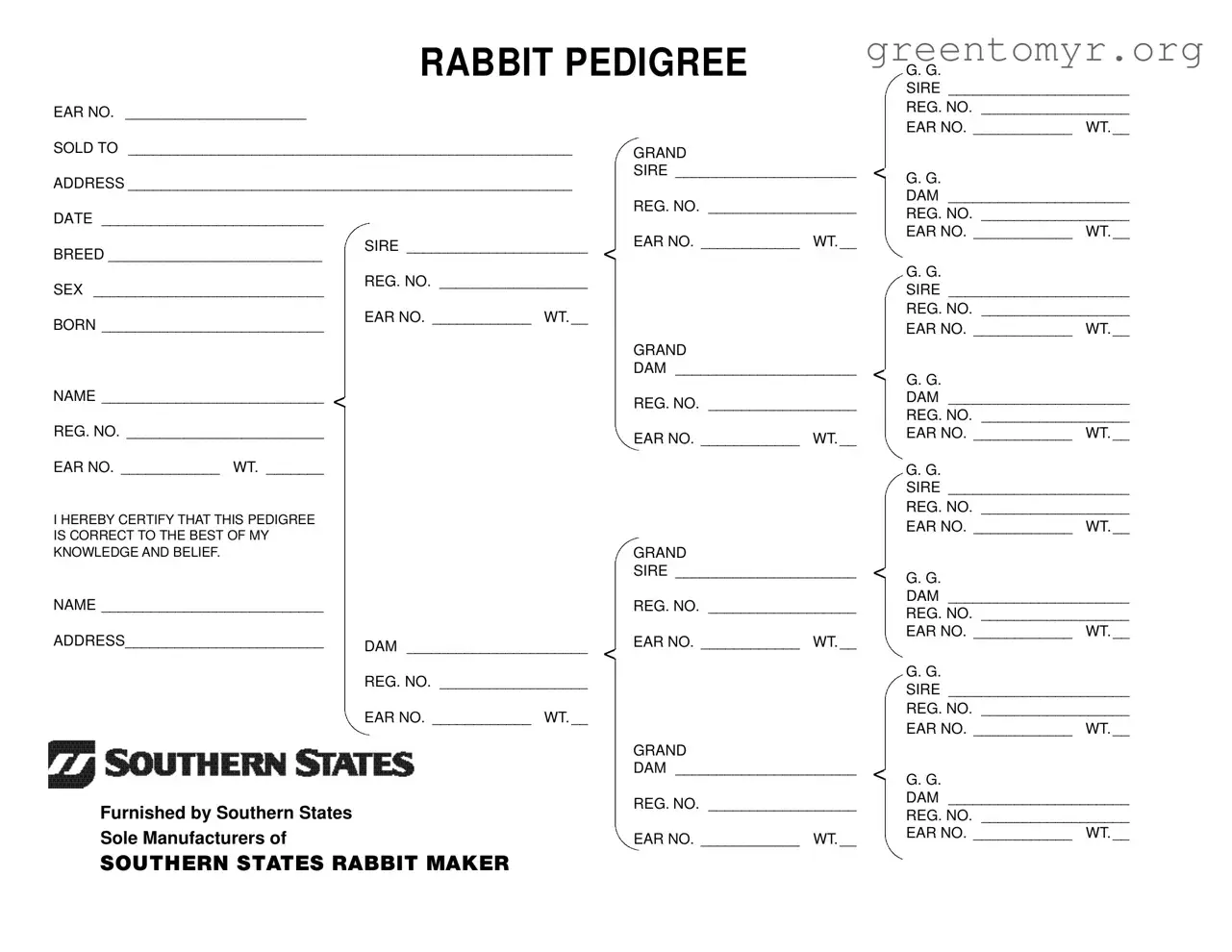
The Rabbit Pedigree form serves as an essential tool for rabbit breeders, providing a comprehensive record of a rabbit's lineage. This form captures crucial details about the animal's ancestry, including the names and registration numbers of the sire and dam, along with their ear numbers and weights. It also highlights the grand sires and grand dams, ensuring that breeders can trace the genetic background of their rabbits effectively. By documenting this information, breeders can make informed decisions regarding breeding practices, helping to maintain the health and quality of their rabbit stock. Additionally, the form includes sections for the seller's information and a certification statement, affirming the accuracy of the details provided. This not only fosters trust between breeders and buyers but also promotes responsible breeding within the rabbit community.
RABBIT PEDIGREE
G. G.
SIRE ______________________
EAR NO. ______________________
SOLD TO ______________________________________________________
ADDRESS ______________________________________________________
GRAND
SIRE ______________________ <
REG. NO. __________________
REG. NO. __________________
EAR NO. ____________ WT. __
G. G.
DAM ______________________
DATE ___________________________
BREED __________________________
SEX ____________________________
BORN ___________________________
SIRE ______________________
REG. NO. __________________
EAR NO. ____________ WT. __
<
EAR NO. ____________ WT. __
REG. NO. __________________
EAR NO. ____________ WT. __
G. G.
SIRE ______________________
REG. NO. __________________
EAR NO. ____________ WT. __
NAME ___________________________ <
REG. NO. ________________________
EAR NO. ____________ WT. _______
I HEREBY CERTIFY THAT THIS PEDIGREE IS CORRECT TO THE BEST OF MY KNOWLEDGE AND BELIEF.
GRAND
DAM ______________________ <
REG. NO. __________________
EAR NO. ____________ WT. __
GRAND
SIRE ______________________ <
G. G.
DAM ______________________
REG. NO. __________________
EAR NO. ____________ WT. __
G. G.
SIRE ______________________
REG. NO. __________________
EAR NO. ____________ WT. __
G. G.
NAME ___________________________ |
REG. NO. __________________
DAM ______________________
REG. NO. __________________
ADDRESS________________________ |
DAM ______________________ |
|
|
|
REG. NO. __________________ |
<
EAR NO. ____________ WT. __
EAR NO. ____________ WT. __
G. G.
SIRE ______________________
EAR NO. ____________ |
WT. __ |
|
|
GRAND |
|
|
DAM ______________________ |
< |
|
|
|
Furnished by Southern States |
REG. NO. __________________ |
|
|
|
|
Sole Manufacturers of |
EAR NO. ____________ WT. __ |
|
REG. NO. __________________
EAR NO. ____________ WT. __
G. G.
DAM ______________________
REG. NO. __________________
EAR NO. ____________ WT. __
SOUTHERN STATES RABBIT MAKER
| Fact Name | Description |
|---|---|
| Purpose | The Rabbit Pedigree form is used to document the lineage of rabbits, providing essential information for breeders and buyers. |
| Key Components | This form includes sections for the sire and dam, registration numbers, ear numbers, weight, and the breeder's certification. |
| Certification | Breeders must certify that the pedigree information is accurate to the best of their knowledge, which adds credibility to the document. |
| Governing Law | In many states, the breeding and sale of rabbits may be governed by agricultural and animal husbandry laws, which can vary by jurisdiction. |
| Registration Numbers | Each rabbit is assigned a unique registration number, which helps in tracking its lineage and ensuring authenticity. |
| Ear Numbers | Ear numbers are specific identifiers for each rabbit, allowing for easy recognition and record-keeping. |
| Weight Information | Including the weight of the rabbits on the form provides additional data that can be useful for breeding decisions. |
| Southern States | The form is furnished by Southern States, a company that specializes in rabbit breeding supplies and documentation. |
| Breed Information | Breeders must specify the breed of the rabbits, which is crucial for maintaining breed standards and characteristics. |
| Historical Significance | Maintaining a pedigree is essential for preserving the history and genetic integrity of rabbit breeds. |
Completing the Rabbit Pedigree form is an important step in documenting the lineage of your rabbit. This form requires detailed information about the rabbit and its ancestors, ensuring that all relevant data is accurately recorded. Follow these steps to fill out the form correctly.
The Rabbit Pedigree form is a document that provides detailed information about a rabbit's lineage. It includes the names and registration numbers of the rabbit's ancestors, such as the sire (father) and dam (mother), along with their ear numbers and weights. This form helps breeders track the genetics and health history of their rabbits, ensuring they make informed breeding decisions.
Accurate information on the Rabbit Pedigree form is crucial for several reasons:
Therefore, providing correct information is essential for the welfare of the rabbits and the success of breeding programs.
You can obtain a Rabbit Pedigree form from various sources. Many rabbit breeding associations provide these forms on their websites. Additionally, local rabbit clubs or breeders may have copies available. If you’re purchasing a rabbit, ask the seller if they can provide a pedigree form. It's a good practice to have one ready when breeding or showing your rabbits.
If you lack some details, it's best to gather as much information as possible before completing the form. You can:
However, ensure that you certify the information you do provide is accurate to the best of your knowledge. This helps maintain the integrity of the pedigree.
Filling out the Rabbit Pedigree form can be straightforward, but many people make common mistakes that can lead to inaccuracies. One frequent error is leaving out essential information. For instance, failing to include the ear number or registration number for the sire or dam can create confusion. Every detail matters in establishing a rabbit’s lineage.
Another mistake often seen is inconsistent naming conventions. When individuals use nicknames or abbreviations for the rabbit’s name, it can complicate the pedigree. Consistency is key. Always use the full registered name to ensure clarity and accuracy.
People also tend to overlook the importance of verifying the information provided. Many assume that their memory is sufficient. However, it’s crucial to double-check details against official records. This step helps prevent unintentional errors that could affect breeding decisions.
Additionally, some individuals fail to include the correct weight of the rabbits. This information is vital for assessing the health and growth of the rabbits. Omitting it not only affects the pedigree but can also mislead future owners about the rabbit’s potential.
Another common oversight is neglecting to sign and date the form. This certification is not just a formality; it confirms that the information provided is accurate to the best of the individual's knowledge. Without a signature, the pedigree lacks legitimacy.
Lastly, many people do not take the time to read the instructions thoroughly. Each section of the Rabbit Pedigree form has specific requirements. Skipping this step can lead to incomplete submissions and delays in processing. Taking a moment to review the guidelines can save time and ensure that the form is filled out correctly.
When dealing with rabbit breeding and registration, several important forms and documents accompany the Rabbit Pedigree form. These documents help ensure accurate record-keeping and facilitate the breeding process. Below is a list of commonly used forms that you may need.
Having these forms readily available can streamline the breeding process and ensure that all necessary information is documented. Keeping accurate records is essential for responsible rabbit breeding.
When filling out the Rabbit Pedigree form, attention to detail is crucial. Here are some important do's and don'ts to keep in mind:
When it comes to the Rabbit Pedigree form, several misconceptions can lead to confusion for both breeders and buyers. Here are seven common misunderstandings:
Many people believe that a pedigree is only important for show rabbits. In reality, having a pedigree can help track lineage for any rabbit, providing valuable information about its genetics and health.
Not all pedigree forms have the same structure or requirements. Each organization may have its own format, and it is essential to use the correct form for your specific breed or registry.
Some may think that filling out every section of the form is not crucial. However, providing complete and accurate information is vital for the pedigree's validity and usefulness.
While a pedigree can provide insight into a rabbit's lineage, it does not guarantee that the rabbit will possess specific traits or qualities. Breeding practices and environmental factors also play significant roles.
Once a pedigree form is filled out and signed, it should not be altered. Making changes can invalidate the document, so it’s essential to ensure accuracy from the start.
Buyers should also be aware of pedigree information. Understanding a rabbit's background can help in making informed decisions about purchasing and breeding.
While pedigrees are often associated with purebreds, mixed-breed rabbits can also benefit from having a pedigree. It helps in tracking lineage and understanding genetic traits.
When filling out the Rabbit Pedigree form, it is essential to provide accurate and complete information. Below are key takeaways to keep in mind: