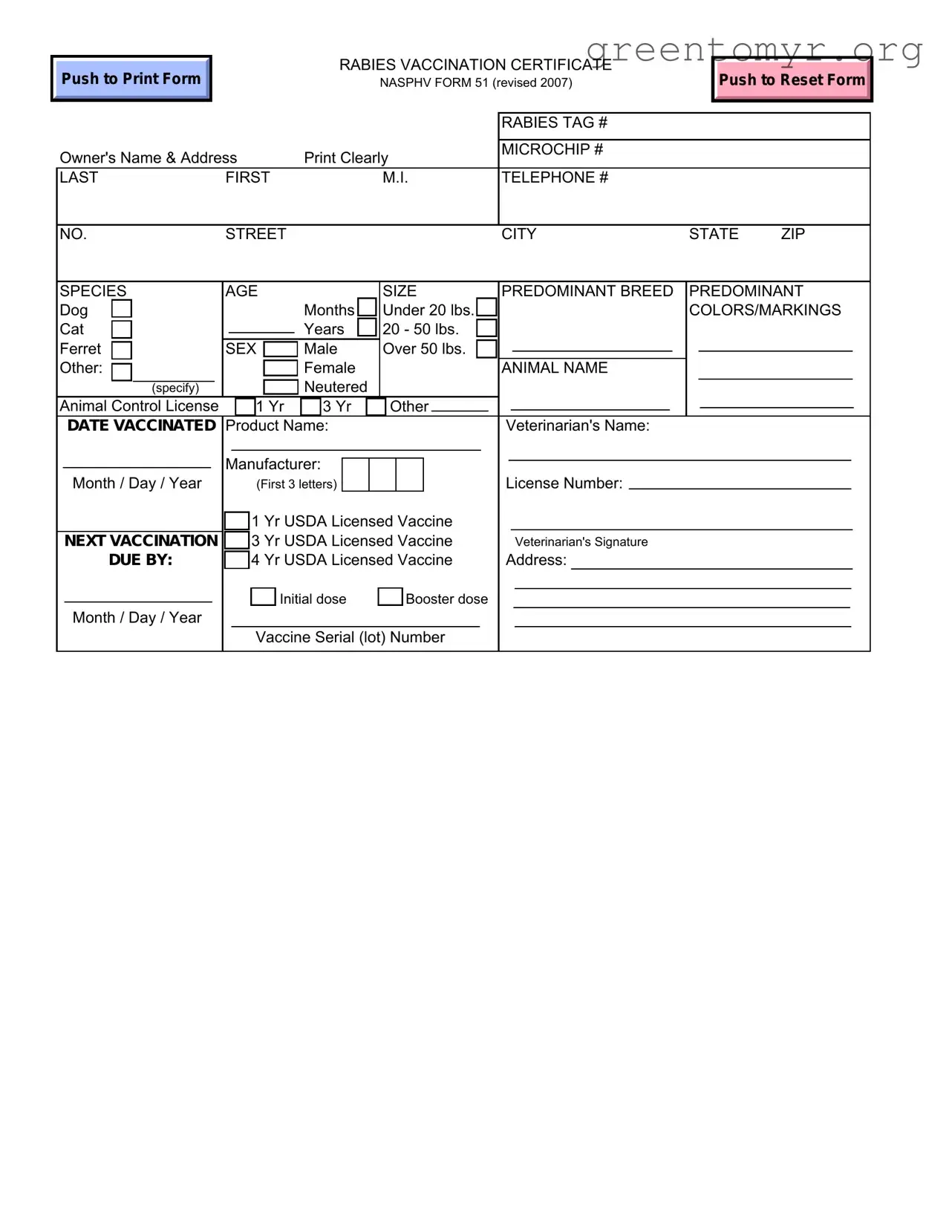
The Rabies Certificate form is a crucial document that plays a significant role in public health and safety. It serves as proof that an animal has been vaccinated against rabies, a potentially fatal virus that can affect both animals and humans. This form includes essential details such as the owner's name and address, the animal's species, age, and breed, as well as specific identifiers like a microchip number. Additionally, it captures vital vaccination information, including the product name, manufacturer, and the veterinarian's credentials. The form also indicates the vaccination duration, whether it is a one-year or three-year vaccine, and outlines the next vaccination due date. Proper completion of this form not only ensures compliance with local regulations but also helps protect communities from the spread of rabies. Understanding the various sections of the Rabies Certificate form is essential for pet owners, veterinarians, and animal control agencies alike, as it fosters responsible pet ownership and promotes public awareness about rabies prevention.

|
|
|
RABIES VACCINATION CERTIFICATE |
|
|
|
Push to Print Form |
|
Push to Reset Form |
||
|
|
NASPHV FORM 51 (revised 2007) |
|||
|
|
|
|
|
|
|
|
|
|
|
|
|
|
|
|
RABIES TAG # |
|
|
|
|
|
|
|
|
Owner's Name & Address |
Print Clearly |
MICROCHIP # |
|
|
|
|
|
|||
|
LAST |
FIRST |
M.I. |
TELEPHONE # |
|
NO.STREET
CITY |
STATE |
ZIP |
SPECIES |
AGE |
|
|
|
|
|
|
|
|
SIZE |
PREDOMINANT BREED |
PREDOMINANT |
|||||||||||||||||||||||||||||||||
Dog |
|
|
|
|
|
|
|
|
|
|
Months |
Under 20 lbs. |
|
|
|
|
|
|
|
|
COLORS/MARKINGS |
||||||||||||||||||||||||
Cat |
|
|
|
|
|
|
|
|
|
|
|
|
|
|
Years |
|
|
20 - 50 lbs. |
|
|
|
|
|
|
|
|
|
|
|
|
|
|
|||||||||||||
|
|
|
|
|
|
|
|
|
|
|
|
|
|
|
|
|
|
|
|
|
|
|
|
||||||||||||||||||||||
|
|
|
|
|
|
|
|
|
|
|
|
|
|
|
|
|
|
|
|
|
|
|
|
||||||||||||||||||||||
Ferret |
|
|
|
|
SEX |
|
|
Male |
Over 50 lbs. |
|
|
|
|
|
|
|
|
|
|
|
|
|
|
||||||||||||||||||||||
|
|
|
|
|
|
|
|
|
|
|
|
|
|
|
|
||||||||||||||||||||||||||||||
|
|
|
|
|
|
|
|
|
|
|
|
||||||||||||||||||||||||||||||||||
|
|
|
|
|
|
|
|
|
|
|
|
|
|
|
|
||||||||||||||||||||||||||||||
Other: |
|
|
|
|
|
|
|
|
|
|
|
|
|
|
Female |
|
|
|
|
|
|
|
|
|
|
ANIMAL NAME |
|
|
|
|
|||||||||||||||
|
|
|
|
|
|
|
|
|
|
|
|
|
|
|
|
|
|
|
|
|
|
|
|
|
|||||||||||||||||||||
|
|
|
|
|
|
|
|
|
|
|
|
|
|
|
|
|
|
|
|
|
|
|
|
|
|||||||||||||||||||||
|
|
|
|
|
|
|
|
|
|
|
|
|
|
|
|
Neutered |
|
|
|
|
|
|
|
|
|
|
|
|
|
|
|
|
|
|
|
|
|
|
|||||||
|
|
|
|
(specify) |
|
|
|
|
|
|
|
|
|
|
|
|
|
|
|
|
|
|
|
|
|
|
|
|
|
|
|
|
|
|
|
||||||||||
|
|
|
|
|
|
|
|
|
|
|
|
|
|
|
|
|
|
|
|
|
|
|
|
|
|
|
|
|
|
|
|
|
|
|
|
|
|||||||||
|
|
|
|
|
|
|
|
|
|
|
|
|
|
|
|
|
|
|
|
|
|
|
|
|
|
|
|
|
|
|
|
|
|
|
|
|
|||||||||
Animal Control License |
|
|
|
|
|
1 Yr |
|
|
|
3 Yr |
|
|
Other |
|
|
|
|
|
|
|
|
|
|
|
|
|
|
|
|
|
|
||||||||||||||
|
|
|
|
|
|
|
|
|
|
|
|
|
|
|
|
|
|
|
|
|
|
|
|||||||||||||||||||||||
|
|
|
|
|
|
|
|
|
|
|
|
|
|||||||||||||||||||||||||||||||||
|
|
|
|
|
|
|
|
|
|
|
|
|
|
|
|
|
|
|
|
|
|
|
|||||||||||||||||||||||
|
DATE VACCINATED |
Product Name: |
|
|
|
|
|
|
|
|
|
|
Veterinarian's Name: |
|
|
|
|
||||||||||||||||||||||||||||
|
|
|
|
|
|
|
|
|
|
|
|
|
|
|
|
|
|
|
|
|
|
|
|
|
|
|
|
|
|
|
|
|
|
|
|
|
|
|
|
|
|
|
|
|
|
|
|
|
|
|
|
|
Manufacturer: |
|
|
|
|
|
|
|
|
|
|
|
|
|
|
|
|
|
|
|
|
|
|
|
|
|
|
||||||||||||
|
Month / Day / Year |
|
|
|
|
|
|
|
|
|
|
|
|
|
|
License Number: |
|
|
|
|
|
|
|
||||||||||||||||||||||
|
|
|
|
|
|
(First 3 letters) |
|
|
|
|
|
|
|
|
|
|
|
|
|
|
|
|
|
||||||||||||||||||||||
|
|
|
|
|
|
|
|
|
|
|
|
|
|
|
|
|
|
|
|
|
|
|
|
|
|
|
|
|
|
|
|
|
|
|
|
|
|
|
|
||||||
|
|
|
|
|
|
|
|
|
|
|
|
1 Yr USDA Licensed Vaccine |
|
|
|
|
|
|
|
|
|
|
|
|
|||||||||||||||||||||
|
|
|
|
|
|
|
|
|
|
|
|
|
|
|
|
|
|
|
|
|
|
||||||||||||||||||||||||
|
|
|
|
|
|
|
|
|
|
|
|
|
|
|
|
|
|
|
|
|
|
||||||||||||||||||||||||
|
NEXT VACCINATION |
|
|
|
|
|
3 Yr USDA Licensed Vaccine |
|
|
|
Veterinarian's Signature |
||||||||||||||||||||||||||||||||||
|
|
|
|
|
|
|
|||||||||||||||||||||||||||||||||||||||
|
|
|
|
|
|
|
|||||||||||||||||||||||||||||||||||||||
|
DUE BY: |
|
|
|
|
|
4 Yr USDA Licensed Vaccine |
Address: |
|||||||||||||||||||||||||||||||||||||
|
|
|
|
||||||||||||||||||||||||||||||||||||||||||
|
|
|
|
||||||||||||||||||||||||||||||||||||||||||
|
|
|
|
|
|
|
|
|
|
|
|
|
|
Initial dose |
|
|
Booster dose |
|
|
|
|
|
|
|
|
|
|
|
|
||||||||||||||||
|
|
|
|
|
|
|
|
|
|
|
|
|
|
|
|
|
|
|
|
|
|
|
|
|
|
|
|
||||||||||||||||||
|
|
|
|
|
|
|
|
|
|
|
|
|
|
|
|
|
|
|
|
|
|
|
|
|
|
|
|
||||||||||||||||||
|
Month / Day / Year |
|
|
|
|
|
|
|
|
|
|
|
|
|
|
||||||||||||||||||||||||||||||
|
|
|
|
|
|
|
|
|
|
|
|
|
|
|
|
|
|
|
|
|
|
|
|
|
|
|
|
|
|
|
|
|
|
|
|
|
|
|
|
||||||
|
|
|
|
|
|
|
|
|
|
|
|
|
|
|
|
|
|
|
|
|
|
|
|
|
|
|
|
|
|
|
|
|
|
|
|
|
|
|
|
||||||
|
|
|
|
|
|
|
|
|
|
|
|
|
|
|
|
|
|
|
|
|
|
|
|
|
|
|
|
|
|
|
|
|
|
|
|
|
|
|
|
||||||
|
|
|
|
|
|
|
|
|
|
|
|
Vaccine Serial (lot) Number |
|
|
|
|
|
|
|
|
|
|
|
|
|
|
|
||||||||||||||||||
|
|
|
|
|
|
|
|
|
|
|
|
|
|
|
|
|
|
|
|
|
|
|
|
|
|
|
|
|
|
|
|
|
|
|
|
|
|
|
|
|
|
|
|
|
|
| Fact Name | Description |
|---|---|
| Form Title | The form is officially titled "Rabies Vaccination Certificate" and is recognized as NASPHV FORM 51 (revised 2007). |
| Purpose | This certificate serves as proof of rabies vaccination for pets, particularly dogs, cats, and ferrets. |
| Owner Information | Pet owners must provide their name, address, and contact information clearly on the form. |
| Animal Details | Information about the animal, such as species, age, size, breed, and markings, is required for identification. |
| Vaccination Details | The form requires the date of vaccination, product name, manufacturer, and the veterinarian's details. |
| License Information | Veterinarians must include their license number and the type of vaccine used (1 Yr, 3 Yr, or 4 Yr). |
| Next Vaccination Due | The form indicates when the next rabies vaccination is due, helping owners keep track of their pet's health needs. |
| State-Specific Forms | Different states may have specific requirements for rabies vaccination certificates governed by state laws. |
| Signature Requirement | A veterinarian's signature is necessary to validate the certificate, confirming that the vaccination has been administered. |
Completing the Rabies Certificate form is an important step in ensuring your pet is properly documented for their rabies vaccination. This certificate will be crucial for pet ownership, travel, and compliance with local regulations. Follow these steps carefully to fill out the form accurately.
After completing the form, review it for accuracy before submitting it to your local authorities or keeping it for your records. This documentation is essential for your pet’s health and compliance with local laws.
A Rabies Certificate is an official document that confirms your pet has been vaccinated against rabies. This certificate is crucial for pet owners, as it serves as proof of vaccination for local regulations and travel requirements.
You need a Rabies Certificate to comply with state and local laws regarding pet vaccinations. Many areas require proof of rabies vaccination for pets, especially when registering them or if they are traveling. This certificate helps protect public health by ensuring pets are vaccinated against this serious disease.
To obtain a Rabies Certificate, you must take your pet to a licensed veterinarian for a rabies vaccination. After administering the vaccine, the veterinarian will complete the Rabies Certificate form, which includes details about your pet and the vaccination. Make sure to keep this certificate in a safe place.
The Rabies Certificate includes several important details:
All of this information is essential for verifying your pet's vaccination status.
The validity of a Rabies Certificate depends on the type of vaccine used. Most rabies vaccines are available for one-year or three-year durations. Your veterinarian will indicate the expiration date on the certificate. It’s important to renew your pet's vaccination before it expires to ensure compliance with local laws.
If you lose your Rabies Certificate, contact your veterinarian as soon as possible. They can often provide a replacement or a copy of the original certificate. Keeping a digital copy can also be helpful for future reference.
Filling out a Rabies Certificate form is an important task that requires attention to detail. One common mistake occurs when individuals fail to print clearly. Illegible handwriting can lead to confusion and potential issues in verifying vaccination status. Ensure that all information, especially the owner's name and address, is easy to read. This helps avoid delays in processing and ensures that the certificate is valid.
Another frequent error is neglecting to provide complete information about the animal. Each section of the form, such as species, age, and predominant breed, must be filled out accurately. Omitting details can result in the form being rejected or requiring additional follow-up. Make sure to double-check that every box is filled in with the correct data.
Additionally, people often overlook the vaccination date. This date is crucial as it indicates when the animal received its rabies vaccine. Inaccurate dates can create complications when it comes time for the next vaccination. Always ensure that the date is current and matches the vaccination records provided by the veterinarian.
Another common mistake is failing to include the veterinarian's signature. This signature is essential for the certificate to be considered valid. Without it, the document lacks authenticity. Make it a point to confirm that the veterinarian has signed the form before submission.
Finally, many individuals forget to check the next vaccination due date. This section is vital for keeping track of when the animal will need its next rabies shot. Failing to note this can lead to lapses in vaccination, which may put both the pet and the community at risk. Be diligent about marking this date clearly to ensure compliance with local regulations.
The Rabies Certificate is an essential document for pet owners, particularly when traveling or boarding animals. However, it is often accompanied by several other forms and documents that serve various purposes related to animal health and safety. Below is a list of common documents that may be used alongside the Rabies Certificate.
Understanding these documents can help pet owners navigate the requirements for travel, boarding, and compliance with local laws. Having the necessary paperwork organized and readily available can make these processes smoother and less stressful.
The Rabies Certificate form shares similarities with several other documents commonly used in veterinary and pet ownership contexts. Below are five such documents:
When filling out the Rabies Certificate form, attention to detail is crucial. Here are five important do's and don'ts to keep in mind:
By following these guidelines, you can help ensure that the rabies vaccination certificate is completed accurately and efficiently.
Understanding the Rabies Certificate form is essential for pet owners and veterinarians alike. However, several misconceptions can lead to confusion. Here’s a list of ten common misunderstandings about this important document:
By clarifying these misconceptions, pet owners can better understand the importance of the Rabies Certificate and ensure their pets remain safe and compliant with local laws.
When filling out and using the Rabies Certificate form, there are several important points to keep in mind. Here are key takeaways to ensure you complete the form accurately and effectively:
By following these guidelines, you can ensure that your Rabies Certificate is filled out correctly and serves its intended purpose effectively.