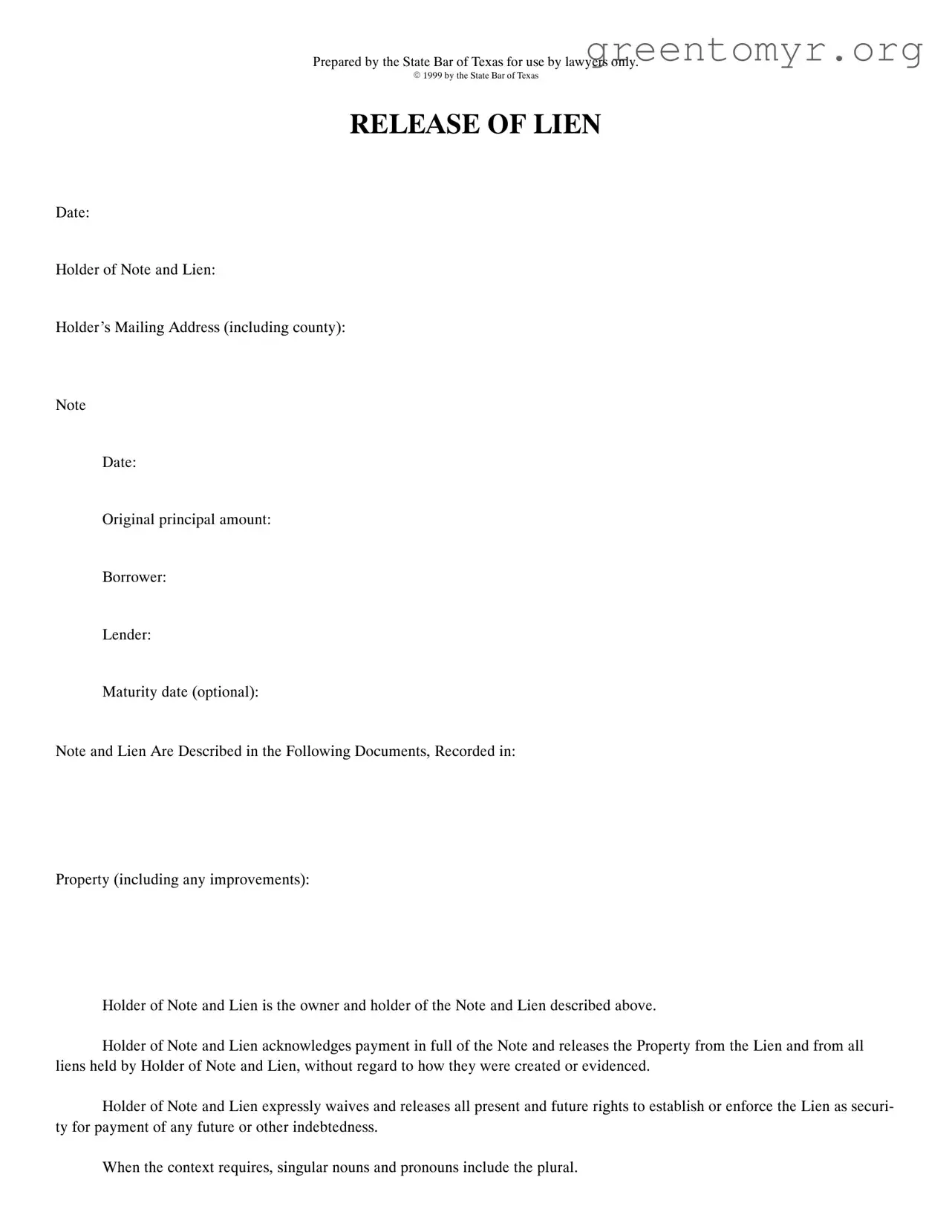
The Release of Lien Texas form is an essential document for anyone involved in real estate transactions in Texas. It serves as a formal acknowledgment that a lien, which is a legal claim against a property for the payment of a debt, has been satisfied. This form includes crucial details such as the date of the release, the names and addresses of the lien holder and borrower, and the original principal amount of the note. It also outlines the property being released from the lien, ensuring that all parties understand which assets are involved. By signing this document, the holder of the note confirms that they have received full payment and relinquishes any rights to enforce the lien in the future. This release not only clears the title of the property but also provides peace of mind to the borrower, knowing that their obligations have been fulfilled. Additionally, the form contains sections for notarization, which adds an extra layer of authenticity and legal standing. Understanding this form is crucial for both lenders and borrowers to navigate the complexities of property ownership and debt resolution in Texas.
Prepared by the State Bar of Texas for use by lawyers only.
E 1999 by the State Bar of Texas
RELEASE OF LIEN
Date:
Holder of Note and Lien:
Holder’s Mailing Address (including county):
Note
Date:
Original principal amount:
Borrower:
Lender:
Maturity date (optional):
Note and Lien Are Described in the Following Documents, Recorded in:
Property (including any improvements):
Holder of Note and Lien is the owner and holder of the Note and Lien described above.
Holder of Note and Lien acknowledges payment in full of the Note and releases the Property from the Lien and from all liens held by Holder of Note and Lien, without regard to how they were created or evidenced.
Holder of Note and Lien expressly waives and releases all present and future rights to establish or enforce the Lien as securi- ty for payment of any future or other indebtedness.
When the context requires, singular nouns and pronouns include the plural.
|
(Acknowledgment) |
|
STATE OF TEXAS |
|
|
COUNTY OF |
|
|
This instrument was acknowledged before me on |
, |
|
by |
. |
|
|
|
|
|
Notary Public, State of Texas |
|
|
Notary’s name (printed): |
|
|
Notary’s commission expires: |
|
|
(Corporate Acknowledgment) |
|
STATE OF TEXAS |
|
|
COUNTY OF |
|
|
This instrument was acknowledged before me on |
, |
|
by |
, |
|
of |
|
|
a |
|
corporation, on behalf of said corporation. |
|
|
|
|
Notary Public, State of Texas |
|
|
Notary’s name (printed): |
|
|
Notary’s commission expires: |
|
AFTER RECORDING RETURN TO: |
PREPARED IN THE LAW OFFICE OF: |
| Fact Name | Details |
|---|---|
| Purpose | The Release of Lien form is used to formally acknowledge the payment of a debt and to release a property from a lien. |
| Governing Law | This form is governed by Texas property and contract law, ensuring compliance with state regulations. |
| Parties Involved | The form requires information about the Holder of the Note and Lien, the Borrower, and the Lender. |
| Acknowledgment Requirement | Notarization is necessary for the form to be legally binding, confirming that the document was signed in the presence of a notary public. |
| Future Rights Waiver | By signing the form, the Holder of the Note and Lien waives any future rights to enforce the lien for any other debts. |
Filling out the Release of Lien form in Texas is a straightforward process that requires careful attention to detail. Once completed, this document will need to be acknowledged by a notary public before it can be recorded. Here’s how to fill out the form step by step.
The Release of Lien Texas form is a legal document that signifies the removal of a lien from a property. A lien is a legal right or interest that a lender has in the borrower's property, granted until the debt obligation is satisfied. This form is typically used when a borrower has fully paid off their debt, allowing the lender to formally acknowledge that the lien is no longer in effect.
This form is primarily completed by the holder of the lien, usually a lender or financial institution. If you have recently paid off a loan secured by property, the lender should prepare this document to release their claim on your property. It is crucial for both parties to ensure that the lien is officially removed from public records.
The Release of Lien Texas form requires several key pieces of information:
Providing accurate and complete information is essential to ensure the document is valid and enforceable.
Once the form is completed and signed by the holder of the lien, it must be acknowledged by a notary public. After notarization, the document should be filed with the appropriate county office where the original lien was recorded. This step is crucial for the release to be officially recognized in public records.
If the Release of Lien is not filed after the debt is paid, the lien may still appear on public records. This could create issues when trying to sell or refinance the property, as potential buyers or lenders may see the lien as an outstanding obligation. It is important to act promptly to avoid any future complications.
Yes, there may be a fee for filing the Release of Lien with the county office. Fees can vary by county, so it is advisable to check with the local office for specific amounts. Additionally, there may be costs associated with notarization and any legal assistance you may seek.
Completing the Release of Lien form in Texas is a crucial step for property owners and lien holders. However, several common mistakes can complicate this process. Understanding these pitfalls can help ensure that the form is filled out correctly and that the lien is properly released.
One frequent error is failing to include all required information. The form requests specific details such as the date, the holder of the note and lien, and the mailing address. Omitting any of this information can lead to delays or even invalidate the release. It is essential to double-check that all fields are filled out completely before submitting the form.
Another mistake involves inaccuracies in the property description. The property must be clearly identified, including any improvements made. Vague or incorrect descriptions can create confusion and may result in legal complications later. It is advisable to reference the original documents that describe the property to ensure accuracy.
People often neglect to acknowledge the payment in full of the note. This acknowledgment is a critical component of the release, as it confirms that the debt has been satisfied. Without this affirmation, the lien may not be considered released, leaving the borrower at risk of continued liability.
Additionally, some individuals may overlook the need for notarization. The form must be acknowledged before a notary public to be valid. Failing to have the document notarized can render it ineffective, undermining the purpose of the release.
Another common oversight is the lack of a clear indication of the maturity date of the note. While this field is optional, providing it can clarify the timeline of the financial obligation and further establish that the lien is being released in accordance with the terms of the loan.
Lastly, individuals sometimes forget to include the necessary corporate acknowledgment if the lien holder is a corporation. This step is vital for ensuring that the release is binding and recognized legally. Without proper acknowledgment from a corporate representative, the release may be challenged.
By being aware of these common mistakes, individuals can approach the Release of Lien process with greater confidence. Taking the time to carefully complete the form will help protect property rights and ensure that the release is legally effective.
The Release of Lien Texas form is an essential document used to formally acknowledge the payment of a debt and to release any claims against a property. Several other forms and documents are often utilized in conjunction with this release. Below is a list of these documents, each with a brief description.
These documents play a crucial role in the process of securing and releasing liens on properties. Each serves a specific purpose and contributes to the overall clarity and legality of real estate transactions.
The Release of Lien Texas form is an important document in real estate transactions. It is similar to several other documents that serve various purposes in the realm of property and financial agreements. Here are ten documents that share similarities with the Release of Lien Texas form:
When filling out the Release Of Lien Texas form, it is essential to approach the task with care and attention to detail. Here are five important do's and don'ts to keep in mind:
Understanding the Release of Lien form in Texas is crucial for both property owners and lenders. However, several misconceptions can lead to confusion. Here are six common misconceptions:
Addressing these misconceptions can help ensure that property owners and lenders understand their rights and responsibilities regarding liens in Texas.
Here are some key takeaways about filling out and using the Release Of Lien Texas form:
Using this form correctly can help protect your property and ensure that all parties understand the release of the lien.