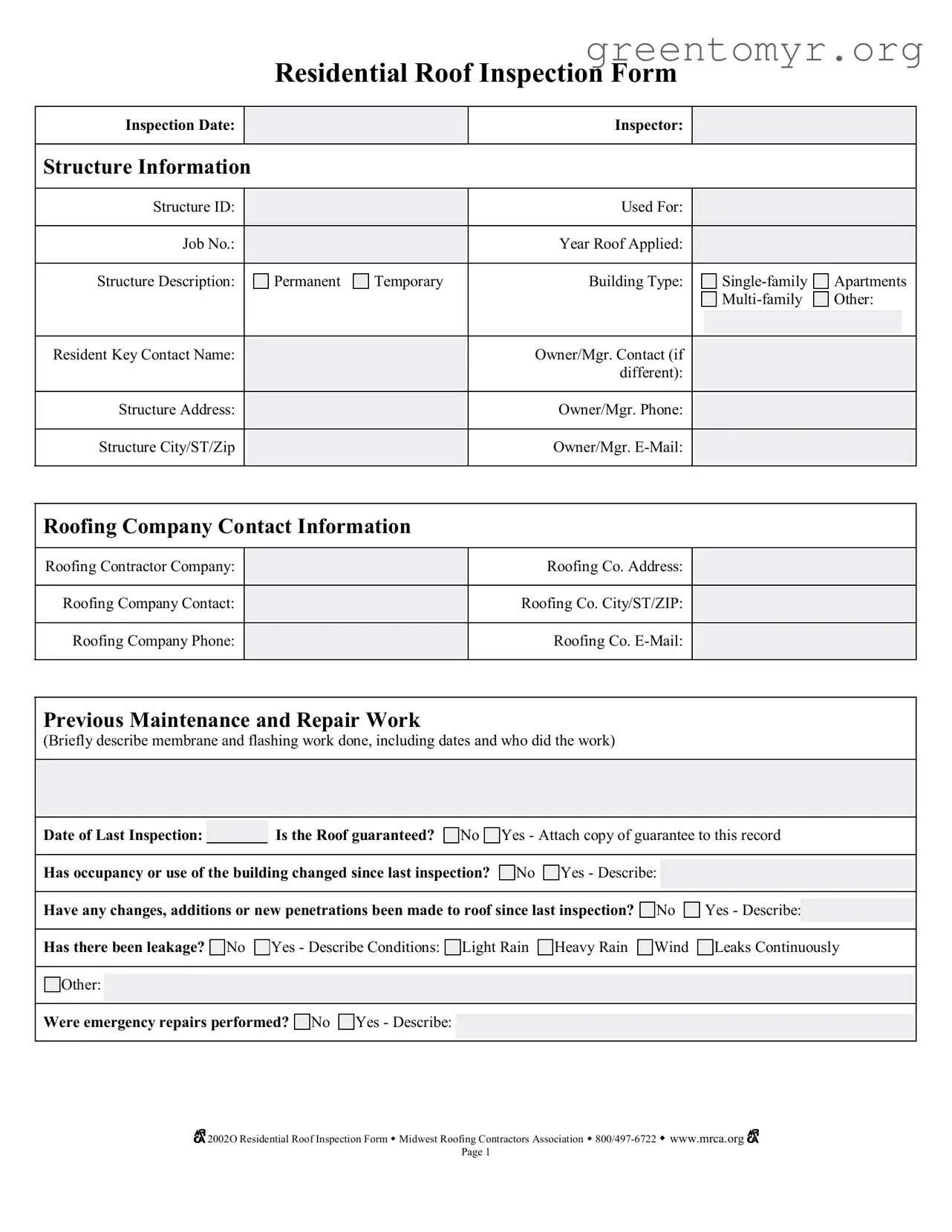
Conducting a thorough roof inspection is crucial for maintaining the integrity and safety of any residential structure. The Roof Inspection Form serves as a comprehensive tool that guides inspectors through the evaluation process. It begins with basic information, such as the inspection date, inspector's name, and details about the structure, including its ID, purpose, and address. Key contact information for the owner or manager is also collected, ensuring effective communication. The form prompts inspectors to note the roofing company’s contact details and any previous maintenance or repair work that has been done. Important questions about the roof's condition, such as whether it has leaked or undergone any changes since the last inspection, help identify potential issues. Additionally, the form includes a detailed assessment section where various roof components are rated as good, fair, or poor, requiring immediate action if necessary. This structured approach ensures that all aspects of the roof, from the membrane to the drainage systems, are thoroughly examined and documented, ultimately supporting informed decision-making for repairs or maintenance.
Residential Roof Inspection Form
Inspection Date: |
|
Inspector: |
|
|
|
|
|
|
|
Structure Information
Structure ID: |
|
|
Used For: |
|
|
|
|
|
|
|
|
|
|
|
|
|
|
Job No.: |
|
|
Year Roof Applied: |
|
|
|
|
|
|
|
|
|
|
|
|
|
|
Structure Description: |
Permanent |
Temporary |
Building Type: |
|
Apartments |
|||
|
|
|
|
|
Other: |
|||
|
|
|
|
|
|
|
|
|
|
|
|
|
|
|
|
|
|
|
|
|
|
|
|
|
|
|
Resident Key Contact Name: |
|
|
Owner/Mgr. Contact (if |
|
|
|
|
|
|
|
|
|
|
|
|
||
|
|
|
different): |
|
|
|
|
|
|
|
|
|
|
|
|
|
|
|
|
|
|
|
|
|
|
|
Structure Address: |
|
|
Owner/Mgr. Phone: |
|
|
|
|
|
|
|
|
|
|
|
|
|
|
|
|
|
|
|
|
|
|
|
Structure City/ST/Zip |
|
|
Owner/Mgr. |
|
|
|
|
|
|
|
|
|
|
|
|
||
|
|
|
|
|
|
|
|
|
|
|
|
|
|
|
|
|
|
Roofing Company Contact Information
Roofing Contractor Company: |
|
Roofing Co. Address: |
|
|
|
|
|
|
|
Roofing Company Contact: |
|
Roofing Co. City/ST/ZIP: |
|
|
|
|
|
|
|
|
|
|
|
|
Roofing Company Phone: |
|
Roofing Co. |
|
|
|
|
|
||
|
|
|
|
|
|
|
|
|
|
Previous Maintenance and Repair Work
(Briefly describe membrane and flashing work done, including dates and who did the work)
Date of Last Inspection: |
|
Is the Roof guaranteed? |
No |
Yes - Attach copy of guarantee to this record |
||||||||
|
|
|
|
|
|
|
|
|
|
|||
|
|
|
|
|
|
|
||||||
Has occupancy or use of the building changed since last inspection? |
No |
Yes - Describe: |
|
|
|
|
||||||
|
|
|
|
|
|
|
|
|
||||
|
|
|
|
|
|
|
|
|
|
|
|
|
|
|
|
|
|||||||||
Have any changes, additions or new penetrations been made to roof since last inspection? |
No |
Yes - Describe: |
|
|
||||||||
|
|
|
|
|
|
|
|
|
|
|
|
|
Has there been leakage? No |
Yes - Describe Conditions: |
Light Rain |
Heavy Rain |
Wind |
Leaks Continuously |
|||||||
|
|
|
|
|
|
|
|
|
|
|
|
|
|
|
|
|
|
|
|
|
|
|
|
||
Other: |
|
|
|
|
|
|
|
|
|
|
|
|
|
|
|
|
|
|
|
|
|
|
|
|
|
|
|
|
|
|
|
|
|
|
|
|
|
|
Were emergency repairs performed? No |
Yes - Describe: |
|
|
|
|
|
|
|
|
|||
|
|
|
|
|
|
|
|
|||||
|
|
|
|
|
|
|
|
|
|
|
|
|
2002O Residential Roof Inspection Form w Midwest Roofing Contractors Association w
Page 1

Residential Roof Inspection Form
Code |
|
|
|
Condition |
|
||||
|
|
|
|
G = Good, No Action |
|
||||
|
|
|
|
F = Fair, Monitor Periodically |
|
||||
|
|
|
|
P = Poor, Immediate Action |
|
||||
|
|
|
|
|
|
|
|
|
|
|
|
|
|
G |
F |
P |
Location |
Action Taken |
|
|
|
|
|
|
|
|
|
|
|
|
Interior |
|
|
|
|
|
|
||
|
|
|
|
|
|
|
|
|
|
|
Roof Deck |
|
|
|
|
|
|
||
|
|
|
|
|
|
|
|
|
|
A1 |
Corrosion |
|
|
|
|
|
|
||
|
|
|
|
|
|
|
|
|
|
A2 |
Spalling (chipping or crumbling) |
|
|
|
|
|
|
||
|
|
|
|
|
|
|
|
|
|
A3 |
Cracking |
|
|
|
|
|
|
||
|
|
|
|
|
|
||||
|
|
|
|
|
|
|
|
|
|
A4 |
Buckling |
|
|
|
|
|
|
||
|
|
|
|
|
|
||||
|
|
|
|
|
|
|
|
|
|
A5 |
Sagging |
|
|
|
|
|
|
||
|
|
|
|
|
|
||||
|
|
|
|
|
|
|
|
|
|
|
|
|
|
|
|
|
|
|
|
A6 |
Open Joints |
|
|
|
|
|
|
||
|
|
|
|
|
|
||||
|
|
|
|
|
|
|
|
|
|
|
|
|
|
|
|
|
|
|
|
A7 |
General Deck Condition |
|
|
|
|
|
|
||
|
|
|
|
|
|
||||
|
|
|
|
|
|
|
|
|
|
|
|
|
|
|
|
|
|
|
|
A8 |
Stains/Drips |
|
|
|
|
|
|
||
|
|
|
|
|
|
||||
|
|
|
|
|
|
|
|
|
|
|
|
|
|
|
|
|
|
|
|
|
|
|
|
|
|
|
|
|
|
A100 |
Other: |
|
|
|
|
|
|
|
|
|
|
|
|
|
|
|
|
|
|
|
|
|
|
|
|
|
|
|
|
|
Walls |
|
|
|
|
|
|
||
|
|
|
|
|
|
|
|
|
|
B1 |
Movement |
|
|
|
|
|
|
||
|
|
|
|
|
|
|
|
|
|
B2 |
Settling |
|
|
|
|
|
|
||
|
|
|
|
|
|
|
|
|
|
B3 |
Cracks |
|
|
|
|
|
|
||
|
|
|
|
|
|
|
|
|
|
B4 |
Spalling (chipping or crumbling) |
|
|
|
|
|
|
||
|
|
|
|
|
|
|
|
|
|
|
|
|
|
|
|
|
|
|
|
B5 |
Paint Peeling |
|
|
|
|
|
|
||
|
|
|
|
|
|
|
|
|
|
B6 |
Water Stains |
|
|
|
|
|
|
||
|
|
|
|
|
|
|
|
|
|
B100 |
Other: |
|
|
|
|
|
|
|
|
|
|
|
|
|
|
|
|
|
|
|
|
|
|
|
|
|
|
|
|
|
Exterior |
|
|
|
|
|
|
||
|
|
|
|
|
|
|
|
|
|
|
Walls |
|
|
|
|
|
|
||
|
|
|
|
|
|
|
|
|
|
C1 |
Deteriorated Mortar Joints |
|
|
|
|
|
|
||
|
|
|
|
|
|
|
|
|
|
2002O Residential Roof Inspection Form w Midwest Roofing Contractors Association w
Page 2

Residential Roof Inspection Form
Code |
|
|
|
|
|
Condition |
|
|
|
||||
|
|
|
|
|
|
G = Good, No Action |
|
|
|
||||
|
|
|
|
|
|
F = Fair, Monitor Periodically |
|
|
|
||||
|
|
|
|
|
|
P = Poor, Immediate Action |
|
|
|
||||
|
|
|
|
|
|
|
|
|
|
|
|
|
|
|
|
|
|
|
|
G |
F |
P |
Location |
|
Action Taken |
||
|
|
|
|
|
|
|
|
|
|
|
|
|
|
C2 |
Settlement Cracks |
|
|
|
|
|
|
|
|
||||
|
|
|
|
|
|
|
|
|
|
|
|
|
|
C3 |
Stains |
|
|
|
|
|
|
|
|
||||
|
|
|
|
|
|
|
|
|
|
|
|
|
|
C4 |
Efflorescence |
|
|
|
|
|
|
|
|
||||
|
|
|
|
|
|
|
|
|
|
|
|
|
|
C5 |
Windows |
|
|
|
|
|
|
|
|
||||
|
|
|
|
|
|
|
|
|
|
|
|
|
|
C7 |
Fascia Displaced |
|
|
|
|
|
|
|
|
||||
|
|
|
|
|
|
|
|
|
|
|
|
|
|
|
|
|
|
|
|
|
|
|
|
|
|
|
|
|
Metal Flashings |
|
|
|
|
|
|
|
|
||||
|
|
|
|
|
|
|
|
|
|
|
|
|
|
|
Counter Flashing |
|
|
|
|
|
|
|
|
||||
|
|
|
|
|
|
|
|
|
|
|
|
|
|
E1 |
Loose/Missing Fasteners |
|
|
|
|
|
|
|
|
||||
|
|
|
|
|
|
|
|
||||||
|
|
|
|
|
|
|
|
|
|
|
|
|
|
|
|
|
|
|
|
|
|
|
|
|
|
|
|
E2 |
Loose/Displaced Metal |
|
|
|
|
|
|
|
|
||||
|
|
|
|
|
|
|
|
|
|
|
|
|
|
|
|
|
|
|
|
|
|
|
|
|
|
|
|
E3 |
Deformed Metal |
|
|
|
|
|
|
|
|
||||
|
|
|
|
|
|
|
|
|
|
|
|
|
|
|
|
|
|
|
|
|
|
|
|
|
|
|
|
E4 |
Corrosion |
|
|
|
|
|
|
|
|
||||
|
|
|
|
|
|
|
|
|
|
|
|
|
|
|
|
|
|
|
|
|
|
|
|
|
|
|
|
E6 |
Sealant Joints |
|
|
|
|
|
|
|
|
||||
|
|
|
|
|
|
|
|
||||||
|
|
|
|
|
|
|
|
|
|
|
|
|
|
|
|
|
|
|
|
|
|
|
|
|
|
|
|
E7 |
Punctures |
|
|
|
|
|
|
|
|
||||
|
|
|
|
|
|
|
|
||||||
|
|
|
|
|
|
|
|
|
|
|
|
|
|
E100 |
Other: |
|
|
|
|
|
|
|
|
|
|
|
|
|
|
|
|
|
|
|
|
|
|
|
|
|
|
|
|
|
|
|
|
|
|
|
|
|
|
|
|
|
Drains/Downspouts |
|
|
|
|
|
|
|
|
||||
|
|
|
|
|
|
|
|
|
|
|
|
|
|
L1 |
Strainers/Clamping Ring |
|
|
|
|
|
|
|
|
||||
|
|
|
|
|
|
|
|
||||||
|
|
|
|
|
|
|
|
|
|
|
|
|
|
|
|
|
|
|
|
|
|
|
|
|
|
|
|
L2 |
Clear of Debris |
|
|
|
|
|
|
|
|
||||
|
|
|
|
|
|
|
|
||||||
|
|
|
|
|
|
|
|
|
|
|
|
|
|
|
|
|
|
|
|
|
|
|
|
|
|
|
|
L3 |
Flashing |
|
|
|
|
|
|
|
|
||||
|
|
|
|
|
|
|
|
||||||
|
|
|
|
|
|
|
|
|
|
|
|
|
|
|
|
|
|
|
|
|
|
|
|
|
|
|
|
L4 |
Overall Cleanliness |
|
|
|
|
|
|
|
|
||||
|
|
|
|
|
|
|
|
|
|
|
|
|
|
|
|
|
|
|
|
|
|
|
|
|
|
|
|
L5 |
Gutter Anchors |
|
|
|
|
|
|
|
|
||||
|
|
|
|
|
|
|
|
|
|
|
|
|
|
|
|
|
|
|
|
|
|
|
|
|
|
|
|
L6 |
Drains/Downspouts |
|
|
|
|
|
|
|
|
||||
|
|
|
|
|
|
|
|
|
|
|
|
|
|
|
|
|
|
|
|
|
|
|
|
|
|
|
|
L7 |
Gutter General Condition |
|
|
|
|
|
|
|
|
||||
|
|
|
|
|
|
|
|
||||||
|
|
|
|
|
|
|
|
|
|
|
|
|
|
|
|
|
|
|
|
|
|
|
|
|
|
|
|
|
|
|
|
|
|
|
|
|
|
||||
L100 |
Other: |
|
|
|
|
|
|
|
|
|
|
||
|
|
|
|
|
|
|
|
|
|
|
|
|
|
|
|
|
|
|
|
|
|
|
|
|
|
|
|
2002O Residential Roof Inspection Form w Midwest Roofing Contractors Association w
Page 3

Residential Roof Inspection Form
Code |
|
|
|
|
|
|
Condition |
|
|
||||
|
|
|
|
|
|
|
G = Good, No Action |
|
|
||||
|
|
|
|
|
|
|
F = Fair, Monitor Periodically |
|
|
||||
|
|
|
|
|
|
|
P = Poor, Immediate Action |
|
|
||||
|
|
|
|
|
|
|
|
|
|
|
|
|
|
|
|
|
|
|
|
|
G |
F |
P |
Location |
Action Taken |
||
|
|
|
|
|
|
|
|
|
|
|
|
|
|
|
Penetrations |
|
|
|
|
|
|
|
|||||
|
|
|
|
|
|
|
|
|
|
|
|
|
|
|
General |
|
|
|
|
|
|
|
|||||
|
|
|
|
|
|
|
|
|
|
|
|
|
|
K1 |
Pitch Pocket Sealant |
|
|
|
|
|
|
|
|||||
|
|
|
|
|
|
|
|||||||
|
|
|
|
|
|
|
|
|
|
|
|
|
|
|
|
|
|
|
|
|
|
|
|
|
|
|
|
K2 |
Loose Flashing |
|
|
|
|
|
|
|
|||||
|
|
|
|
|
|
|
|
|
|
|
|
|
|
|
|
|
|
|
|
|
|
|
|
|
|
|
|
K3 |
Drawbands |
|
|
|
|
|
|
|
|||||
|
|
|
|
|
|
|
|
|
|
|
|
|
|
|
|
|
|
|
|
|
|
|
|
|
|
|
|
|
|
|
|
|
|
|
|
|
|
|
|||
K100 |
Other: |
|
|
|
|
|
|
|
|
|
|
|
|
|
|
|
|
|
|
|
|
|
|
|
|
|
|
|
|
|
|
|
|
|
|
|
|
|
|
|
|
|
Conduit or Pipe |
|
|
|
|
|
|
|
|||||
|
|
|
|
|
|
|
|
|
|
|
|
|
|
N1 |
Sagging |
|
|
|
|
|
|
|
|||||
|
|
|
|
|
|
|
|
|
|
|
|
|
|
N2 |
Supports Moving |
|
|
|
|
|
|
|
|||||
|
|
|
|
|
|
|
|
|
|
|
|
|
|
N3 |
Joints |
|
|
|
|
|
|
|
|||||
|
|
|
|
|
|
|
|
|
|
|
|
|
|
|
|
|
|
|
|
|
|
|
|
|
|
|
|
N4 |
Corrosion |
|
|
|
|
|
|
|
|||||
|
|
|
|
|
|
|
|
|
|
|
|
|
|
|
|
|
|
|
|
|
|
|
|
|
|
|
|
N100 |
Other: |
|
|
|
|
|
|
|
|
|
|
||
|
|
|
|
|
|
|
|
|
|
|
|
|
|
|
|
|
|
|
|
|
|
|
|
|
|
|
|
|
|
|
|
|
|
|
|
|
|
|
|
|
|
|
Membrane/Shingle |
|
|
|
|
|
|
|
|||||
|
|
|
|
|
|
|
|
|
|
|
|
|
|
|
General |
|
|
|
|
|
|
|
|||||
|
|
|
|
|
|
|
|
|
|
|
|
|
|
O1 |
Discoloration |
|
|
|
|
|
|
|
|||||
|
|
|
|
|
|
|
|
|
|
|
|
|
|
|
|
|
|
|
|
|
|
|
|
|
|
|
|
O2 |
Coating/Surfacing |
|
|
|
|
|
|
|
|||||
|
|
|
|
|
|
|
|||||||
|
|
|
|
|
|
|
|
|
|
|
|
|
|
O3 |
Cracking |
|
|
|
|
|
|
|
|||||
|
|
|
|
|
|
|
|
|
|
|
|
|
|
O4 |
Wrinkles |
|
|
|
|
|
|
|
|||||
|
|
|
|
|
|
|
|
|
|
|
|
|
|
O5 |
Punctures |
|
|
|
|
|
|
|
|||||
|
|
|
|
|
|
|
|
|
|
|
|
|
|
O9 |
Delamination |
|
|
|
|
|
|
|
|||||
|
|
|
|
|
|
|
|
|
|
|
|
|
|
|
|
|
|
|
|
|
|
|
|
|
|
|
|
O10 |
Alligatoring |
|
|
|
|
|
|
|
|||||
|
|
|
|
|
|
|
|||||||
|
|
|
|
|
|
|
|
|
|
|
|
|
|
|
|
|
|
|
|
|
|
|
|
|
|
|
|
O11 |
Granule Adhesion |
|
|
|
|
|
|
|
|||||
|
|
|
|
|
|
|
|||||||
|
|
|
|
|
|
|
|
|
|
|
|
|
|
|
|
|
|
|
|
|
|
|
|
|
|
|
|
O12 |
Standing Water |
|
|
|
|
|
|
|
|||||
|
|
|
|
|
|
|
|||||||
|
|
|
|
|
|
|
|
|
|
|
|
|
|
|
|
|
|
|
|
|
|
|
|
|
|
|
|
2002O Residential Roof Inspection Form w Midwest Roofing Contractors Association w
Page 4
| Fact Name | Description |
|---|---|
| Inspection Date | The date when the roof inspection is conducted is recorded on the form. |
| Structure Information | Details about the structure, including ID, type, and description, must be filled out. |
| Roofing Company Details | Contact information for the roofing contractor is required, including name and address. |
| Previous Maintenance | A section is dedicated to documenting past maintenance and repairs, including dates. |
| Condition Codes | Conditions are rated as Good, Fair, or Poor, guiding the necessary actions. |
| Governing Laws | In some states, specific laws govern roof inspections, such as building codes and safety regulations. |
Completing the Roof Inspection form involves gathering information about the structure, the roofing company, and any previous maintenance or repairs. After filling out the form, it will be essential to keep a copy for your records and any necessary follow-up actions.
The Roof Inspection Form requires several key pieces of information. This includes the inspection date, inspector's name, and structure details such as the structure ID, type (single-family, multi-family, etc.), and address. Additionally, the form asks for contact information for both the owner/manager and the roofing contractor. Previous maintenance and repair work should be briefly described, along with the date of the last inspection. Information about any changes to the building's occupancy or roof since the last inspection is also necessary.
The Roof Inspection Form uses a simple coding system to indicate the condition of different roof components. Inspectors will assign one of three codes to each item: G for Good (no action needed), F for Fair (monitor periodically), and P for Poor (immediate action required). This coding helps prioritize repairs and maintenance based on the current state of the roof.
If leakage has occurred, it is essential to describe the conditions that led to the leaks. The form allows you to specify factors such as light rain, heavy rain, wind, or continuous leaks. Providing detailed descriptions will help in assessing the severity of the issue and determining the necessary repairs. If emergency repairs were performed, those should also be documented on the form.
Yes, if the roof is guaranteed, a copy of the guarantee must be attached to the inspection form. This documentation is crucial for understanding warranty coverage and ensuring that any future repairs are handled under the terms of the guarantee.
A thorough roof inspection involves checking various components, including the interior roof deck, exterior walls, drains, and penetrations. Each area should be assessed for signs of damage or wear, such as corrosion, cracks, or stains. Using the provided codes, mark the condition of each component on the roof plan grid. Keeping a photographic record can also enhance the thoroughness of your inspection.
If any changes, additions, or new penetrations have been made to the roof since the last inspection, these must be described on the form. This information is vital for understanding the current state of the roof and ensuring that all modifications are properly accounted for during the inspection process. Accurate documentation helps in assessing potential impacts on roof integrity.
When it comes to filling out the Roof Inspection form, many individuals inadvertently make mistakes that can lead to confusion or incomplete records. One common error is failing to provide accurate contact information for the roofing contractor. This information is vital for follow-up communications and should include the company name, address, and phone number. Omitting this data can delay necessary repairs or maintenance.
Another frequent mistake is neglecting to describe previous maintenance and repair work adequately. The form requests a brief history of any work done, including dates and the names of those who performed it. Without this information, inspectors may not have a complete understanding of the roof's condition, which could affect future assessments.
People also often overlook the importance of indicating whether the roof is guaranteed. If the answer is "Yes," attaching a copy of the guarantee is essential. Failing to do so might lead to complications if issues arise later on. Additionally, some individuals forget to note changes in occupancy or use of the building since the last inspection. Such changes can significantly impact the roof's performance and longevity.
Another mistake is not adequately addressing any new penetrations or modifications made to the roof. This section is crucial because it helps inspectors identify potential problem areas. If there have been changes, they must be described clearly to ensure a thorough evaluation.
When it comes to reporting leaks, people sometimes provide vague descriptions or fail to specify the conditions under which the leaks occurred. Whether it was during light rain or heavy rain, these details are critical for understanding the roof's vulnerabilities. Similarly, if emergency repairs were performed, a comprehensive description is necessary. Simply stating "repairs were made" does not provide enough context for future inspections.
Another common oversight is failing to mark the condition codes accurately. The form provides specific codes (G, F, P) to indicate the state of various components. Mislabeling these conditions can lead to misunderstandings about the urgency of repairs needed. It’s essential to take the time to assess each area thoroughly before making these designations.
In addition, some individuals neglect to document any photographic evidence of the roof’s condition. Photographs can serve as invaluable records, providing visual proof of the roof's state at the time of inspection. Failing to include this evidence can weaken the documentation process.
Lastly, people often forget to keep copies of the completed inspection forms and any photographic records. Maintaining a Roof Historical Record is crucial for future reference and can be beneficial if disputes arise. Keeping these records organized and accessible ensures that all parties involved have the necessary information at their fingertips.
By being mindful of these common mistakes, individuals can ensure that their Roof Inspection forms are completed accurately and comprehensively, ultimately leading to better maintenance and longevity of their roofs.
When conducting a roof inspection, several forms and documents can enhance the thoroughness of the assessment. Each document serves a specific purpose, ensuring that all relevant information is collected and organized effectively. Below is a list of common forms that accompany the Roof Inspection form.
Utilizing these forms alongside the Roof Inspection form can significantly enhance the quality and reliability of the roof assessment process. Each document plays a role in creating a comprehensive picture of the roof's condition, ensuring that necessary actions are taken promptly and effectively.
When filling out the Roof Inspection form, it is important to follow specific guidelines to ensure accuracy and completeness. Below is a list of things to do and avoid during this process.
Misconceptions about the Roof Inspection Form
When filling out and using the Roof Inspection form, it is important to keep several key points in mind. Understanding these can help ensure a thorough and effective inspection process.
By following these guidelines, the Roof Inspection form can serve as a valuable tool for maintaining the integrity of the roof and ensuring proper documentation for future reference.