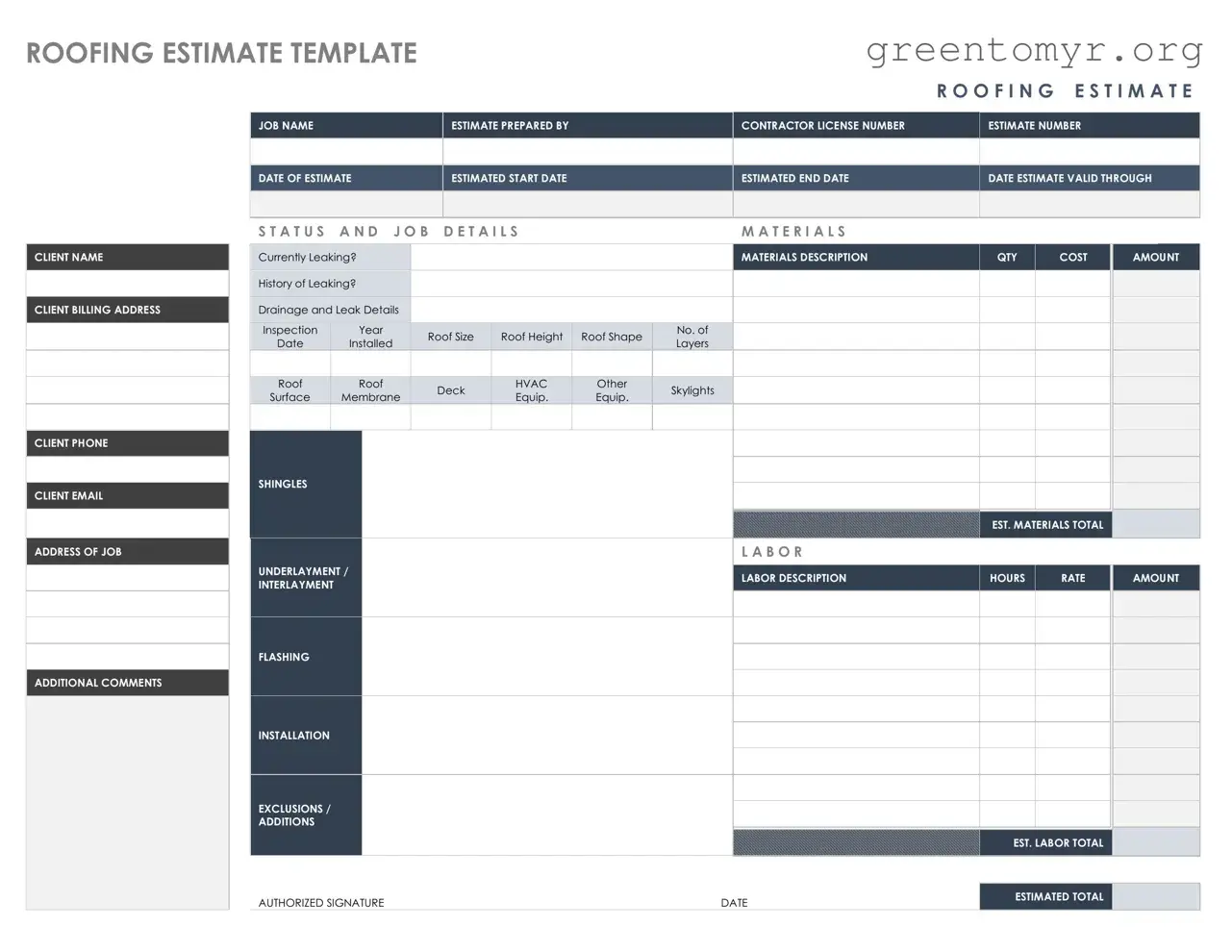
When it comes to maintaining the integrity of your home, a solid roof is essential. Understanding the roofing estimate form is a crucial step in ensuring you receive the right service at a fair price. This form typically includes key details such as the scope of work, materials to be used, and estimated costs. It also outlines the timeline for the project and any warranties that may apply. By carefully reviewing this document, homeowners can make informed decisions, compare different contractors, and ensure that all necessary aspects of the roofing job are addressed. Without a clear and comprehensive estimate, you may face unexpected costs or delays, making it vital to grasp the importance of each section of the roofing estimate form. Being proactive in this area can save you time, money, and stress in the long run.

ROOFING ESTIMATE TEMPLATE
R O O F I N G E S T I M A T E
CLIENT NAME
CLIENT BILLING ADDRESS
CLIENT PHONE
CLIENT EMAIL
ADDRESS OF JOB
ADDITIONAL COMMENTS
|
JOB NAME |
|
|
|
|
|
|
|
|
ESTIMATE PREPARED BY |
|
|
|
|
|
|
|
CONTRACTOR LICENSE NUMBER |
|
|
ESTIMATE NUMBER |
|
|
|
|
||||||||||
|
|
|
|
|
|
|
|
|
|
|
|
|
|
|
|
|
|
|
|
|
|
||||||||||||||
|
|
|
|
|
|
|
|
|
|
|
|
|
|
|
|
|
|
|
|
|
|
|
|
|
|
|
|
|
|
|
|
|
|
|
|
|
|
|
|
|
|
|
|
|
|
|
|
|
|
|
|
|
|
|
|
|
|
|
|
|
|
|
|
|
|
|
|
|
|||
|
DATE OF ESTIMATE |
|
|
|
|
ESTIMATED START DATE |
|
|
|
|
|
|
|
ESTIMATED END DATE |
|
|
DATE ESTIMATE VALID THROUGH |
|
|||||||||||||||||
|
|
|
|
|
|
|
|
|
|
|
|
|
|
|
|
|
|
|
|
|
|
|
|
|
|
|
|
|
|
|
|
|
|
|
|
|
|
|
|
|
|
|
|
|
|
|
|
|
|
|
|
|
|
|
|
|
|
|
|
|
|
|
|
|
|
|
|
|
|
|
|
|
S T A T U S A N D J O B D E T A I L S |
|
|
|
|
|
|
|
M A T E R I A L S |
|
|
|
|
|
|
|
|
|
|
||||||||||||||||
|
|
|
|
|
|
|
|
|
|
|
|
|
|
|
|
|
|
|
|
|
|
|
|
|
|
|
|
|
|
|
|
|
|||
|
Currently Leaking? |
|
|
|
|
|
|
|
|
|
|
|
|
|
|
|
|
|
MATERIALS DESCRIPTION |
|
|
QTY |
|
|
COST |
|
|
AMOUNT |
|
||||||
|
|
|
|
|
|
|
|
|
|
|
|
|
|
|
|
|
|
|
|
|
|
|
|
|
|
|
|
|
|
|
|
|
|
|
|
|
History of Leaking? |
|
|
|
|
|
|
|
|
|
|
|
|
|
|
|
|
|
|
|
|
|
|
|
|
|
|
|
|
|
|||||
|
|
|
|
|
|
|
|
|
|
|
|
|
|
|
|
|
|
|
|
|
|
|
|
|
|
|
|
|
|
|
|
|
|
|
|
|
Drainage and Leak Details |
|
|
|
|
|
|
|
|
|
|
|
|
|
|
|
|
|
|
|
|
|
|
|
|
|
|
|
|
|
|||||
|
|
|
|
|
|
|
|
|
|
|
|
|
|
|
|
|
|
|
|
|
|
|
|
|
|
|
|
|
|
|
|
|
|
|
|
|
Inspection |
|
|
|
Year |
|
|
Roof Size |
|
|
Roof Height |
|
|
Roof Shape |
|
|
No. of |
|
|
|
|
|
|
|
|
|
|
|
|
||||||
|
Date |
|
|
Installed |
|
|
|
|
|
|
|
|
Layers |
|
|
|
|
|
|
|
|
|
|
|
|
|
|
||||||||
|
|
|
|
|
|
|
|
|
|
|
|
|
|
|
|
|
|
|
|
|
|
|
|
|
|
|
|
|
|||||||
|
|
|
|
|
|
|
|
|
|
|
|
|
|
|
|
|
|
|
|
|
|
|
|
|
|
|
|
|
|
|
|
|
|
|
|
|
Roof |
|
|
|
Roof |
|
|
|
Deck |
|
|
HVAC |
|
|
Other |
|
|
Skylights |
|
|
|
|
|
|
|
|
|
|
|
|
|
|
|||
|
Surface |
|
|
Membrane |
|
|
|
|
|
Equip. |
|
|
Equip. |
|
|
|
|
|
|
|
|
|
|
|
|
|
|
||||||||
|
|
|
|
|
|
|
|
|
|
|
|
|
|
|
|
|
|
|
|
|
|
|
|
|
|
|
|
|
|
||||||
|
|
|
|
|
|
|
|
|
|
|
|
|
|
|
|
|
|
|
|
|
|
|
|
|
|
|
|
|
|
|
|
|
|
|
|
|
SHINGLES |
|
|
|
|
|
|
|
|
|
|
|
|
|
|
|
|
|
|
|
|
|
|
|
|
|
|
|
|
|
|
|
|
||
|
|
|
|
|
|
|
|
|
|
|
|
|
|
|
|
|
|
|
|
|
|
|
|
|
|
|
|
|
|
|
|
|
|||
|
|
|
|
|
|
|
|
|
|
|
|
|
|
|
|
|
|
|
|
|
|
|
|
|
|
|
|
|
|
|
|
|
|||
|
|
|
|
|
|
|
|
|
|
|
|
|
|
|
|
|
|
|
|
|
|
|
|
|
|
|
|
|
|
|
|
|
|
|
|
|
|
|
|
|
|
|
|
|
|
|
|
|
|
|
|
|
|
|
|
|
|
|
|
|
|
|
EST. MATERIALS TOTAL |
|
|
|
|
|
|||
|
|
|
|
|
|
|
|
|
|
|
|
|
|
|
|
|
|
|
|
|
|
|
|
|
|
|
|
|
|
|
|
|
|
|
|
|
|
|
|
|
|
|
|
|
|
|
|
|
|
|
|
|
|
|
|
|
|
|
|
L A B O R |
|
|
|
|
|
|
|
|
|
|
|
|
UNDERLAYMENT / |
|
|
|
|
|
|
|
|
|
|
|
|
|
|
|
|
|
|
|
|
|
|
|
|
|
|
|
|
|
|
||||
|
|
|
|
|
|
|
|
|
|
|
|
|
|
|
|
|
|
|
|
LABOR DESCRIPTION |
|
|
HOURS |
|
|
RATE |
|
|
AMOUNT |
|
|||||
|
INTERLAYMENT |
|
|
|
|
|
|
|
|
|
|
|
|
|
|
|
|
|
|
|
|
|
|
|
|
|
|
|
|||||||
|
|
|
|
|
|
|
|
|
|
|
|
|
|
|
|
|
|
|
|
|
|
|
|
|
|
|
|
|
|
|
|
|
|||
|
|
|
|
|
|
|
|
|
|
|
|
|
|
|
|
|
|
|
|
|
|
|
|
|
|
|
|
|
|
|
|
|
|
|
|
|
FLASHING |
|
|
|
|
|
|
|
|
|
|
|
|
|
|
|
|
|
|
|
|
|
|
|
|
|
|
|
|
|
|
|
|
||
|
|
|
|
|
|
|
|
|
|
|
|
|
|
|
|
|
|
|
|
|
|
|
|
|
|
|
|
|
|
|
|
|
|||
|
|
|
|
|
|
|
|
|
|
|
|
|
|
|
|
|
|
|
|
|
|
|
|
|
|
|
|
|
|
|
|
|
|
|
|
|
|
|
|
|
|
|
|
|
|
|
|
|
|
|
|
|
|
|
|
|
|
|
|
|
|
|
|
|
|
|
|
|
|
|
|
|
INSTALLATION |
|
|
|
|
|
|
|
|
|
|
|
|
|
|
|
|
|
|
|
|
|
|
|
|
|
|
|
|
|
|
|
|
||
|
|
|
|
|
|
|
|
|
|
|
|
|
|
|
|
|
|
|
|
|
|
|
|
|
|
|
|
|
|
|
|
|
|||
|
|
|
|
|
|
|
|
|
|
|
|
|
|
|
|
|
|
|
|
|
|
|
|
|
|
|
|
|
|
|
|
|
|
|
|
|
|
|
|
|
|
|
|
|
|
|
|
|
|
|
|
|
|
|
|
|
|
|
|
|
|
|
|
|
|
|
|
|
|
|
|
|
EXCLUSIONS / |
|
|
|
|
|
|
|
|
|
|
|
|
|
|
|
|
|
|
|
|
|
|
|
|
|
|
|
|
|
|
|
|
||
|
|
|
|
|
|
|
|
|
|
|
|
|
|
|
|
|
|
|
|
|
|
|
|
|
|
|
|
|
|
|
|
|
|||
|
ADDITIONS |
|
|
|
|
|
|
|
|
|
|
|
|
|
|
|
|
|
|
|
|
|
|
|
|
|
|
|
|
|
|
|
|
||
|
|
|
|
|
|
|
|
|
|
|
|
|
|
|
|
|
|
|
|
|
|
|
|
|
|
|
EST. LABOR TOTAL |
|
|
|
|
|
|||
|
|
|
|
|
|
|
|
|
|
|
|
|
|
|
|
|
|
|
|
|
|
|
|
|
|
|
|
|
|
|
|
|
|
|
|
|
|
|
|
|
|
|
|
|
|
|
|
|
|
|
|
|
|
|
|
|
|
|
|
|
|
|
|
|
|
|
|
||||
|
AUTHORIZED SIGNATURE |
|
|
|
|
|
|
|
|
|
|
|
|
|
DATE |
|
ESTIMATED TOTAL |
|
|
|
|
|
|||||||||||||
|
|
|
|
|
|
|
|
|
|
|
|
|
|
|
|
|
|
|
|
|
|
|
|
||||||||||||
| Fact Name | Description |
|---|---|
| Purpose | The Roofing Estimate form provides a detailed breakdown of costs associated with roofing services. |
| Components | It typically includes labor costs, material expenses, and any additional fees. |
| Legal Requirements | In some states, specific disclosures must be included, such as licensing information. |
| Governing Laws | State laws may dictate the format and content of the estimate; for example, California requires compliance with the Business and Professions Code. |
| Signature Requirement | Many jurisdictions require the homeowner's signature to confirm acceptance of the estimate. |
| Validity Period | The estimate often has a validity period, after which the terms may change. |
After obtaining the Roofing Estimate form, you will need to provide specific information to ensure an accurate assessment of your roofing needs. Follow the steps below to complete the form correctly.
The Roofing Estimate form is a tool designed to help homeowners and property managers request a detailed assessment of roofing services. By filling out this form, you provide essential information that allows roofing contractors to evaluate your needs and offer accurate pricing.
Completing the Roofing Estimate form streamlines the process of getting a quote for your roofing project. It ensures that contractors have all the necessary information upfront, which can lead to quicker responses and more accurate estimates. Additionally, it helps you outline your specific needs and preferences.
The form typically requires the following details:
Providing as much detail as possible will help contractors give you a more accurate estimate.
Response times can vary depending on the contractor's workload. Generally, you can expect to receive an estimate within 24 to 48 hours after submitting the Roofing Estimate form. If you haven't heard back within that timeframe, it’s perfectly okay to follow up with the contractor.
Most roofing contractors offer free estimates to encourage potential clients to explore their services. However, it's wise to confirm this when you submit your form, as some specialized services might come with a fee.
Once you receive your estimate, review it carefully. The estimate will detail the scope of work, materials needed, and associated costs. If you have questions or need clarifications, don’t hesitate to reach out to the contractor. You can also use this estimate to compare with other contractors to ensure you're getting the best value.
Yes, if you realize you need to adjust any details after submitting the form, simply contact the contractor directly. They will guide you on how to update your request. Clear communication helps ensure that your needs are met accurately.
When filling out a Roofing Estimate form, many individuals overlook key details that can lead to inaccuracies in their estimates. One common mistake is failing to provide complete contact information. Without a valid phone number or email address, contractors cannot reach out for clarification or to discuss the estimate.
Another frequent error is neglecting to specify the type of roofing material desired. Whether it’s asphalt shingles, metal, or tile, each material has different costs and installation requirements. Omitting this information can result in an estimate that does not reflect the homeowner's preferences.
People often forget to include the size of the roof. Measurements should be as precise as possible. Inaccurate dimensions can lead to significant discrepancies in the final quote, potentially resulting in unexpected costs later on.
Additionally, some individuals do not mention any existing issues with their roof. If there are leaks, structural damage, or other problems, this information is crucial for an accurate estimate. Contractors need to understand the full scope of work required.
Another mistake is overlooking the timeline for the project. Specifying when the work should start and how quickly it needs to be completed helps contractors assess their availability and plan accordingly. Without this information, scheduling can become problematic.
Many people also fail to ask questions or provide special instructions. If there are specific concerns or requirements, such as eco-friendly materials or unique design elements, these should be clearly stated. This ensures that the estimate aligns with the homeowner's vision.
Lastly, some individuals submit the form without reviewing it for errors. Simple typos or omissions can lead to misunderstandings or delays. Taking the time to double-check the information can save both parties time and frustration.
When working with roofing projects, several forms and documents are commonly used alongside the Roofing Estimate form. Each document serves a specific purpose to ensure clarity and facilitate communication between contractors and clients. Below is a list of five essential documents that may accompany a Roofing Estimate.
These documents work together to provide a comprehensive framework for managing roofing projects. Utilizing them can enhance communication, ensure compliance, and foster a positive working relationship between contractors and clients.
The Roofing Estimate form serves as a crucial document in the construction and home improvement industries. Its purpose is to provide a detailed breakdown of the costs associated with roofing projects. However, it shares similarities with several other important documents. Below is a list of seven documents that resemble the Roofing Estimate form, along with an explanation of how they are alike.
Understanding these documents helps homeowners navigate the complexities of roofing projects and ensures that they are well-informed about their commitments and expectations.
When filling out a Roofing Estimate form, it is important to approach the task with care and attention. Here are some essential dos and don'ts to consider:
By adhering to these guidelines, you can help ensure that your roofing estimate is as accurate and comprehensive as possible. This will facilitate a smoother process for both you and the contractor.
When it comes to roofing estimates, many people have misconceptions that can lead to confusion or misinformed decisions. Here are six common misconceptions about roofing estimate forms:
Many believe that all roofing estimates provide the same information. In reality, estimates can vary significantly based on the contractor, the materials used, and the scope of the project.
Some people think that the lowest estimate is the best deal. However, a low price may indicate subpar materials or rushed work, which can lead to higher costs down the line.
While cost is an important factor, roofing estimates also detail the materials, labor, and timeline for the project. Understanding these elements is crucial for making an informed decision.
Many assume that roofing estimates are set in stone. In fact, it’s often possible to negotiate terms, especially if you have multiple estimates to compare.
Not all contractors will give you a thorough estimate. Some may provide a vague overview without specifics. Always ask for clarity on any points that seem unclear.
People often think that signing an estimate means they cannot make changes. However, most contracts allow for modifications as long as both parties agree.
Understanding these misconceptions can help homeowners make better decisions when seeking roofing services. Always take the time to read through estimates carefully and ask questions when needed.
When filling out and using the Roofing Estimate form, it is essential to keep several key points in mind. These takeaways will help ensure accuracy and efficiency in the process.
By keeping these points in mind, individuals can navigate the roofing estimate process more effectively.