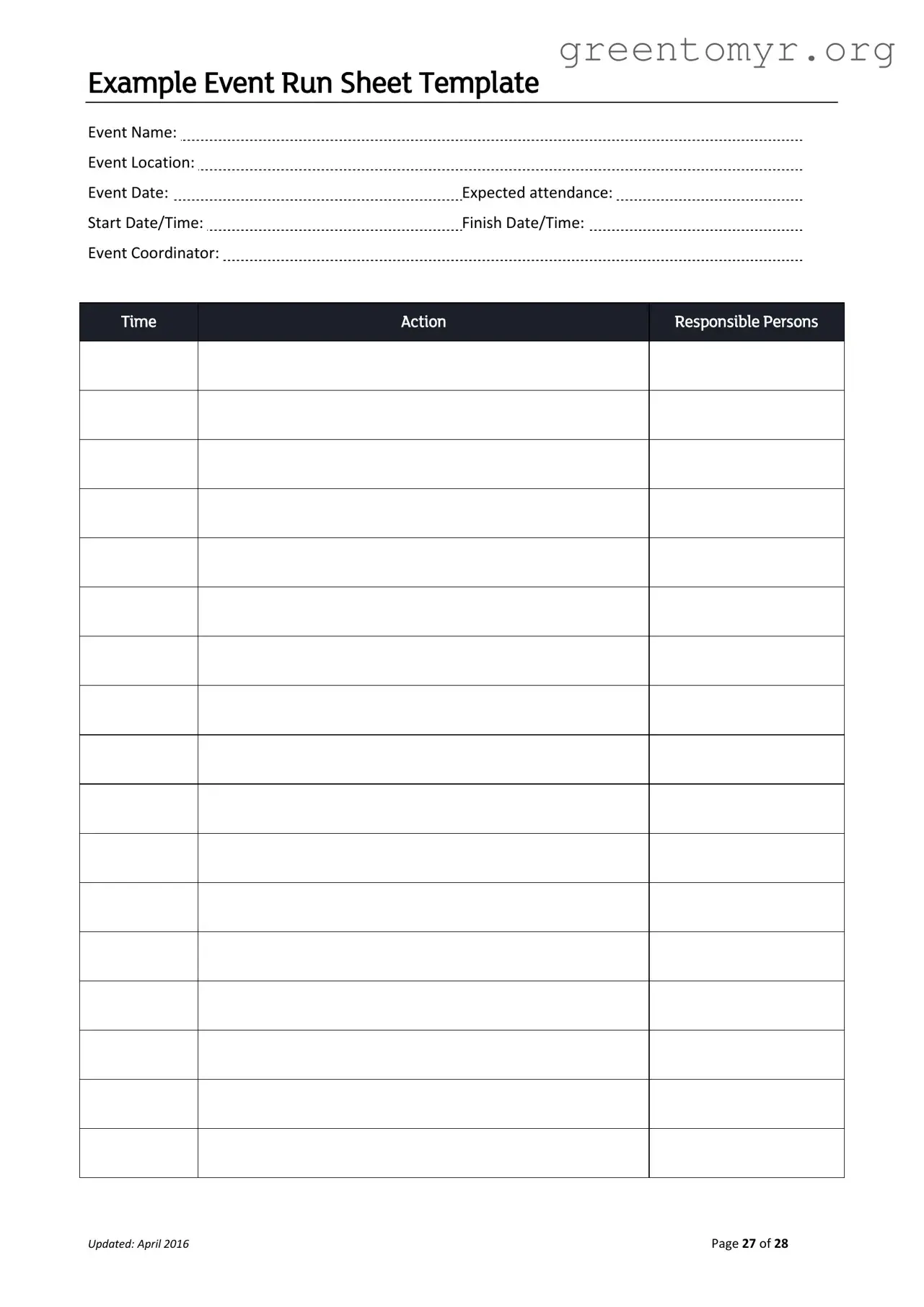
The Running Sheet form serves as a crucial tool for event planning and management, providing a structured approach to organizing various aspects of an event. It encompasses essential details such as the event name, location, and date, all of which are fundamental for ensuring a successful gathering. Additionally, the form captures expected attendance numbers, allowing coordinators to anticipate logistical needs. Key timings, including start and finish dates and times, are also recorded, helping to maintain a clear schedule. The inclusion of an event coordinator's name ensures accountability and facilitates communication among team members. Furthermore, the Running Sheet outlines specific actions to be taken, along with the responsible persons for each task, promoting a collaborative environment. This form, regularly updated to reflect current needs, is an invaluable resource for anyone involved in organizing events, ensuring that all details are meticulously planned and executed.
Example Event Run Sheet Template
Event Name: |
|
Event Location: |
|
Event Date: |
Expected attendance: |
Start Date/Time: |
Finish Date/Time: |
Event Coordinator: |
|
Time
Action
Responsible Persons
Updated: April 2016 |
Page 27 of 28 |
| Fact Name | Description |
|---|---|
| Purpose | The Running Sheet form serves as a detailed plan for event coordination, outlining key details and timelines for effective management. |
| Event Details | It includes essential information such as the event name, location, date, and expected attendance, which helps in organizing the event smoothly. |
| Timing | Start and finish times are clearly indicated, ensuring all participants are aware of the schedule and can plan accordingly. |
| Responsibility | The form designates responsible persons for each action, promoting accountability and clarity in roles during the event. |
| State-Specific Laws | In some states, the use of a Running Sheet may be governed by event planning regulations and liability laws, which vary by jurisdiction. |
To successfully complete the Running Sheet form, follow the steps outlined below. This form collects essential information about your event, ensuring all participants are informed and prepared. Once filled out, the form will serve as a guide for the event's execution.
A Running Sheet form is a detailed document used to plan and organize events. It outlines the schedule of activities, responsibilities, and logistics involved in the event. This form helps ensure that everyone involved is aware of their roles and the timing of each task, contributing to a smooth and successful event execution.
Typically, a Running Sheet form includes the following information:
This information helps everyone involved in the event stay organized and informed about what to expect.
A Running Sheet form can significantly enhance event management by providing a clear timeline and a list of responsibilities. With this document, event coordinators can:
Ultimately, this leads to better coordination and a more enjoyable experience for attendees.
The event coordinator or organizer is typically responsible for creating the Running Sheet form. This person gathers input from team members and stakeholders to ensure that all necessary details are included. In larger events, a dedicated planning team may assist in compiling the information.
The Running Sheet form should be updated regularly, especially as the event date approaches. Changes in logistics, timing, or personnel may occur, and it is crucial to keep the document current. Regular updates help prevent miscommunication and ensure that everyone is on the same page.
Yes, the Running Sheet form is versatile and can be adapted for various types of events, including corporate meetings, weddings, festivals, and more. The core structure remains the same, but specific details can be modified to suit the unique requirements of each event.
If you notice an error in the Running Sheet form, it is essential to address it promptly. Communicate the error to the event coordinator or the person responsible for maintaining the document. Corrections should be made as soon as possible to avoid confusion among team members and ensure the event runs smoothly.
While there is no universally mandated format for a Running Sheet form, many templates exist that provide a helpful starting point. A standard format often includes sections for all relevant details, such as the event name, date, and action items. Customizing the form to fit the specific needs of your event is encouraged, ensuring that it serves its purpose effectively.
Filling out a Running Sheet form can seem straightforward, but many individuals encounter common pitfalls that can lead to confusion or miscommunication. One frequent mistake is failing to accurately input the event name. This information is crucial, as it sets the context for all planning and coordination efforts. If the name is incorrect, it can lead to misunderstandings among team members and attendees.
Another common error is neglecting to specify the event location. Without a clear location, participants may struggle to find the venue, which can affect attendance and overall event success. It is essential to ensure that the location is both specific and easily recognizable.
People often overlook the importance of including the event date and expected attendance. These details are vital for logistical planning. If the date is wrong, it can result in scheduling conflicts or resource misallocation. Similarly, an inaccurate estimate of attendance can affect seating arrangements, catering, and other essential services.
Additionally, the start date/time and finish date/time fields are sometimes filled out incorrectly or left blank. These timeframes are critical for coordinating activities and ensuring that everything runs smoothly. If the times are not clearly defined, it can lead to delays and confusion during the event.
Another mistake involves not identifying the event coordinator. This person plays a key role in managing the event, and their absence from the form can create a leadership vacuum. Clearly designating a coordinator helps streamline communication and decision-making.
Lastly, individuals may forget to update the form with the latest information. Keeping the Running Sheet current is essential for effective planning. Regular updates ensure that all team members are on the same page and can respond to any changes that arise.
The Running Sheet form is a crucial tool for event planning, providing a structured overview of all activities and responsibilities during an event. However, several other documents complement the Running Sheet, ensuring that every aspect of the event is well-organized and executed smoothly. Below is a list of commonly used forms and documents that work in tandem with the Running Sheet.
Utilizing these documents alongside the Running Sheet form can greatly enhance the planning and execution of an event. Each document plays a vital role in ensuring that all aspects are addressed, leading to a successful and memorable experience for everyone involved.
The Running Sheet form is an essential tool for organizing events, providing a clear outline of the schedule and responsibilities. Several other documents share similarities with the Running Sheet, each serving a unique purpose while maintaining a focus on organization and clarity. Here are nine documents that are similar to the Running Sheet form:
When filling out the Running Sheet form, it’s essential to follow certain guidelines to ensure accuracy and clarity. Here’s a list of things you should and shouldn’t do:
By following these guidelines, you can help ensure that your Running Sheet is both effective and easy to understand for everyone involved in the event.
Understanding the Running Sheet form is crucial for effective event management. However, several misconceptions can lead to confusion. Here are nine common misunderstandings:
By addressing these misconceptions, event planners can utilize the Running Sheet more effectively, ensuring a smoother event experience for everyone involved.
When using the Running Sheet form, there are several important considerations to keep in mind. These takeaways can help ensure that the event runs smoothly and efficiently.