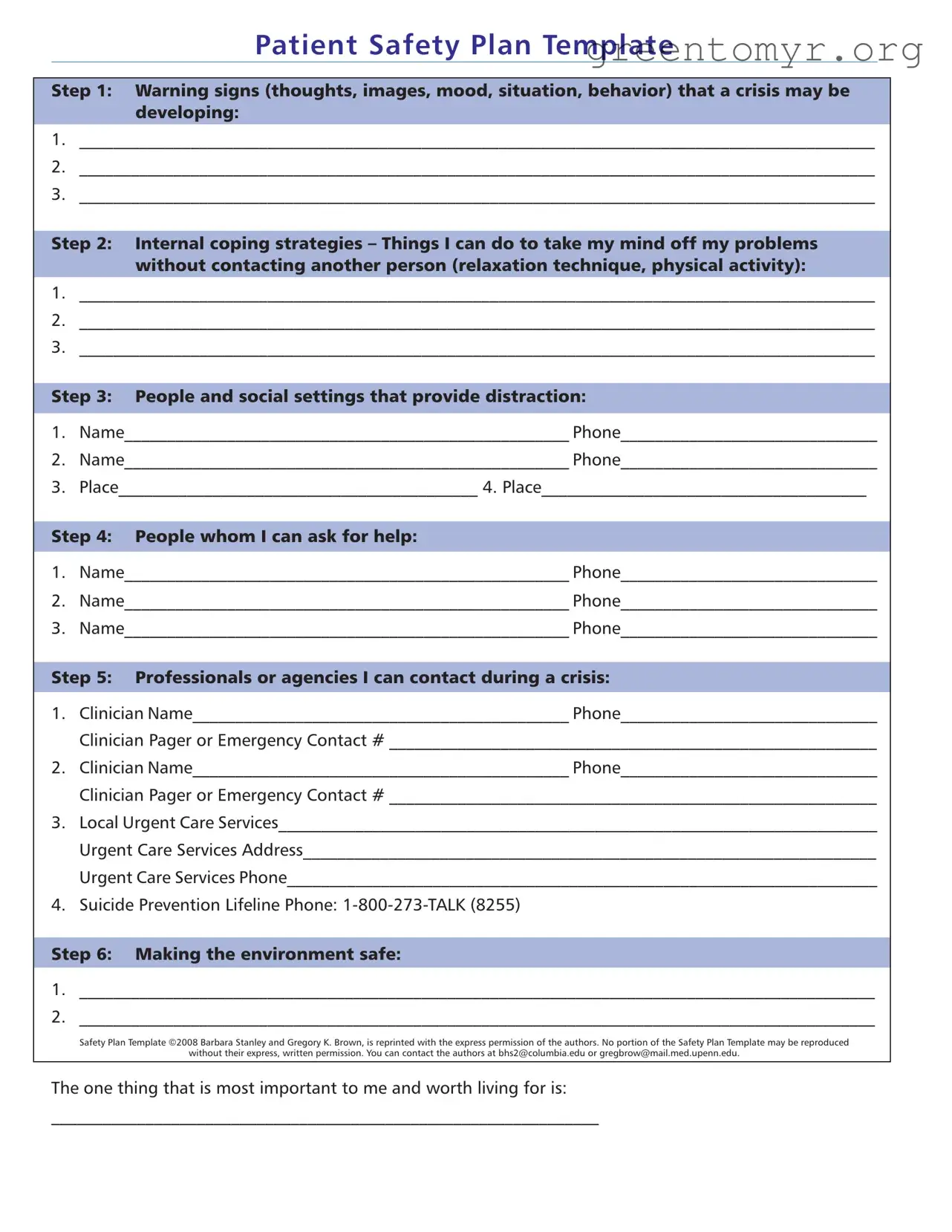
The Safety Plan form serves as a vital tool for individuals navigating mental health challenges, offering a structured approach to crisis management. It begins by identifying warning signs, such as specific thoughts, moods, or behaviors that may signal an impending crisis. Recognizing these early indicators can empower individuals to take proactive steps. Next, the form encourages the development of internal coping strategies, suggesting activities that can provide distraction and alleviate distress without needing to reach out to others. Additionally, it highlights the importance of social support by listing people and places that can serve as sources of distraction and comfort. The form also emphasizes the need for a reliable support network by identifying individuals who can be contacted for help during a crisis. Furthermore, it includes a section for professional resources, detailing clinicians and agencies that can provide immediate assistance. Finally, the form addresses environmental safety, prompting individuals to consider adjustments that can enhance their immediate surroundings. Ultimately, this comprehensive plan culminates in a personal reflection on what matters most, reinforcing the value of life and connection in challenging times.

Patient Safety Plan Template
Step 1: Warning signs (thoughts, images, mood, situation, behavior) that a crisis may be developing:
1._____________________________________________________________________________________________
2._____________________________________________________________________________________________
3._____________________________________________________________________________________________
Step 2: Internal coping strategies – Things I can do to take my mind off my problems without contacting another person (relaxation technique, physical activity):
1._____________________________________________________________________________________________
2._____________________________________________________________________________________________
3._____________________________________________________________________________________________
Step 3: People and social settings that provide distraction:
1.Name____________________________________________________ Phone______________________________
2.Name____________________________________________________ Phone______________________________
3.Place__________________________________________ 4. Place______________________________________
Step 4: People whom I can ask for help:
1.Name____________________________________________________ Phone______________________________
2.Name____________________________________________________ Phone______________________________
3.Name____________________________________________________ Phone______________________________
Step 5: Professionals or agencies I can contact during a crisis:
1.Clinician Name____________________________________________ Phone______________________________
Clinician Pager or Emergency Contact # _________________________________________________________
2.Clinician Name____________________________________________ Phone______________________________
Clinician Pager or Emergency Contact # _________________________________________________________
3.Local Urgent Care Services______________________________________________________________________
Urgent Care Services Address___________________________________________________________________
Urgent Care Services Phone_____________________________________________________________________
4.Suicide Prevention Lifeline Phone:
Step 6: Making the environment safe:
1._____________________________________________________________________________________________
2._____________________________________________________________________________________________
Safety Plan Template ©2008 Barbara Stanley and Gregory K. Brown, is reprinted with the express permission of the authors. No portion of the Safety Plan Template may be reproduced
without their express, written permission. You can contact the authors at [email protected] or [email protected].
The one thing that is most important to me and worth living for is:
________________________________________________________________
| Fact Name | Description |
|---|---|
| Purpose | The Safety Plan form is designed to help individuals identify warning signs and coping strategies during a crisis. |
| Structure | The form is divided into six steps, each focusing on different aspects of crisis management. |
| Warning Signs | Individuals are encouraged to list specific thoughts, images, moods, situations, or behaviors that indicate a developing crisis. |
| Coping Strategies | The form prompts users to identify internal coping strategies that can be employed without needing to contact others. |
| Support Network | Step three focuses on identifying people and social settings that can provide distraction during difficult times. |
| Help Sources | Individuals are advised to list people they can reach out to for help, emphasizing the importance of support. |
| Professional Contacts | The form includes a section for listing professionals or agencies that can be contacted during a crisis, including urgent care services. |
| Safety Measures | Making the environment safe is highlighted as a critical step in the plan, with space to outline specific actions. |
| Copyright Information | The Safety Plan Template is copyrighted and cannot be reproduced without the authors' permission. |
Completing the Safety Plan form is an important step in preparing for potential crises. This form helps individuals identify their warning signs, coping strategies, and support systems. By filling it out, you create a personalized plan that can guide you during difficult times. Follow these steps carefully to ensure you cover all necessary areas.
The Safety Plan form is a structured tool designed to help individuals identify warning signs of a crisis, develop coping strategies, and outline resources for support. It is an essential resource for anyone who may be at risk of self-harm or suicidal thoughts.
Anyone who experiences emotional distress or has thoughts of self-harm can benefit from filling out the Safety Plan form. It is particularly useful for individuals who have a history of mental health issues or crises.
The Safety Plan form consists of six key steps:
Warning signs can include specific thoughts, feelings, or behaviors that signal a crisis. Consider what you experience when you feel overwhelmed. Write down these signs in the first step of the form.
Internal coping strategies are activities you can do alone to help manage your feelings. These might include relaxation techniques, physical activities, or hobbies that help you feel better without needing to reach out to someone else.
Include friends, family members, or anyone you trust who can provide emotional support. Make sure to have their contact information handy in case you need to reach out during a difficult time.
Identify mental health professionals, such as your therapist or psychiatrist, and any local urgent care services. It’s also important to include the Suicide Prevention Lifeline number for immediate support.
Making your environment safe involves removing or securing items that could be harmful. Think about what changes you can make to reduce risks in your surroundings. Write these down in the last step of the form.
Yes, sharing your Safety Plan with trusted individuals can be beneficial. They can help remind you of your coping strategies and support you in times of crisis.
The most important thing to include is a personal reason for living. This could be a goal, a loved one, or anything that gives you hope. It serves as a reminder of what matters most to you.
Filling out the Safety Plan form can be a crucial step in ensuring personal safety and well-being. However, there are common mistakes that individuals may make during this process. Recognizing these errors can lead to a more effective and supportive plan.
One frequent mistake is not identifying specific warning signs that indicate a crisis may be developing. Individuals often leave this section blank or provide vague descriptions. It is essential to be as detailed as possible, noting specific thoughts, images, moods, situations, or behaviors that signal distress. Clarity in this area can help both the individual and their support network recognize when action is needed.
Another common oversight is failing to include internal coping strategies. Many people underestimate the importance of having personal techniques to manage their feelings. This section should list activities that can distract or calm the individual without needing to reach out to others. By neglecting to fill this out, individuals may find themselves without immediate options during a crisis.
Additionally, some individuals do not provide enough detail when listing people and social settings that offer distraction. It is vital to include names and contact information for friends, family, or community spaces that provide comfort and support. Leaving this information incomplete can hinder the ability to seek help or distraction when it is most needed.
Furthermore, individuals may overlook the importance of specifying people they can ask for help. This section should not only include names but also reliable contact numbers. Relying on vague references can lead to confusion during critical moments. Having clear contacts ensures that support is readily available when needed.
Lastly, many people fail to thoroughly complete the section regarding professionals or agencies they can contact during a crisis. It is essential to list not only clinicians but also emergency contacts and local urgent care services. A lack of comprehensive information in this area can leave individuals feeling unsupported when they require immediate assistance.
When creating a comprehensive Safety Plan, it’s often beneficial to accompany it with other important documents. These forms can provide additional support and resources, ensuring a well-rounded approach to safety and crisis management. Below is a list of commonly used documents that complement the Safety Plan form.
Incorporating these documents alongside the Safety Plan can enhance preparedness and provide a clearer path to maintaining safety and well-being. Each form plays a unique role in supporting individuals through challenging times, ensuring they have the necessary resources at their fingertips.
When filling out the Safety Plan form, it’s essential to approach the task thoughtfully. Here are six things you should and shouldn’t do to ensure the form is completed effectively.
Completing the Safety Plan form is a proactive step toward ensuring your well-being. By following these guidelines, you can create a useful resource that supports you during challenging times.
Understanding the Safety Plan form is crucial for those who may need it. However, several misconceptions can lead to confusion. Here are seven common misunderstandings:
Clarifying these misconceptions can empower individuals to take control of their mental health and well-being. A well-crafted Safety Plan can be an invaluable resource in times of need.
Filling out and utilizing the Safety Plan form can be a vital step in managing personal crises. Here are some key takeaways to consider:
Ultimately, the most important aspect of the Safety Plan is identifying what is worth living for. This personal reflection can serve as a guiding light during challenging times.