Content Navigation

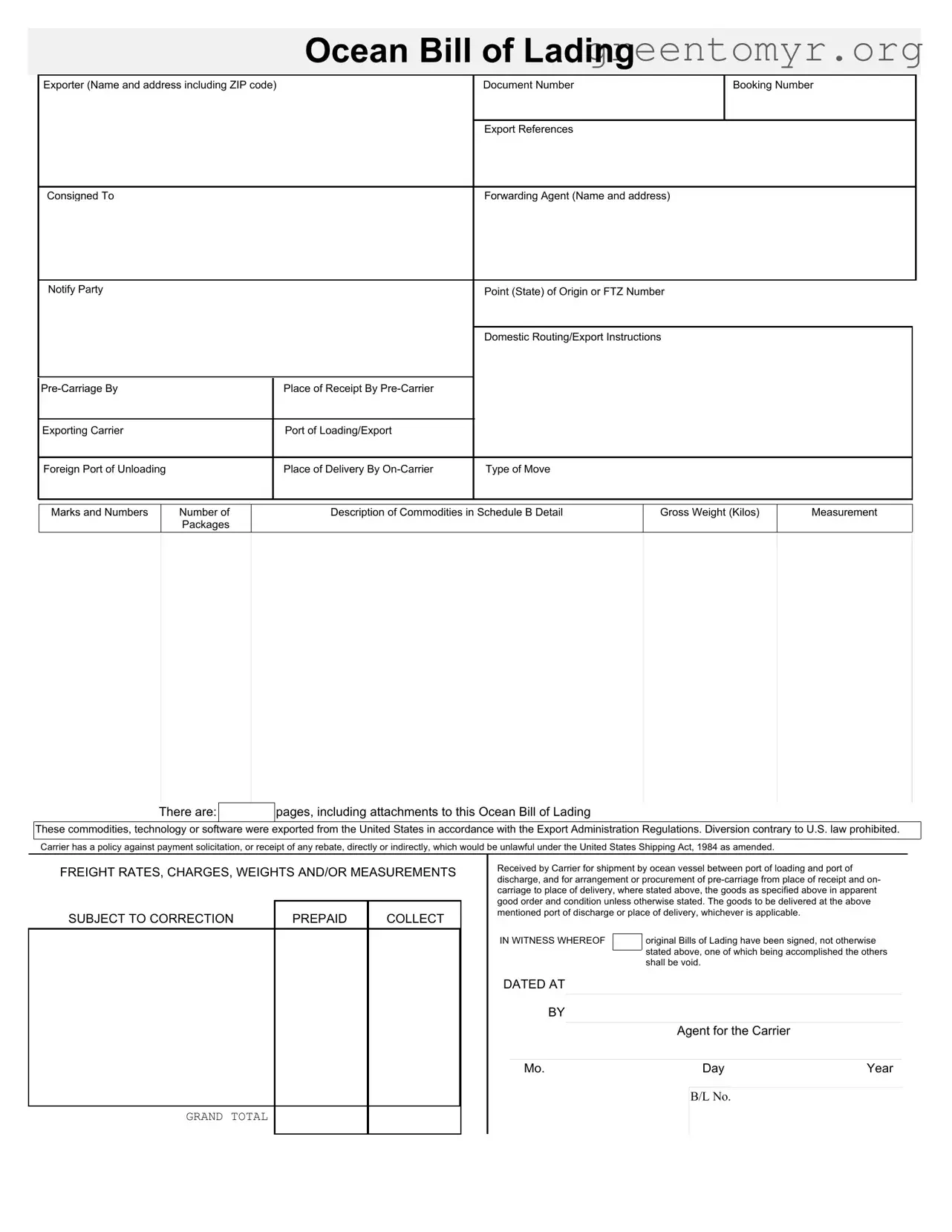
The Sample Ocean Bill of Lading form serves as a crucial document in the shipping industry, detailing essential information for the transportation of goods by sea. This form includes the names and addresses of the exporter and forwarding agent, along with critical identifiers such as the document number and booking number. It specifies the point of origin and provides instructions for domestic routing and export. Key details about the shipment, such as the exporting carrier, port of loading, and foreign port of unloading, are also included. The form outlines the description of commodities being shipped, including their gross weight and packaging details. Additionally, it emphasizes compliance with U.S. Export Administration Regulations, noting that any diversion of goods contrary to U.S. law is prohibited. The carrier's policies regarding payment solicitation and compliance with the United States Shipping Act are explicitly stated. Finally, the form confirms the receipt of goods in apparent good order and condition, setting the stage for their delivery at the designated port of discharge or place of delivery. The legal significance of this document cannot be overstated, as it serves as both a receipt and a contract between the shipper and the carrier.

Sample Ocean Bill Of Lading Example

Ocean Bill of Lading

Exporter (Name and address including ZIP code)


Document Number


Booking Number


Export References


Consigned To


Forwarding Agent (Name and address)


Notify Party


Point (State) of Origin or FTZ Number


Domestic Routing/Export Instructions


Pre-Carriage By


Place of Receipt By Pre-Carrier


Exporting Carrier


Port of Loading/Export


Foreign Port of Unloading


Place of Delivery By On-Carrier

Type of Move


Marks and Numbers


Number of


Description of Commodities in Schedule B Detail

Gross Weight (Kilos)

Measurement


Packages


There are:

pages, including attachments to this Ocean Bill of Lading

These commodities, technology or software were exported from the United States in accordance with the Export Administration Regulations. Diversion contrary to U.S. law prohibited.

Carrier has a policy against payment solicitation, or receipt of any rebate, directly or indirectly, which would be unlawful under the United States Shipping Act, 1984 as amended.

FREIGHT RATES, CHARGES, WEIGHTS AND/OR MEASUREMENTS

SUBJECT TO CORRECTION

PREPAID

COLLECT

GRAND TOTAL

Received by Carrier for shipment by ocean vessel between port of loading and port of discharge, and for arrangement or procurement of pre-carriage from place of receipt and on- carriage to place of delivery, where stated above, the goods as specified above in apparent good order and condition unless otherwise stated. The goods to be delivered at the above mentioned port of discharge or place of delivery, whichever is applicable.

IN WITNESS WHEREOF


original Bills of Lading have been signed, not otherwise


stated above, one of which being accomplished the others


shall be void.

DATED AT

BY

Agent for the Carrier

Mo.

Day

Year

B/L NO.

File Breakdown

Fact Name Description
Exporter Information The form requires the exporter's name and address, including ZIP code, to identify the sender of the goods.
Consignee Details Information about the party receiving the goods is needed, including the forwarding agent's name and address.
Governing Law This form is governed by U.S. law, specifically the Export Administration Regulations and the United States Shipping Act, 1984.
Freight Charges Freight rates and charges are subject to correction, whether prepaid or collect, ensuring accurate billing.

Guide to Using Sample Ocean Bill Of Lading

Filling out the Sample Ocean Bill of Lading form is essential for ensuring that your shipment is processed correctly. This document serves as a receipt for goods, a contract for transportation, and a document of title. To complete the form accurately, follow the steps outlined below.

  1. Exporter Information: Enter the name and address of the exporter, including ZIP code.
  2. Document Number: Fill in the specific document number assigned to this Bill of Lading.
  3. Booking Number: Write down the booking number related to your shipment.
  4. Export References: Provide any relevant export reference numbers.
  5. Consigned To: Indicate the name and address of the consignee.
  6. Forwarding Agent: Enter the name and address of the forwarding agent, if applicable.
  7. Notify Party: List the party to be notified upon arrival of the shipment.
  8. Point of Origin: Specify the state of origin or the FTZ number.
  9. Domestic Routing/Export Instructions: Include any specific routing or export instructions.
  10. Pre-Carriage By: Indicate the name of the carrier responsible for pre-carriage.
  11. Place of Receipt By: Fill in the location where the goods will be received.
  12. Exporting Carrier: Provide the name of the exporting carrier.
  13. Port of Loading/Export: Specify the port where the goods will be loaded for export.
  14. Foreign Port of Unloading: Indicate the foreign port where the goods will be unloaded.
  15. Place of Delivery By: Enter the location where the goods will be delivered.
  16. On-Carrier: Specify the name of the carrier responsible for on-carriage.
  17. Type of Move: Indicate whether the move is import, export, or transshipment.
  18. Marks and Numbers: List any marks and numbers on the packages.
  19. Number of Packages: Fill in the total number of packages being shipped.
  20. Description of Commodities: Provide a detailed description of the commodities using Schedule B numbers.
  21. Gross Weight: Enter the total gross weight in kilos.
  22. Measurement: Specify the measurements of the shipment.
  23. Attachments: Indicate the number of pages, including any attachments.
  24. Regulatory Compliance: Acknowledge that the commodities were exported in accordance with U.S. Export Administration Regulations.
  25. Carrier Policy: Note the carrier's policy against payment solicitation or unlawful rebates.
  26. Freight Rates: Understand that freight rates, charges, weights, and measurements are subject to correction.
  27. Payment Terms: Specify whether the freight is prepaid or collect.
  28. Grand Total: Enter the grand total of charges.
  29. Carrier Receipt: Confirm receipt of the goods by the carrier for shipment.
  30. Port of Discharge: State the port of discharge or place of delivery.
  31. Signature: Sign and date the form, including the agent's name and title.

Get Answers on Sample Ocean Bill Of Lading

What is an Ocean Bill of Lading?

An Ocean Bill of Lading is a crucial document in international shipping. It serves as a receipt for the goods being transported, a contract between the shipper and the carrier, and a document of title. Essentially, it outlines the details of the shipment, including the type of goods, their destination, and the parties involved in the transaction.

What information is included in the Sample Ocean Bill of Lading form?

The Sample Ocean Bill of Lading form contains several key pieces of information:

  • Exporter’s name and address
  • Document number and booking number
  • Consignee and forwarding agent details
  • Point of origin and export instructions
  • Carrier information, including port of loading and unloading
  • Description of the commodities being shipped
  • Gross weight and measurements of the cargo

Who are the parties involved in an Ocean Bill of Lading?

Several parties are typically involved in an Ocean Bill of Lading:

  1. Exporter: The individual or company sending the goods.
  2. Consignee: The person or entity receiving the goods.
  3. Carrier: The shipping company responsible for transporting the goods.
  4. Forwarding Agent: An intermediary who arranges the transportation of goods on behalf of the exporter.

What does it mean when it states "freight rates, charges, weights and/or measurements subject to correction"?

This phrase indicates that the listed freight rates, charges, weights, and measurements may not be final. They are subject to verification and adjustment based on actual conditions. Therefore, it’s essential for all parties to be aware that the final costs may differ from those initially quoted.

What is the significance of the "in witness whereof" clause?

The "in witness whereof" clause signifies that the original Bills of Lading have been signed and are legally binding. It indicates that once one of the original documents is fulfilled, the others become void. This is important for ensuring that only one valid Bill of Lading is in effect at any given time.

What are the implications of the statement regarding U.S. export regulations?

This statement emphasizes compliance with U.S. Export Administration Regulations. It highlights that the commodities being exported must not be diverted contrary to U.S. law. Violating these regulations can result in severe penalties, including fines and legal repercussions for the parties involved.

What should I do if there are discrepancies in the Ocean Bill of Lading?

If discrepancies arise, it’s crucial to address them immediately. Contact the carrier or forwarding agent to clarify any inconsistencies. Documentation should be reviewed carefully to ensure that all information is accurate and matches the actual shipment. Timely communication can help prevent issues during transit or at customs.

How can I obtain a Sample Ocean Bill of Lading form?

Sample Ocean Bill of Lading forms can typically be obtained from shipping companies, freight forwarders, or online resources that specialize in international shipping documentation. It’s advisable to use a template that aligns with the specific requirements of your shipment and the regulations governing your trade.

Common mistakes

Filling out the Sample Ocean Bill of Lading form can be a straightforward process, but many individuals make common mistakes that can lead to complications. One frequent error is neglecting to include complete and accurate information in the Exporter section. This includes the name and address, along with the ZIP code. Incomplete details can cause delays in shipment or issues with customs clearance.

Another mistake involves the Document Number and Booking Number. These numbers are critical for tracking the shipment and ensuring that all parties are on the same page. Failing to input these numbers correctly can result in lost shipments or miscommunication with the carrier.

People often overlook the importance of specifying the Consigned To and Forwarding Agent sections. If the recipient’s information is incorrect or incomplete, it may lead to the goods being sent to the wrong address. Additionally, the Notify Party section should not be ignored, as this informs others about the shipment's status and any necessary actions they need to take.

Another common oversight occurs in the Point of Origin or FTZ Number section. Failing to provide this information can complicate the logistics of the shipment and may lead to regulatory issues. It is essential to ensure that the correct state or foreign trade zone number is included.

When it comes to the Description of Commodities, accuracy is vital. Many people make the mistake of providing vague descriptions or omitting details altogether. This can lead to problems with customs and may even result in fines or confiscation of goods. A detailed description helps ensure compliance with regulations.

Another area of concern is the Gross Weight and Measurement section. Errors in weight or measurements can affect freight charges and shipping logistics. It is crucial to double-check these figures to avoid unexpected costs or complications during transit.

Individuals sometimes neglect to include the correct Type of Move, which can lead to confusion regarding the shipment's routing. It is important to indicate whether the move is domestic or international and to specify the nature of the transport clearly.

Lastly, many people fail to sign and date the form properly. The IN WITNESS WHEREOF section must be completed accurately, as the absence of a signature can render the document invalid. This oversight can lead to significant issues when attempting to claim the goods or resolve disputes.

Documents used along the form

The Sample Ocean Bill of Lading is a critical document in the shipping process, serving as a receipt for goods and a contract between the shipper and carrier. Several other documents often accompany this form to ensure compliance with regulations and to facilitate the smooth movement of goods. Below is a list of commonly used forms and documents in conjunction with the Ocean Bill of Lading.

  • Commercial Invoice: This document provides a detailed account of the transaction between the buyer and seller, including descriptions of the goods, their value, and payment terms.
  • Packing List: A packing list outlines the contents of each package being shipped, including dimensions and weight, which aids in inventory management and customs clearance.
  • Export Declaration: Required by U.S. Customs, this document reports the export of goods and is essential for compliance with trade regulations.
  • Certificate of Origin: This document certifies the country in which the goods were produced, which can affect tariffs and trade agreements.
  • Insurance Certificate: This document provides proof of insurance coverage for the goods during transit, protecting against potential losses or damages.
  • Letter of Credit: Often used in international trade, this financial document ensures that payment will be made to the seller once specific conditions are met.
  • Import License: Depending on the nature of the goods, an import license may be required by the destination country to legally import the items.
  • Shipper's Letter of Instruction: This document provides specific instructions from the shipper to the carrier regarding the handling and transportation of the goods.
  • Transit Manifest: A transit manifest lists all the cargo being transported and is used by customs authorities for verification purposes.

Each of these documents plays a vital role in the shipping process, ensuring that all parties involved have the necessary information to comply with legal requirements and facilitate the successful transportation of goods. Proper documentation is essential for minimizing delays and avoiding potential legal issues during international shipping.

Similar forms

  • Air Waybill: Similar to the Ocean Bill of Lading, the Air Waybill serves as a receipt for goods and a contract between the shipper and the airline. It outlines the details of the shipment, including the sender, recipient, and nature of the goods, ensuring that both parties have a clear understanding of the transportation terms.
  • Rail Bill of Lading: This document is used for shipments transported by rail. Like the Ocean Bill of Lading, it acts as a contract and receipt, detailing the shipment's origin, destination, and contents. It also includes liability terms for the carrier.
  • Truck Bill of Lading: Used for ground transportation, the Truck Bill of Lading provides similar functions. It documents the shipment details, including addresses and descriptions of the goods, and serves as proof of delivery once the goods reach their destination.
  • Combined Transport Bill of Lading: This document covers shipments that involve multiple modes of transport. It combines elements of the Ocean Bill of Lading and other transport documents, detailing the entire journey of the goods from origin to destination.
  • Freight Forwarder’s Bill of Lading: Issued by a freight forwarder, this document serves as a receipt and contract for the transportation of goods. It includes similar information to the Ocean Bill of Lading but may also encompass additional services provided by the forwarder.
  • Warehouse Receipt: While primarily a document of storage, a Warehouse Receipt can resemble an Ocean Bill of Lading in that it acknowledges the receipt of goods and outlines their condition. It can be used to transfer ownership of the goods while in storage.

Dos and Don'ts

When filling out the Sample Ocean Bill of Lading form, it's important to be careful and thorough. Here’s a list of things you should and shouldn’t do:

  • Do include the complete name and address of the exporter, including the ZIP code.
  • Do ensure all numbers, like the document number and booking number, are accurate.
  • Do specify the type of move clearly to avoid confusion.
  • Do double-check the gross weight and measurements of the cargo.
  • Do sign and date the form to validate it.
  • Don’t leave any sections blank; all fields must be filled out.
  • Don’t use abbreviations that could lead to misunderstandings.
  • Don’t forget to include the notify party information.
  • Don’t misrepresent the description of the commodities.
  • Don’t ignore any regulations related to export compliance.

Misconceptions

Misconceptions about the Sample Ocean Bill of Lading form can lead to confusion for exporters and importers alike. Below are seven common misconceptions explained.

  • It is a contract of sale. The Ocean Bill of Lading is not a contract of sale; it is a document that serves as a receipt for goods and evidence of the contract of carriage.
  • It guarantees delivery. While it outlines shipping details, it does not guarantee that the goods will be delivered in perfect condition or on time.
  • All information is optional. Many fields are mandatory. Missing information can lead to delays or complications in the shipping process.
  • It is only relevant for international shipping. The Ocean Bill of Lading can also be used for domestic shipments that involve ocean transport.
  • It is the same as a receipt. Although it serves as a receipt, it also has legal implications regarding ownership and liability during transit.
  • It cannot be amended. Amendments can be made to the Bill of Lading, but they must be documented properly and agreed upon by all parties involved.
  • It is only for large shipments. The Ocean Bill of Lading can be used for shipments of any size, as long as they are transported by ocean vessel.

Understanding these misconceptions can help ensure smoother transactions and compliance with shipping regulations.

Key takeaways

Filling out and utilizing the Sample Ocean Bill of Lading form is crucial for ensuring a smooth shipping process. Here are five key takeaways to consider:

  • Accuracy is Essential: Each section of the form must be completed with precise information, including the names and addresses of the exporter, consignee, and forwarding agent. Any errors can lead to delays or legal complications.
  • Understand Your Responsibilities: The form outlines the obligations of the carrier and the shipper. Familiarize yourself with these responsibilities to ensure compliance with regulations and avoid potential liabilities.
  • Keep Documentation Organized: The Bill of Lading serves as a receipt and a contract for the shipment. Retain copies of the completed form and any attachments for your records and future reference.
  • Be Aware of Legal Implications: The form includes important legal language regarding export regulations and payment policies. Understanding these clauses can help you navigate legal requirements and avoid violations.
  • Review Freight Charges: The section detailing freight rates and charges is subject to correction. Regularly review these figures to ensure they are accurate and reflect the agreed-upon terms.

By keeping these takeaways in mind, individuals and businesses can effectively navigate the complexities of shipping goods internationally.