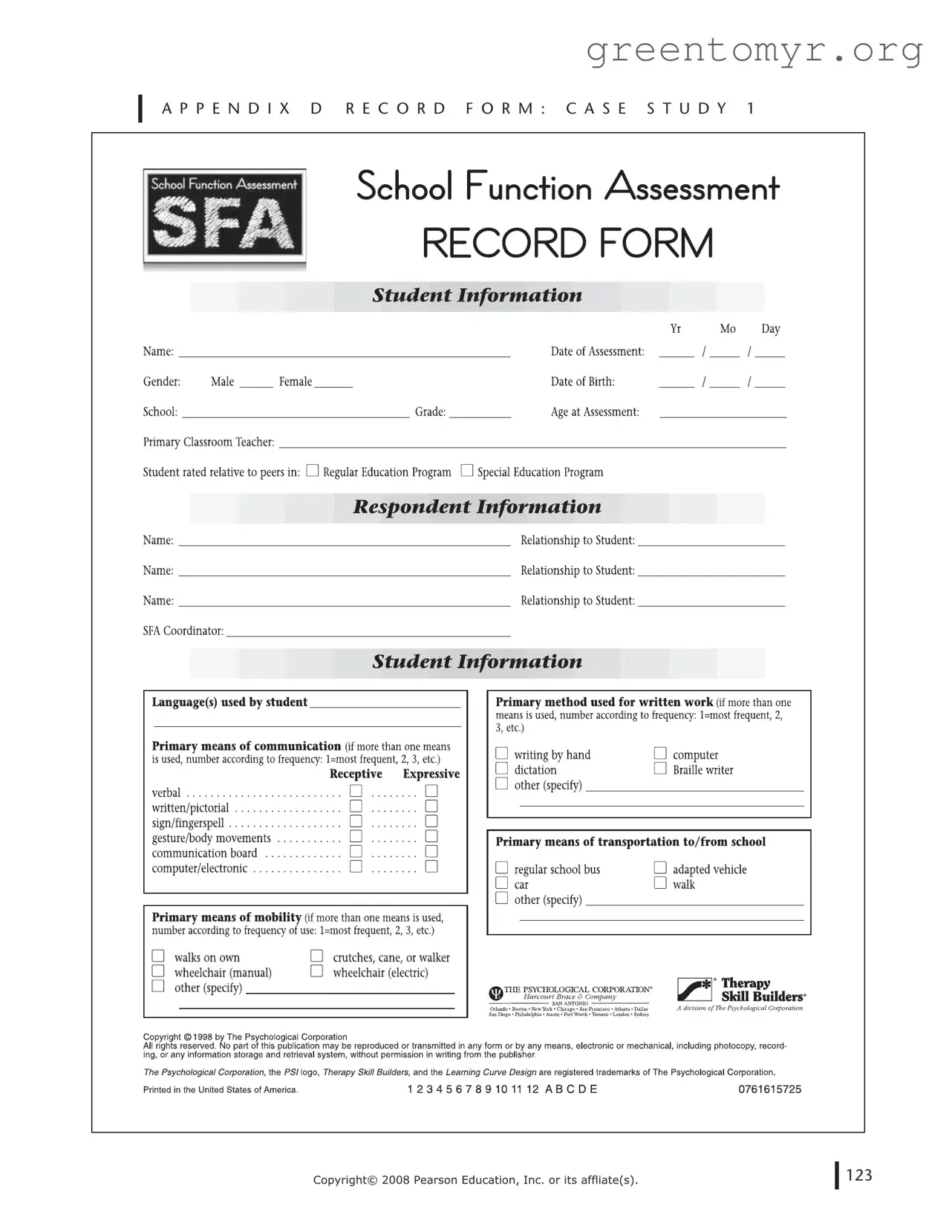
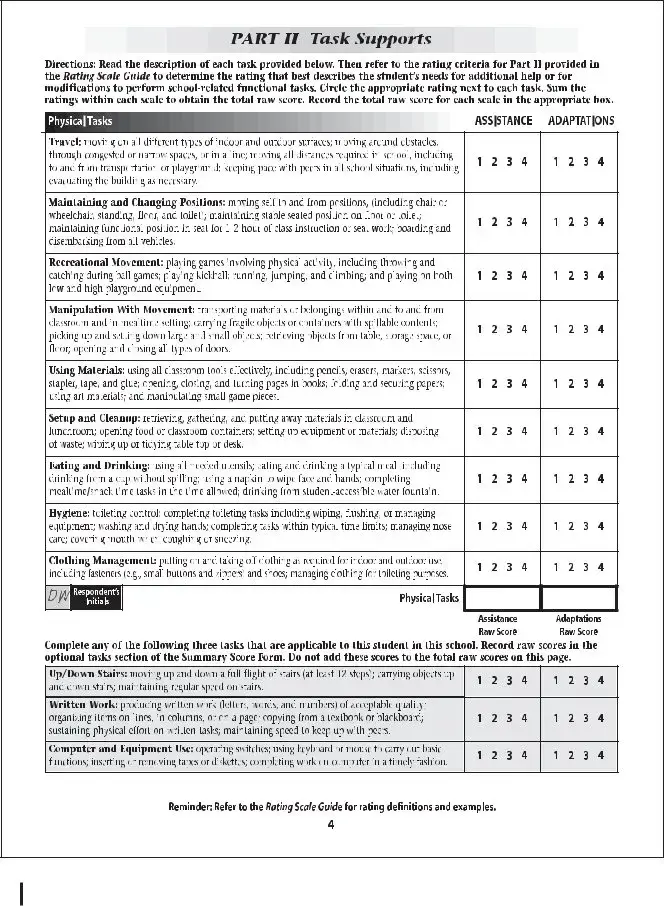
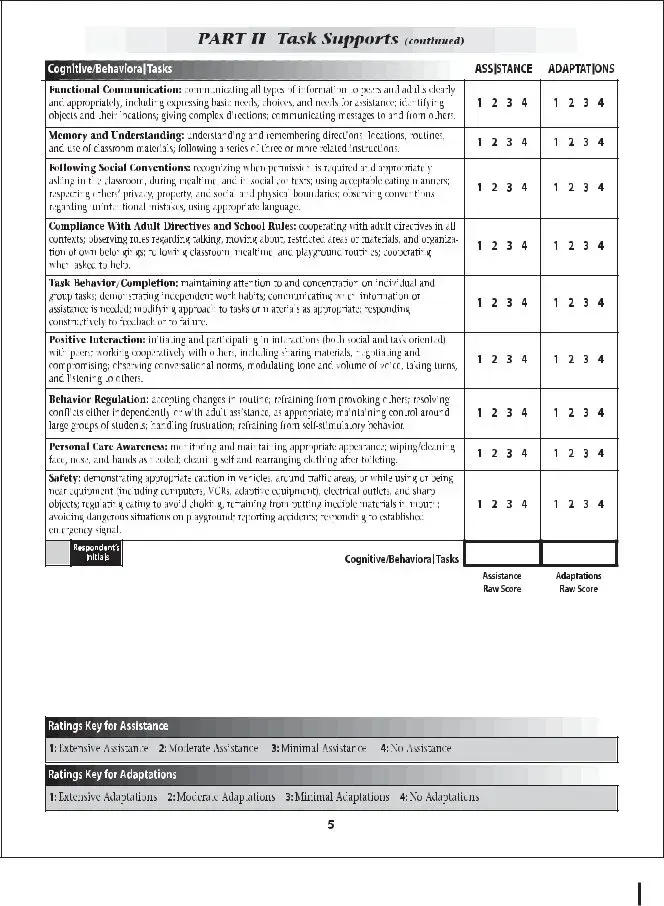
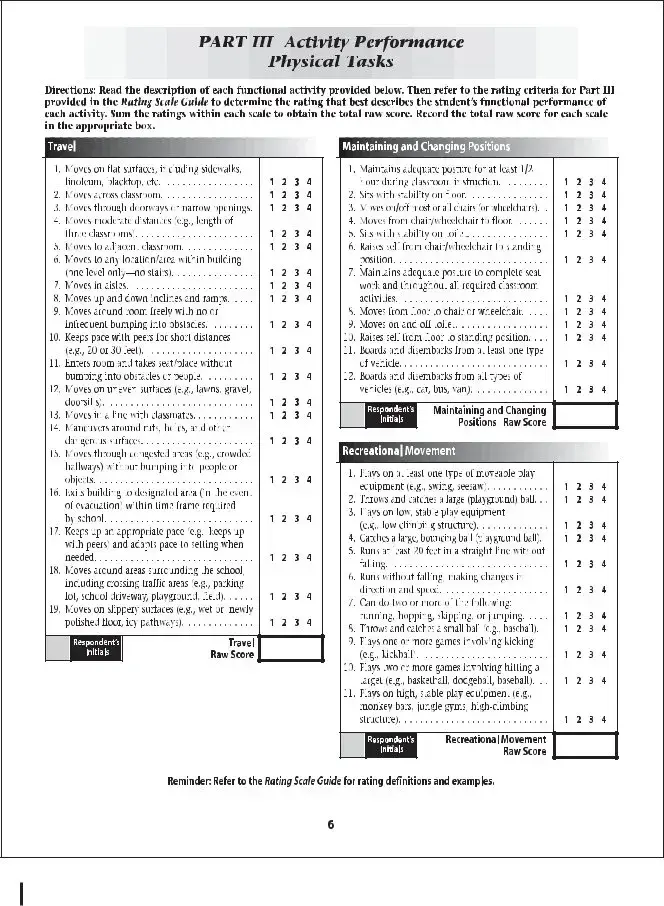
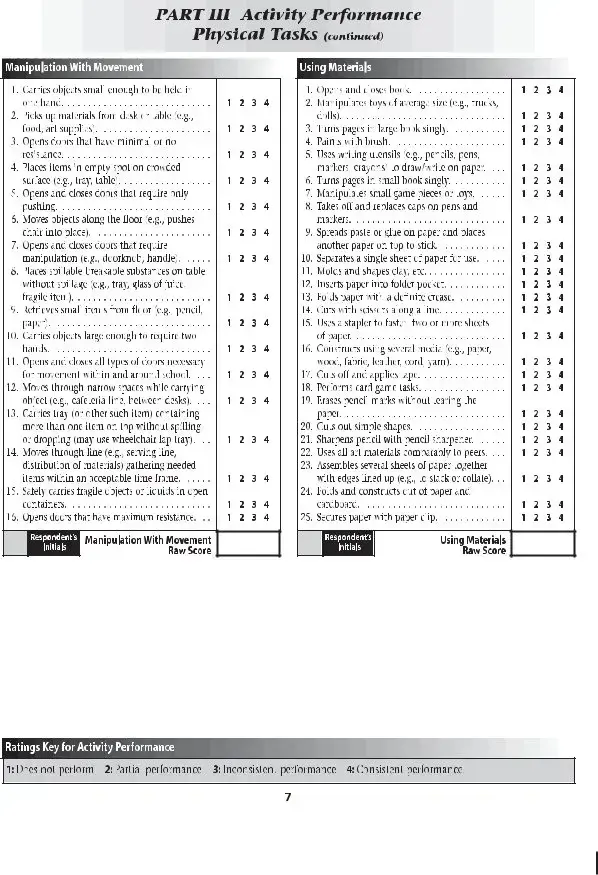
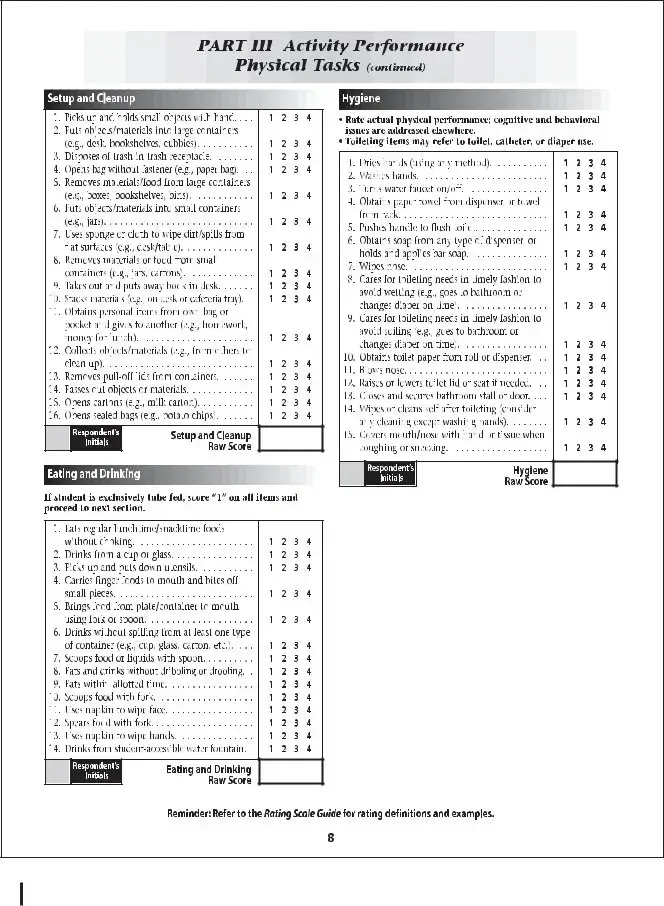
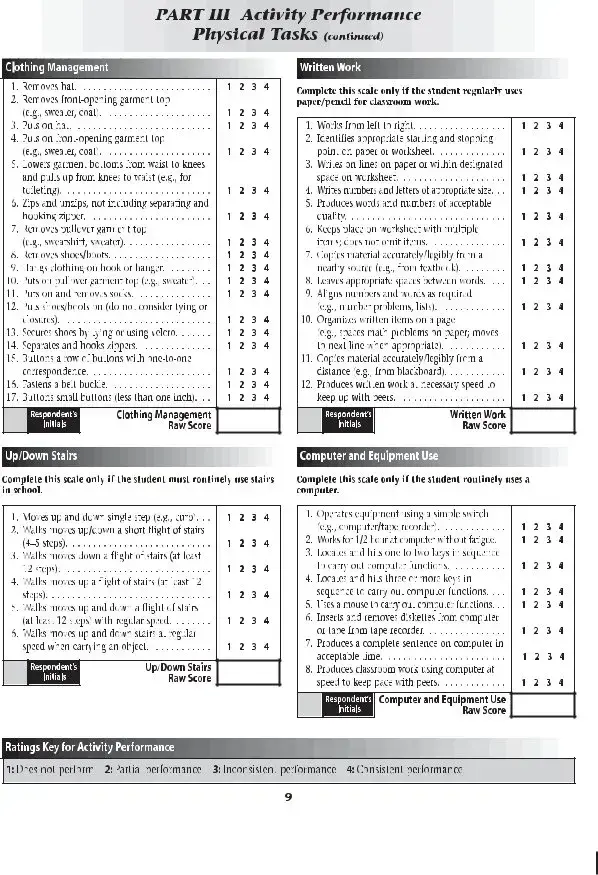
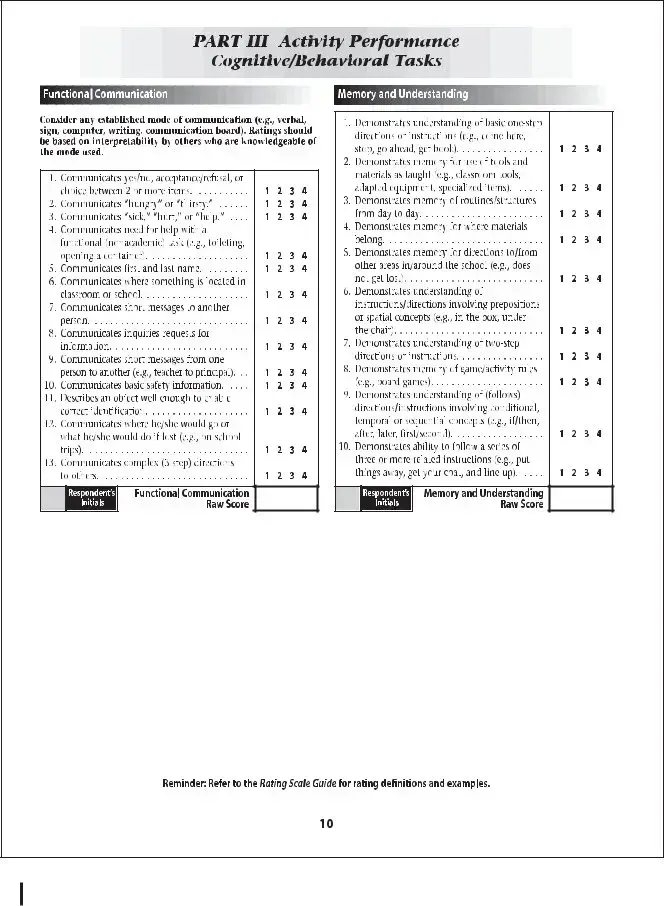
The School Function Assessment (SFA) form plays a crucial role in evaluating students' functional abilities within the school environment. Designed for use with children in kindergarten through sixth grade, the SFA assesses various aspects of a child's performance, including their ability to participate in school activities, manage daily tasks, and interact with peers. This comprehensive tool focuses on three primary areas: participation, task support, and activity performance. By gathering insights from teachers and caregivers, the SFA provides valuable data that can guide individualized education plans (IEPs) and support services. Furthermore, it aids in identifying students who may require additional assistance, ensuring that each child receives the appropriate resources to thrive in their educational setting. Through its structured approach, the SFA highlights the importance of functional skills in fostering academic success and social integration.
A P P E N D I X D R E C O R D F O R M : C A S E S T U D Y 1 |
Copyright© 2008 Pearson Education, Inc. or its affliate(s).
123
R E C O R D F O R M : C A S E S T U D Y 1 |
124
Copyright© 2008 Pearson Education, Inc. or its affliate(s).
R E C O R D F O R M : C A S E S T U D Y 1 |
Copyright© 2008 Pearson Education, Inc. or its affliate(s).
125
R E C O R D F O R M : C A S E S T U D Y 1 |
126
Copyright© 2008 Pearson Education, Inc. or its affliate(s).
R E C O R D F O R M : C A S E S T U D Y 1 |
Copyright© 2008 Pearson Education, Inc. or its affliate(s).
127
R E C O R D F O R M : C A S E S T U D Y 1 |
128
Copyright© 2008 Pearson Education, Inc. or its affliate(s).
R E C O R D F O R M : C A S E S T U D Y 1
Copyright© 2008 Pearson Education, Inc. or its affliate(s).
129
R E C O R D F O R M : C A S E S T U D Y 1 |
130
Copyright© 2008 Pearson Education, Inc. or its affliate(s).
R E C O R D F O R M : C A S E S T U D Y 1
Copyright© 2008 Pearson Education, Inc. or its affliate(s).
131
R E C O R D F O R M : C A S E S T U D Y 1 |
132
Copyright© 2008 Pearson Education, Inc. or its affliate(s).
| Fact Name | Details |
|---|---|
| Purpose | The School Function Assessment form is designed to evaluate a student's participation in school-related activities. |
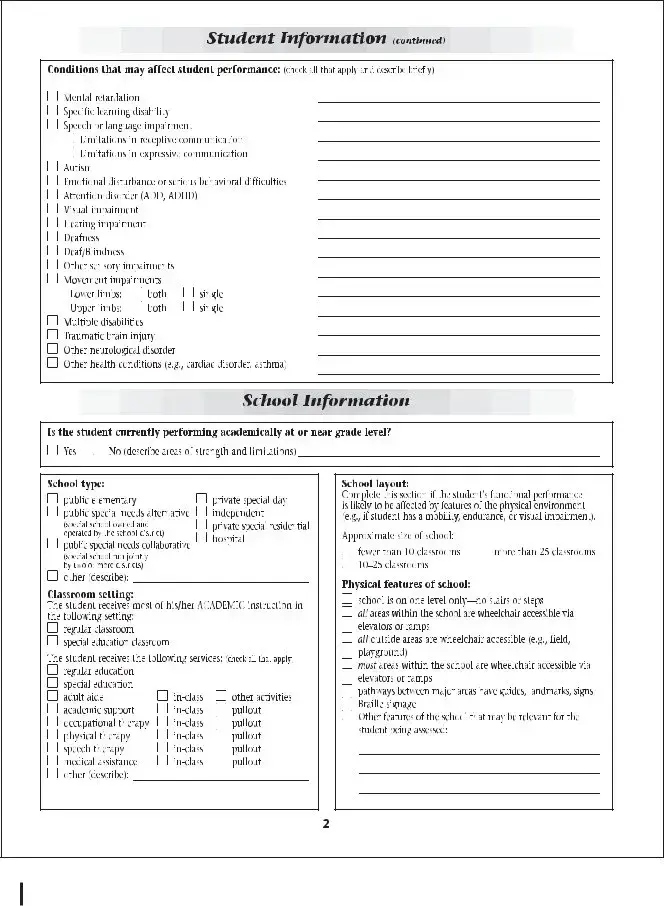
| Components | This assessment includes various sections that address different aspects of a student's functioning, such as physical, social, and academic skills. |
| Usage | Educators and specialists use the form to gather information that helps in developing individualized education plans (IEPs). |
| State-Specific Forms | Some states have specific versions of the School Function Assessment form that comply with local education laws, such as the Individuals with Disabilities Education Act (IDEA). |
| Copyright | The form is copyrighted by Pearson Education, Inc., indicating it is a proprietary document. |
Filling out the School Function Assessment form is an important step in understanding a student's needs and strengths in a school setting. Once you have completed the form, it will be submitted for review, and the information will help educators tailor their approach to support the student effectively.
The School Function Assessment (SFA) form is a tool designed to evaluate a student's performance in school-related activities. It focuses on how well students can participate in various tasks and routines within the school environment. The assessment helps identify areas where support may be needed, allowing educators and parents to work together to enhance the student's educational experience.
The SFA form is typically completed by professionals who work closely with the student, such as teachers, school therapists, or special education staff. These individuals have the necessary insight into the student's daily activities and can provide valuable information about their functional abilities in a school setting. In some cases, input from parents may also be included to give a more comprehensive view of the student's performance.
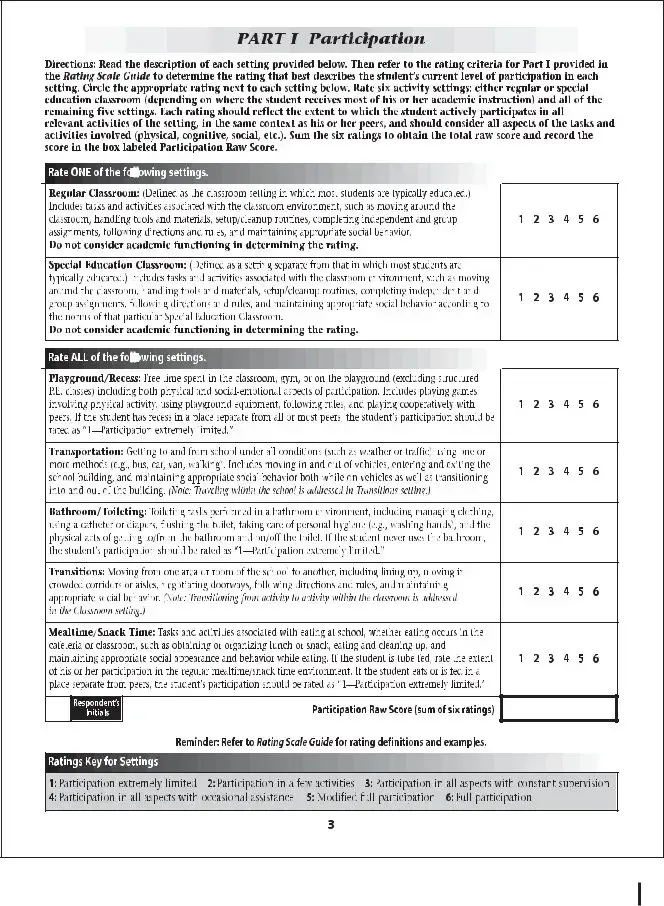
The SFA assesses several key areas of school functioning, including:
This comprehensive approach ensures that all aspects of a student's school life are considered, leading to more effective support strategies.
Information gathered from the SFA is used to develop individualized education plans (IEPs) and tailor interventions that meet the specific needs of the student. By understanding a student's strengths and challenges, educators can create a more supportive learning environment. This assessment also helps track progress over time, ensuring that the strategies in place are effective and adjusted as needed.
While the SFA is not legally required, it is highly recommended for students who may need additional support in the school setting. Utilizing this assessment can provide valuable insights that help in developing effective educational strategies. Schools often use it as part of their overall evaluation process for students with special needs, making it a beneficial tool for many educational teams.
When individuals fill out the School Function Assessment form, several common mistakes can hinder the accuracy and effectiveness of the assessment. One significant error is the failure to provide specific examples of a child's performance. Rather than using vague descriptions, it is essential to detail particular instances that illustrate the child's abilities and challenges. This specificity helps evaluators understand the child's unique situation better.
Another frequent mistake involves overlooking the importance of collaboration with other professionals. Many individuals complete the form in isolation, neglecting to consult with teachers, therapists, or other specialists who work with the child. Input from these professionals can provide valuable insights that enhance the overall understanding of the child's functioning in various settings.
In addition, some people tend to focus solely on deficits rather than recognizing strengths. While it is important to identify areas where a child may struggle, it is equally vital to highlight their skills and capabilities. A balanced view fosters a more comprehensive assessment and can lead to more effective support strategies.
Moreover, individuals may misinterpret the scoring system. Each section of the assessment has specific criteria that need to be understood clearly. Misunderstanding how to rate a child's performance can lead to inaccurate scores, which ultimately affect the recommendations made based on the assessment.
Another common oversight is not updating the form regularly. Children grow and change, and their needs may evolve over time. Failing to reflect these changes in the assessment can result in outdated information that does not accurately represent the child's current functioning.
Lastly, some individuals may rush through the form, resulting in incomplete or hasty responses. Taking the time to thoughtfully consider each question and provide thorough answers is crucial. A rushed submission can overlook important details that could significantly impact the assessment's outcomes.
The School Function Assessment form is a valuable tool for evaluating a student's performance in a school setting. It helps educators identify strengths and areas for improvement, ultimately guiding interventions and support strategies. Several other forms and documents complement this assessment, enhancing the overall understanding of a student's needs and abilities.
These documents work together to provide a comprehensive view of a student's educational experience. By utilizing them alongside the School Function Assessment form, educators can create a supportive and effective learning environment tailored to each student's needs.
The School Function Assessment (SFA) form is a valuable tool used to evaluate a child's performance in school settings. It shares similarities with several other assessment documents. Here are four documents that are comparable to the SFA:
When filling out the School Function Assessment form, there are important guidelines to follow. Here’s a list of things you should and shouldn't do:
Misconceptions about the School Function Assessment form can lead to misunderstandings regarding its purpose and use. Here are seven common misconceptions:
The School Function Assessment (SFA) form is a valuable tool for evaluating a student's functional abilities in a school setting. Here are some key takeaways for effectively filling out and utilizing this form: