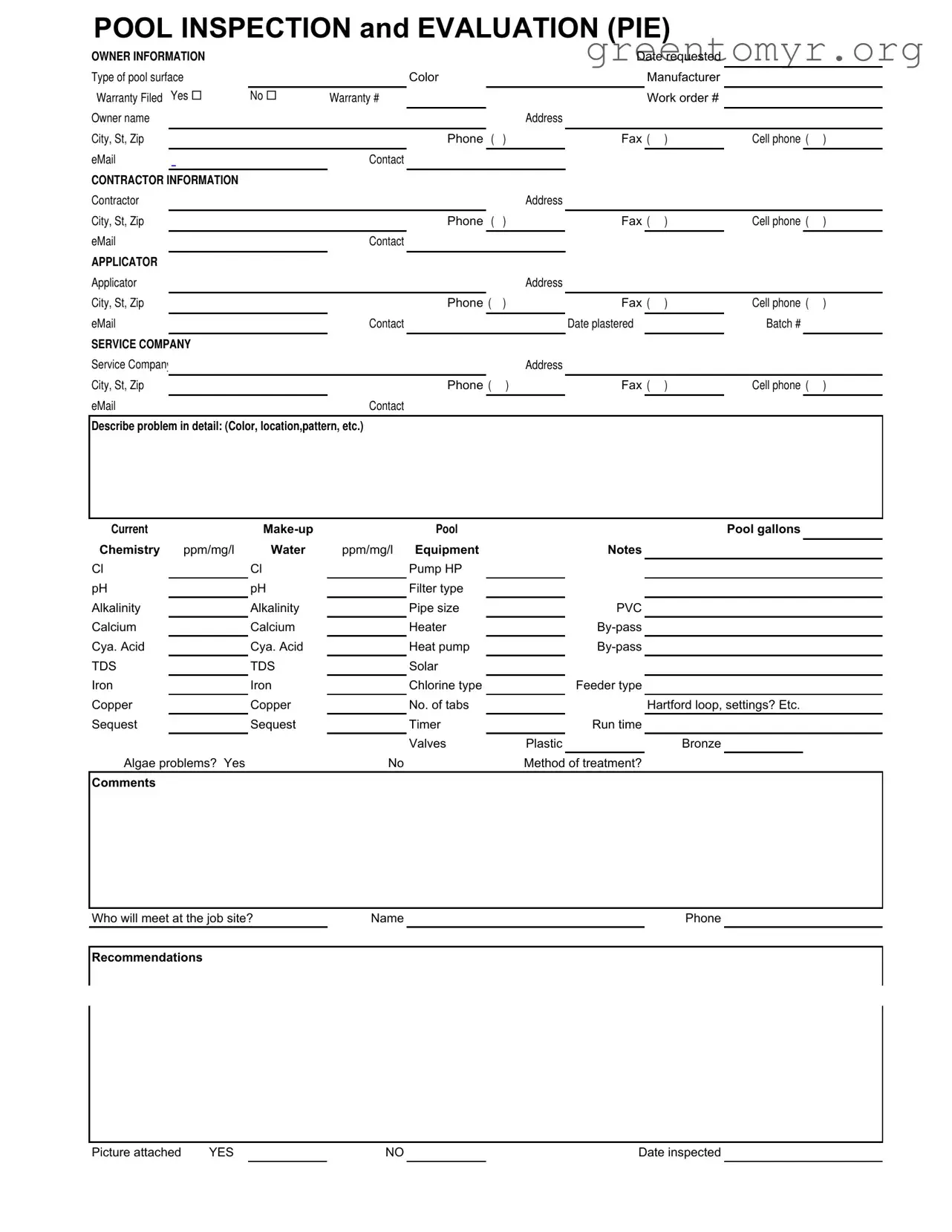
The Swimming Pool Inspection form is a vital tool for ensuring the safety and functionality of your pool. It captures essential information about the pool, including the owner’s details, contractor information, and specific characteristics of the pool itself. Each section of the form is designed to gather comprehensive data, such as the type of pool surface, manufacturer details, and warranty status. The form also includes a detailed description of any existing problems, which can range from color discrepancies to equipment malfunctions. Additionally, it records critical chemistry levels, equipment specifications, and maintenance history, providing a complete picture of the pool’s condition. The inspector will note recommendations and any necessary follow-up actions, ensuring that all aspects are covered. With this thorough approach, the form serves as both a checklist and a guide for maintaining a safe swimming environment.

POOL INSPECTION and EVALUATION (PIE)
OWNER INFORMATION |
|
|
|
|
|
|
|
|
|
Date requested |
|
|
|
|||||
Type of pool surface |
|
|
|
|
|
|
|
|
|
|
|
|
|
|
||||
|
|
|
Color |
|
|
|
|
|
Manufacturer |
|
|
|
||||||
|
|
|
|
|
|
|
|
|
|
|
|
|
|
|
|
|
|
|
Warranty Filed Yes |
No |
Warranty # |
|
|
|
|
|
Work order # |
|
|
|
|||||||
Owner name |
|
|
|
|
|
|
|
Address |
|
|
|
|
|
|||||
|
|
|
|
|
|
|
|
|
|
|
|
|
|
|
|
|
||
City, St, Zip |
|
|
|
Phone ( |
) |
|
|
Fax ( |
) |
|
Cell phone ( |
) |
||||||
|
|
|
|
|
|
|
|
|
|
|
|
|
|
|
|
|
||
|
Contact |
|
|
|
|
|
|
|
|
|
|
|
||||||
|
|
|
|
|
|
|
|
|
|
|
|
|
|
|
|
|
|
|
CONTRACTOR INFORMATION |
|
|
|
|
|
|
|
|
|
|
|
|
|
|
|
|
|
|
Contractor |
|
|
|
|
|
|
|
Address |
|
|
|
|
|
|||||
|
|
|
|
|
|
|
|
|
|
|
|
|
|
|
|
|||
City, St, Zip |
|
|
|
Phone ( |
) |
|
|
Fax ( |
) |
|
Cell phone ( |
) |
||||||
|
|
|
|
|
|
|
|
|
|
|
|
|
|
|
|
|
||
|
Contact |
|
|
|
|
|
|
|
|
|
|
|
||||||
|
|
|
|
|
|
|
|
|
|
|
|
|
|
|
|
|
|
|
APPLICATOR |
|
|
|
|
|
|
|
|
|
|
|
|
|
|
|
|
|
|
Applicator |
|
|
|
|
|
|
|
Address |
|
|
|
|
|
|||||
|
|
|
|
|
|
|
|
|
|
|
|
|
|
|
|
|||
City, St, Zip |
|
|
|
Phone ( |
) |
|
|
Fax ( |
) |
|
Cell phone ( |
) |
||||||
|
|
|
|
|
|
|
|
|
|
|
|
|
|
|
||||
|
Contact |
|
|
|
Date plastered |
|
|
Batch # |
|
|||||||||
|
|
|
|
|
|
|
|
|
|
|
|
|
|
|
|
|
|
|
SERVICE COMPANY |
|
|
|
|
|
|
|
|
|
|
|
|
|
|
|
|
|
|
Service Company |
|
|
|
|
|
|
|
Address |
|
|
|
|
|
|||||
|
|
|
|
|
|
|
|
|
|
|
|
|
|
|
|
|||
City, St, Zip |
|
|
|
Phone ( |
) |
|
|
Fax ( |
) |
|
Cell phone ( |
) |
||||||
|
|
|
|
|
|
|
|
|
|
|
|
|
|
|
|
|||
|
Contact |
|
|
|
|
|
|
|
|
|
|
|
||||||
Describe problem in detail: (Color, location,pattern, etc.)
Current |
|
|
Pool |
|
|
|
|
|
Pool gallons |
|||
Chemistry |
ppm/mg/l |
Water |
ppm/mg/l Equipment |
|
|
Notes |
|
|
|
|
||
|
|
|
|
|
|
|||||||
Cl |
|
Cl |
|
Pump HP |
|
|
|
|
|
|
|
|
pH |
|
pH |
|
Filter type |
|
|
|
|
|
|
|
|
Alkalinity |
|
Alkalinity |
|
Pipe size |
|
|
PVC |
|
|
|
|
|
Calcium |
|
Calcium |
|
Heater |
|
|
|
|
|
|
|
|
Cya. Acid |
|
Cya. Acid |
|
Heat pump |
|
|
|
|
|
|
||
TDS |
|
TDS |
|
Solar |
|
|
|
|
|
|
|
|
Iron |
|
Iron |
|
Chlorine type |
|
|
Feeder type |
|
|
|
|
|
Copper |
|
Copper |
|
No. of tabs |
|
|
|
|
Hartford loop, settings? Etc. |
|||
Sequest |
|
Sequest |
|
Timer |
|
|
Run time |
|
|
|
|
|
|
|
|
|
Valves |
Plastic |
|
Bronze |
|
|
|||
Algae problems? Yes |
|
No |
Method of treatment? |
|
|
|
|
|||||
Comments |
|
|
|
|
|
|
|
|
|
|
|
|
|
|
|
|
|
|
|
|
|
|
|
|
|
Who will meet at the job site? |
Name |
|
Phone |
Recommendations
Picture attached |
YES |
|
NO |
|
Date inspected |
| Fact Name | Description |
|---|---|
| Form Purpose | The Swimming Pool Inspection and Evaluation (PIE) form is used to assess the condition and safety of swimming pools. |
| Owner Information | The form requires detailed information about the pool owner, including name, address, and contact details. |
| Contractor Details | Contractor information is also collected, which includes their name, address, and contact information. |
| Service Company | A section for service company details ensures that the inspection can be verified and followed up as needed. |
| State-Specific Laws | In many states, such as California, the inspection must comply with the California Health and Safety Code, Section 116025. |
| Inspection Outcomes | The form allows inspectors to document findings, recommendations, and any immediate actions required to address issues. |
Completing the Swimming Pool Inspection form requires careful attention to detail. Each section gathers important information about the pool, the owner, and any issues that may need addressing. Follow these steps to ensure that the form is filled out correctly.
The Swimming Pool Inspection form, also known as the Pool Inspection and Evaluation (PIE) form, is designed to assess the condition of a swimming pool. It gathers essential information about the pool, including the owner's details, contractor information, and specifics about the pool's surface and equipment. This form helps ensure that any issues with the pool can be identified and addressed properly, contributing to the safety and enjoyment of pool users.
When filling out the Swimming Pool Inspection form, you will need to provide several key details:
Completing this information accurately will help facilitate a thorough inspection.
The inspection process typically involves a qualified inspector visiting the pool site to evaluate its condition. The inspector will review the information provided on the form and physically assess the pool. This may include checking the pool's surface, equipment, and water chemistry. After the inspection, the inspector will document their findings and may provide recommendations for any necessary repairs or maintenance. It is important to have a designated contact person available at the job site to discuss any immediate concerns.
If you notice any issues with your pool, such as discoloration, equipment malfunction, or water quality concerns, it is essential to address them promptly. Begin by documenting the problem in detail, including its location and any patterns you observe. Then, fill out the Swimming Pool Inspection form with this information and submit it to your contractor or service company. They can then schedule an inspection to evaluate the problem and recommend solutions. Regular maintenance and prompt attention to issues can help prolong the life of your pool and ensure a safe swimming environment.
Completing the Swimming Pool Inspection form accurately is crucial for ensuring a thorough evaluation. However, many individuals make common mistakes that can lead to delays or misunderstandings. One frequent error is failing to provide complete owner information. Missing details such as the owner’s name, address, or contact numbers can hinder communication and the inspection process.
Another common mistake involves the contractor information section. Some individuals neglect to include the contractor’s address or phone number, which is essential for follow-up questions or clarifications. Incomplete information can complicate the coordination of services.
When detailing the applicator information, people sometimes overlook the need to provide a valid contact number. This omission can prevent timely communication regarding the inspection and any necessary follow-up actions. It is important to ensure that all contact fields are filled out completely.
Describing the problem in detail is a critical part of the inspection process. Many individuals make the mistake of providing vague descriptions. Specifics such as color, location, and pattern of the issue are necessary for a proper evaluation. Without these details, the inspector may not fully understand the problem.
Another area where errors frequently occur is in the current make-up pool section. Some people fail to accurately report the pool's gallon capacity, which can impact the assessment of chemical balance and treatment needs. Accurate measurements are essential for effective pool management.
In the chemistry section, it is common for individuals to misreport the levels of chlorine, pH, or alkalinity. These figures are crucial for determining the pool's health and safety. Providing incorrect values can lead to inappropriate treatment recommendations.
Individuals often neglect to attach relevant pictures of the pool or the specific issues being reported. Visual documentation can significantly aid inspectors in understanding the situation better. If pictures are not included, it may result in additional site visits or delays in the evaluation process.
Lastly, failing to indicate who will meet at the job site can cause confusion. Providing a name and phone number for the point of contact ensures that the inspection proceeds smoothly. Clear communication about who is responsible for meeting the inspector can prevent unnecessary complications.
When conducting a swimming pool inspection, several other forms and documents are often necessary to ensure a thorough evaluation and compliance with safety regulations. Here is a list of related documents that may be required:
Having these documents readily available can significantly streamline the inspection process and ensure that all aspects of pool safety and maintenance are addressed effectively. Keeping organized records promotes a safer swimming environment for everyone.
The Swimming Pool Inspection form shares similarities with several other documents used in various inspection and evaluation contexts. Here are five such documents:
When filling out the Swimming Pool Inspection form, attention to detail is crucial. Here are some dos and don’ts to consider:
Misconceptions about the Swimming Pool Inspection form can lead to confusion and miscommunication. Here are seven common misunderstandings:
Understanding these misconceptions can help ensure that pool inspections are thorough and effective, ultimately leading to safer swimming environments.
When filling out and using the Swimming Pool Inspection form, keep these key takeaways in mind:
Remember, a well-filled form leads to better service and quicker solutions.