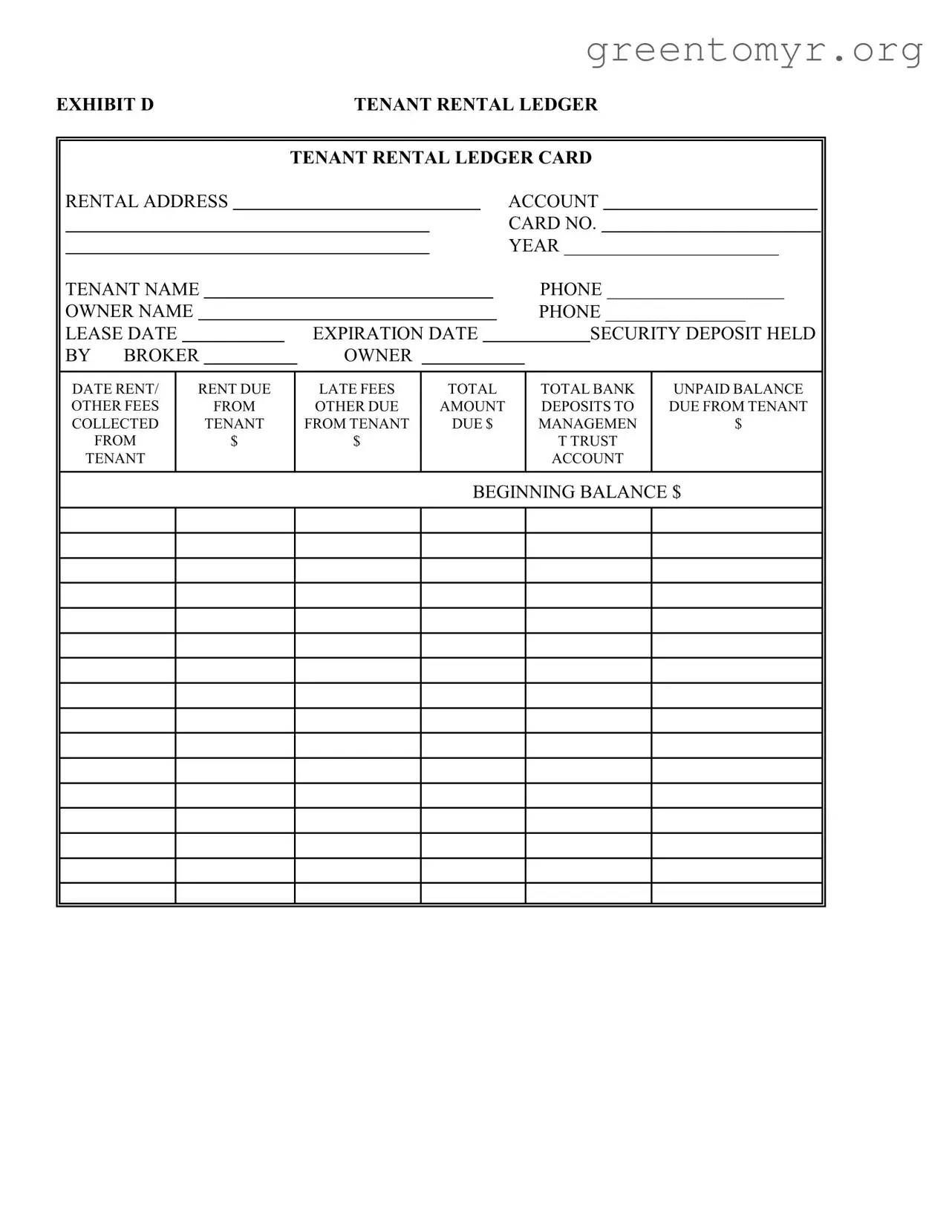
The Tenant Ledger Card is a crucial document for both landlords and tenants, serving as a comprehensive record of rental transactions throughout a lease period. This form includes essential information such as the rental address, tenant and owner names, and their respective contact details. It outlines key dates, including the lease start and expiration dates, ensuring that both parties are clear about the terms of their agreement. Security deposits are also noted, detailing who holds these funds, whether it's the broker or the owner. The card meticulously tracks rent and other fees collected from the tenant, highlighting any amounts due, such as late fees or additional charges. By summarizing the total amount due and the unpaid balance, this form helps maintain transparency and accountability. Additionally, it records deposits into the management trust account, providing a clear financial picture for both the landlord and the tenant. Overall, the Tenant Ledger Card is an invaluable tool for effective property management and fostering positive landlord-tenant relationships.
EXHIBIT D |
|
|
TENANT RENTAL LEDGER |
|
|||||||||||||||||
|
|
|
|
|
|
|
|
|
|
|
|
|
|
|
|
|
|
|
|
|
|
|
|
|
|
|
|
|
|
|
|
|
|
|
|
|
|
|
|
|
|
|
|
|
|
|
|
|
|
|
TENANT RENTAL LEDGER CARD |
|
|||||||||||||
|
|
RENTAL ADDRESS |
|
|
|
|
|
|
|
|
ACCOUNT |
|
|
|
|||||||
|
|
|
|
|
|
|
|
|
|
|
|
|
|
CARD NO. |
|
|
|
||||
|
|
|
|
|
|
|
|
|
|
|
|
|
|
YEAR _______________________ |
|
||||||
|
|
TENANT NAME |
|
|
|
|
|
|
|
|
|
|
PHONE ___________________ |
|
|||||||
|
|
OWNER NAME |
|
|
|
|
|
|
|
|
|
|
PHONE _______________ |
|
|||||||
|
|
LEASE DATE |
|
|
|
EXPIRATION DATE |
|
|
|
|
|
SECURITY DEPOSIT HELD |
|
||||||||
|
|
BY BROKER |
|
|
|
OWNER |
|
|
|
|
|
|
|
|
|
|
|
|
|||
DATE RENT/ OTHER FEES COLLECTED FROM TENANT
RENT DUE
FROM
TENANT
$
LATE FEES
OTHER DUE
FROM TENANT
$
TOTAL
AMOUNT
DUE $
TOTAL BANK |
UNPAID BALANCE |
DEPOSITS TO |
DUE FROM TENANT |
MANAGEMEN |
$ |
T TRUST |
|
ACCOUNT |
|
|
|
BEGINNING BALANCE $
| Fact Name | Description |
|---|---|
| Form Purpose | The Tenant Ledger Card is used to track rental payments, fees, and balances for tenants. |
| Information Included | This form includes details such as tenant name, lease dates, security deposits, and amounts due. |
| Account Number | Each Tenant Ledger Card has a unique account card number for identification purposes. |
| Late Fees | Landlords can specify late fees on the card, ensuring tenants are aware of potential additional charges. |
| State-Specific Laws | In many states, including California, the use of a Tenant Ledger Card is governed by the California Civil Code Section 1962. |
| Record Keeping | Landlords must maintain accurate records on the Tenant Ledger Card for legal compliance and dispute resolution. |
Filling out the Tenant Ledger Card form is a straightforward process. Ensure you have all necessary information ready before starting. This form will help you keep accurate records of rental payments and other related transactions.
The Tenant Ledger Card form is a document used to track rental payments and other financial transactions between a tenant and a landlord or property manager. It provides a clear record of what the tenant owes, what has been paid, and any additional fees that may apply.
The form includes several key pieces of information:
This form is crucial for maintaining transparency between tenants and landlords. It helps both parties understand their financial obligations and keeps a record of all transactions. This can be especially helpful in case of disputes or misunderstandings about payments.
The Tenant Ledger Card should be updated regularly—ideally after each transaction. This ensures that all records are current and accurate. Keeping the ledger up to date helps prevent any confusion regarding what is owed or paid.
The responsibility for maintaining the Tenant Ledger Card typically falls on the property manager or landlord. However, tenants are encouraged to keep their own records as well. This dual approach can help ensure accuracy and clarity.
If a discrepancy arises, both parties should review the records together. It’s important to compare notes and identify where the error occurred. Open communication is key to resolving any issues quickly and fairly.
No, the Tenant Ledger Card is designed for individual tenants. Each tenant should have their own ledger card to accurately reflect their specific rental payments and charges. This keeps financial records organized and clear.
While the Tenant Ledger Card itself may not be legally binding, it serves as an important record of transactions. It can be used as evidence in disputes or legal matters regarding rental agreements. Keeping accurate records is beneficial for both landlords and tenants.
Tenant Ledger Card forms can often be obtained from property management companies, real estate offices, or online resources. It’s important to ensure that the form you use complies with local regulations and includes all necessary fields for your specific needs.
Filling out a Tenant Ledger Card form can seem straightforward, but many people make common mistakes that can lead to confusion later on. One frequent error is neglecting to fill in the tenant's name completely. This can result in issues when trying to track payments or resolve disputes. Always ensure that the full legal name of the tenant is clearly written.
Another mistake often made is leaving out the lease dates. Both the start and expiration dates are crucial for understanding the terms of the rental agreement. Without these dates, it becomes difficult to determine if the tenant is currently in good standing or if they are overdue on payments.
Some individuals also forget to include the security deposit information. This amount should be clearly stated, as it protects both the tenant and the landlord. Omitting this detail can lead to misunderstandings about what funds are available and what obligations exist at the end of the lease.
Additionally, people sometimes miscalculate the total amount due. This can happen when adding rent, late fees, and other charges. It’s essential to double-check these calculations to avoid billing errors that could frustrate tenants and lead to payment delays.
Another common oversight is not documenting the bank deposits correctly. Keeping accurate records of all payments received helps maintain transparency and trust between the tenant and landlord. Failing to track deposits can create confusion about what has been paid and what remains outstanding.
Lastly, many forget to include their contact information on the form. Both the tenant and the owner should provide their phone numbers. This ensures that communication can flow smoothly if there are questions or issues regarding the ledger. Clear lines of communication are vital in any rental relationship.
The Tenant Ledger Card is an essential document for managing rental properties. It helps landlords and property managers keep track of rent payments, security deposits, and any other fees associated with a tenant. Alongside the Tenant Ledger Card, several other forms and documents are commonly used to facilitate effective property management and maintain clear records. Below is a list of these documents, along with brief descriptions of each.
Utilizing these forms and documents alongside the Tenant Ledger Card creates a comprehensive system for tracking rental transactions and maintaining clear communication between landlords and tenants. This organized approach not only helps in managing properties effectively but also fosters a positive rental experience for all parties involved.
The Tenant Ledger Card form is similar to several other documents that track financial transactions and obligations. Below are six documents that share similarities with the Tenant Ledger Card:
When filling out the Tenant Ledger Card form, attention to detail is crucial. Here are five important do's and don'ts to consider:
By following these guidelines, you can create a comprehensive and accurate Tenant Ledger Card that serves its purpose effectively.
Understanding the Tenant Ledger Card form is crucial for both tenants and landlords. However, several misconceptions can lead to confusion. Here are nine common misunderstandings:
Clarifying these misconceptions can help both tenants and landlords manage their rental agreements more effectively.
When filling out and using the Tenant Ledger Card form, keep these key takeaways in mind: