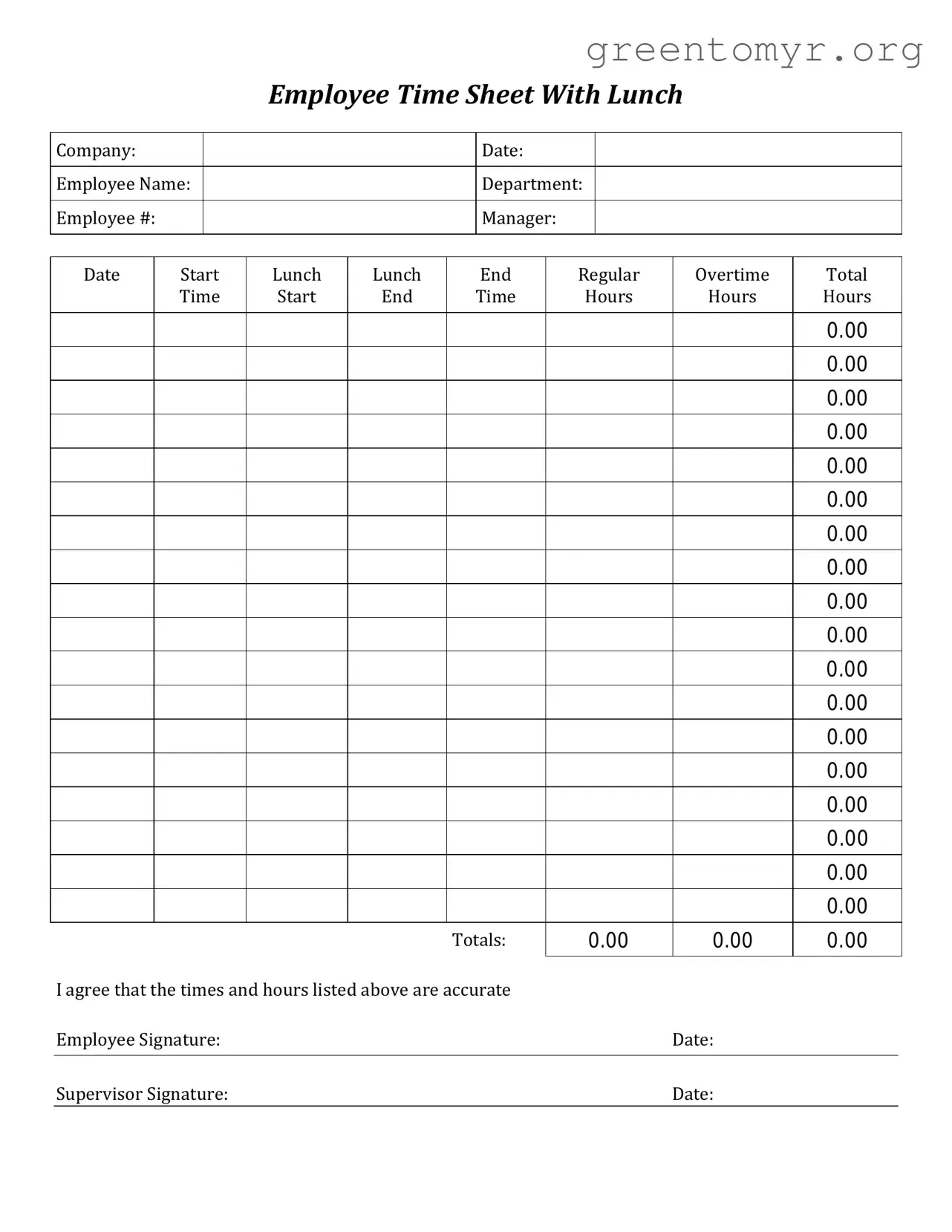
The Time Card form serves as a crucial tool for tracking employee hours and ensuring accurate payroll processing. This form typically includes sections for recording the date, the number of hours worked each day, and any overtime hours accrued. Employees often fill out their time cards weekly or bi-weekly, providing a comprehensive overview of their work schedule. Additionally, the form may require signatures from both the employee and a supervisor, adding a layer of accountability. Some variations of the time card also allow for the inclusion of breaks and specific project codes, which can help organizations analyze labor costs more effectively. Overall, the Time Card form plays an essential role in maintaining transparent and organized records of employee work hours, ultimately contributing to efficient payroll management and compliance with labor regulations.

Employee Time Sheet With Lunch
Company:
Employee Name:
Employee #:
Date:
Department:
Manager:
Date |
Start |
Lunch |
Lunch |
End |
Regular |
Overtime |
Total |
|
Time |
Start |
End |
Time |
Hours |
Hours |
Hours |
|
|
|
|
|
|
|
|
|
|
|
|
|
|
|
0.00 |
|
|
|
|
|
|
|
|
|
|
|
|
|
|
|
0.00 |
|
|
|
|
|
|
|
|
|
|
|
|
|
|
|
0.00 |
|
|
|
|
|
|
|
|
|
|
|
|
|
|
|
0.00 |
|
|
|
|
|
|
|
|
|
|
|
|
|
|
|
0.00 |
|
|
|
|
|
|
|
|
|
|
|
|
|
|
|
0.00 |
|
|
|
|
|
|
|
|
|
|
|
|
|
|
|
0.00 |
|
|
|
|
|
|
|
|
|
|
|
|
|
|
|
0.00 |
|
|
|
|
|
|
|
|
|
|
|
|
|
|
|
0.00 |
|
|
|
|
|
|
|
|
|
|
|
|
|
|
|
0.00 |
|
|
|
|
|
|
|
|
|
|
|
|
|
|
|
0.00 |
|
|
|
|
|
|
|
|
|
|
|
|
|
|
|
0.00 |
|
|
|
|
|
|
|
|
|
|
|
|
|
|
|
0.00 |
|
|
|
|
|
|
|
|
|
|
|
|
|
|
|
0.00 |
|
|
|
|
|
|
|
|
|
|
|
|
|
|
|
0.00 |
|
|
|
|
|
|
|
|
|
|
|
|
|
|
|
0.00 |
|
|
|
|
|
|
|
|
|
|
|
|
|
|
|
0.00 |
|
|
|
|
|
|
|
|
|
|
|
|
|
|
|
0.00 |
|
|
|
|
|
|
|
|
|
|
|
|
Totals: |
0.00 |
0.00 |
0.00 |
|
|
|
|
|
|
|
|
I agree that the times and hours listed above are accurate |
|
Employee Signature: |
Date: |
|
|
Supervisor Signature: |
Date: |
|
|
| Fact Name | Description |
|---|---|
| Purpose | The Time Card form is used to record hours worked by employees, ensuring accurate payroll processing. |
| Components | Typically includes employee name, date, hours worked, and signatures for verification. |
| State-Specific Forms | Some states may require specific formats or additional information based on local labor laws. |
| Governing Laws | In California, for example, the form must comply with the California Labor Code, which mandates accurate record-keeping. |
| Submission Process | Employees usually submit the completed form to their supervisor or HR department for processing. |
| Retention Period | Employers are generally required to keep time card records for a minimum of three years, depending on state regulations. |
Completing the Time Card form is an important step in tracking your work hours accurately. This ensures that you receive the appropriate compensation for your time worked. Follow the steps below to fill out the form correctly.
Once you have completed these steps, the Time Card form will be ready for submission to your supervisor or payroll department.
The Time Card form is designed to accurately record the hours worked by employees. It serves as a vital tool for tracking attendance, calculating wages, and ensuring compliance with labor regulations. By submitting a completed Time Card, employees help their supervisors manage payroll efficiently and maintain accurate records of work hours.
To fill out the Time Card form, follow these steps:
Double-check your entries to ensure accuracy before submitting the form to your supervisor.
If you notice an error on your Time Card after submission, it's important to address it promptly. Here’s what you can do:
Timely communication is key to ensuring that payroll is processed accurately and on schedule.
Deadlines for submitting Time Cards typically align with the payroll schedule of your organization. Generally, employees are expected to submit their Time Cards by the end of the pay period, which may be weekly or bi-weekly. Check with your supervisor or the HR department for specific dates. Adhering to these deadlines helps ensure that your hours are processed in a timely manner, allowing for prompt payment.
Completing a Time Card form accurately is crucial for ensuring that employees are paid correctly and on time. However, many individuals make common mistakes that can lead to delays or payment issues. Here are nine mistakes to watch out for when filling out your Time Card form.
First, failing to include all hours worked is a frequent error. Employees may forget to log overtime or additional hours, which can result in underpayment. It is essential to double-check that every hour is accounted for, especially during busy workweeks.
Another common mistake is neglecting to specify the correct dates. Time Cards should clearly reflect the start and end dates of the pay period. If these dates are incorrect, it can cause confusion and delays in processing payroll.
Many people also forget to sign their Time Card. An unsigned form may not be considered valid, leading to potential payment issues. Always ensure that you sign and date your Time Card before submitting it.
Inaccurate calculations can create significant problems. Employees sometimes miscalculate their total hours or overtime pay. Taking a moment to review your math can prevent discrepancies that may affect your paycheck.
Another mistake involves using incorrect codes for job classifications or projects. Each employer typically has specific codes to indicate the type of work performed. Using the wrong code can lead to misallocation of hours and confusion in payroll processing.
Some individuals submit their Time Cards late. Timeliness is key in payroll processing. Late submissions can delay payments and create unnecessary stress for both employees and payroll departments.
Not keeping a personal record of hours worked is another oversight. Maintaining your own log can help ensure that your Time Card is accurate and complete. This practice can serve as a reference if any discrepancies arise.
Additionally, failing to communicate with supervisors or managers about any discrepancies can lead to unresolved issues. If you notice an error or have questions, addressing them promptly can help clarify misunderstandings before they escalate.
Lastly, overlooking company-specific guidelines for completing the Time Card can result in mistakes. Each organization may have unique requirements for how Time Cards should be filled out. Familiarizing yourself with these guidelines is essential for a smooth payroll process.
By being aware of these common mistakes and taking steps to avoid them, employees can ensure that their Time Card submissions are accurate and timely, ultimately leading to a smoother payroll experience.
The Time Card form is an essential document for tracking employee hours worked, but it is often accompanied by several other forms and documents that help streamline payroll and human resources processes. Understanding these additional documents can provide clarity and ensure compliance with labor regulations.
These documents, alongside the Time Card form, create a comprehensive framework for managing employee hours, payroll, and benefits. Familiarity with these forms can enhance organizational efficiency and support compliance with employment laws.
The Time Card form is an essential document for tracking work hours and ensuring accurate payroll. Several other documents serve similar purposes in different contexts. Here’s a list of seven documents that share similarities with the Time Card form:
When filling out a Time Card form, it’s important to follow certain guidelines to ensure accuracy and compliance. Here’s a list of things you should and shouldn't do:
Misconceptions about the Time Card form can lead to confusion and errors in tracking work hours. Here are eight common misconceptions explained:
This is not true. While hourly employees often use time cards to track their hours, salaried employees may also need to submit time cards for project tracking or compliance purposes.
Some workplaces require daily submissions, but others allow weekly or bi-weekly submissions. It’s essential to follow your employer's specific guidelines.
Many systems do not automatically calculate overtime. Employees should check their time cards for accuracy and ensure that overtime hours are reported correctly.
Submitting time cards late can lead to delayed payments or payroll issues. Timeliness is crucial for accurate processing.
Estimating hours can lead to inaccuracies. Employees should track their actual hours worked to ensure proper compensation.
Employees should also review their own time cards for errors before submission. This helps prevent issues down the line.
Time cards provide valuable data for project tracking and resource allocation. They help managers understand how time is spent across projects.
While changes may not be allowed after a certain deadline, many employers have processes in place for correcting errors on submitted time cards.
When it comes to filling out and using the Time Card form, keep these key takeaways in mind:
Following these guidelines will help streamline the process and ensure you are compensated fairly for your work.