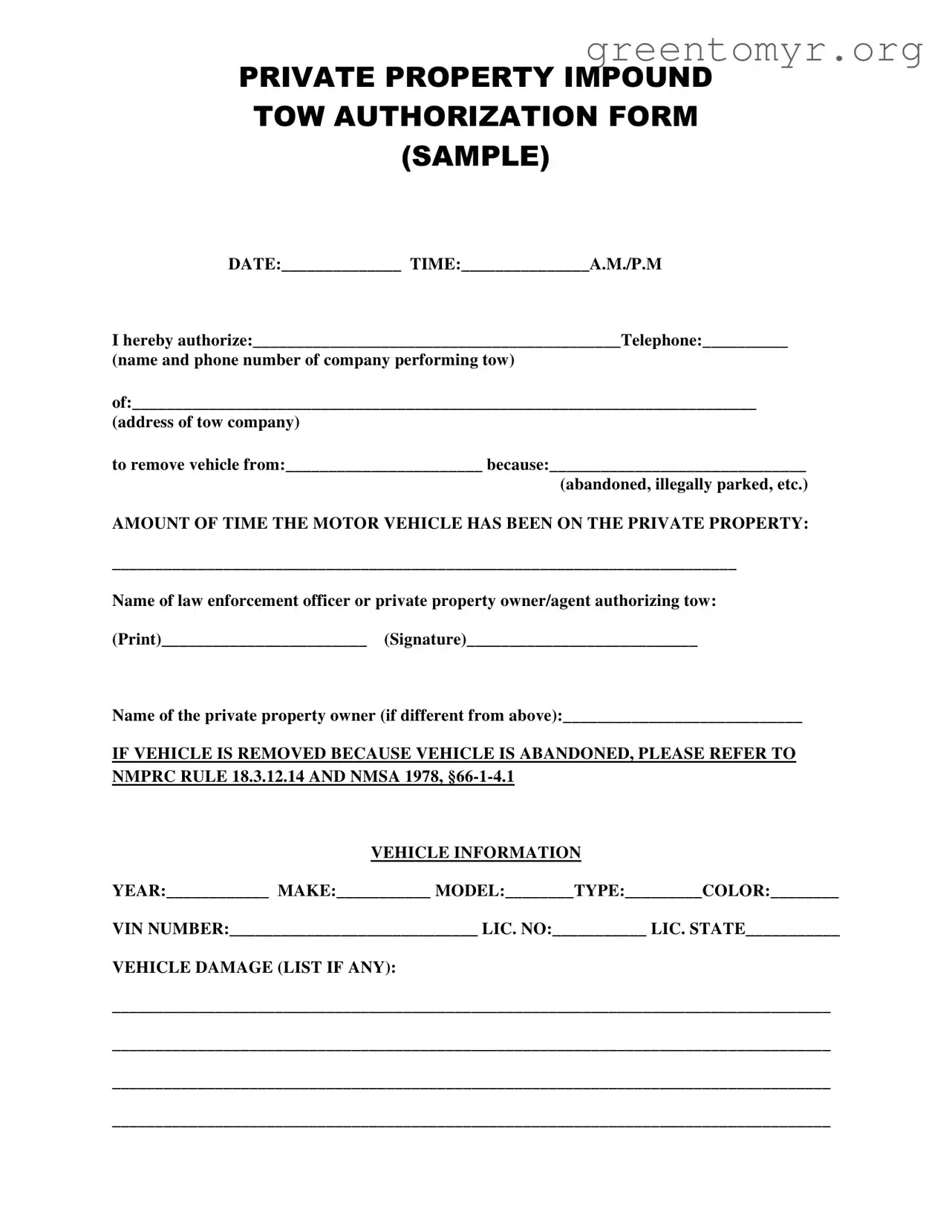
The Tow Authorization form is a vital document used by property owners and authorized agents to facilitate the removal of vehicles from private property. This form captures essential details, such as the date and time of the tow, the identity of the towing company, and the reasons for the vehicle's removal, whether it be due to abandonment or illegal parking. It also requires specific information about the vehicle, including its make, model, color, and license plate details. The form emphasizes the importance of documenting how long the vehicle has been on the property, which can be crucial for legal compliance. Additionally, it includes sections for the signatures of the property owner or their agent and the law enforcement officer, if applicable. For vehicles deemed abandoned, the form references specific state regulations, ensuring that the towing process adheres to local laws. By using this form, property owners can effectively manage unauthorized vehicles while protecting their rights and responsibilities.
PRIVATE PROPERTY IMPOUND TOW AUTHORIZATION FORM (SAMPLE)
DATE:______________ TIME:_______________A.M./P.M
Ihereby authorize:___________________________________________Telephone:__________
(name and phone number of company performing tow)
of:_________________________________________________________________________
(address of tow company)
to remove vehicle from:_______________________ because:______________________________
(abandoned, illegally parked, etc.)
AMOUNT OF TIME THE MOTOR VEHICLE HAS BEEN ON THE PRIVATE PROPERTY:
_________________________________________________________________________
Name of law enforcement officer or private property owner/agent authorizing tow:
(Print)________________________ (Signature)___________________________
Name of the private property owner (if different from above):____________________________
IF VEHICLE IS REMOVED BECAUSE VEHICLE IS ABANDONED, PLEASE REFER TO NMPRC RULE 18.3.12.14 AND NMSA 1978,
VEHICLE INFORMATION
YEAR:____________ MAKE:___________ MODEL:________TYPE:_________COLOR:________
VIN NUMBER:_____________________________ LIC. NO:___________ LIC. STATE___________
VEHICLE DAMAGE (LIST IF ANY):
____________________________________________________________________________________
____________________________________________________________________________________
____________________________________________________________________________________
____________________________________________________________________________________
| Fact Name | Details |
|---|---|
| Purpose | The Tow Authorization form allows property owners to authorize the removal of vehicles from private property. |
| Authorization | The form requires the property owner or their agent to provide explicit permission for the towing company to remove the vehicle. |
| Contact Information | It includes spaces for the towing company's name and contact number, ensuring clear communication. |
| Reason for Tow | The form mandates the specification of the reason for towing, such as abandonment or illegal parking. |
| Time on Property | Property owners must indicate how long the vehicle has been on their property before towing is authorized. |
| Law Enforcement Involvement | It provides space for the name and signature of a law enforcement officer or property owner/agent who authorizes the tow. |
| Vehicle Information | The form collects detailed information about the vehicle, including year, make, model, color, VIN number, and license plate details. |
| State-Specific Law | In New Mexico, the form references NMPRC Rule 18.3.12.14 and NMSA 1978, §66-1-4.1 regarding abandoned vehicles. |
| Damage Reporting | It includes a section for noting any damage to the vehicle, which is crucial for liability purposes. |
Completing the Tow Authorization form is a straightforward process that ensures the necessary details are accurately captured. Once filled out, this form can be submitted to the appropriate towing company to initiate the vehicle removal process.
The Tow Authorization form serves as a legal document that grants permission to a towing company to remove a vehicle from private property. This form is crucial for property owners or their agents who need to address issues such as abandoned or illegally parked vehicles. By completing this form, the property owner ensures that the towing process is documented and authorized, protecting their rights and responsibilities.
To complete the Tow Authorization form, several key pieces of information must be provided:
Providing complete and accurate information is essential to ensure a smooth towing process.
Typically, the property owner or an authorized agent can complete the Tow Authorization form. If a law enforcement officer is involved, they may also sign the form to validate the towing process. It is important that the person authorizing the tow has the legal right to do so, as this protects both the property owner and the towing company from potential disputes.
If your vehicle has been towed, the first step is to locate the towing company listed on the Tow Authorization form. You can typically find their contact information on signage near the towing location or by searching online. Once you contact the towing company, you will need to provide details about your vehicle, such as the make, model, and license plate number, to confirm its location. Be prepared to pay any towing fees and possibly storage fees before retrieving your vehicle. If you believe the tow was unauthorized, gather any evidence you have and consider contacting local law enforcement or seeking legal advice.
Filling out a Tow Authorization form may seem straightforward, but there are common mistakes that can lead to complications. One frequent error is leaving the date and time fields blank. Without this information, it can be difficult to establish when the vehicle was authorized for towing, which could create legal challenges later.
Another mistake is failing to provide complete contact information for the towing company. The form requires both the name and telephone number of the company performing the tow. Omitting this information can lead to confusion about who is responsible for the towing process.
Many individuals also neglect to fill out the address of the towing company. This detail is crucial for record-keeping and ensuring that all parties involved know where the vehicle will be taken. Incomplete addresses can complicate the retrieval process for vehicle owners.
When stating the reason for the tow, some people provide vague descriptions. It is important to clearly specify whether the vehicle is abandoned, illegally parked, or for another reason. A precise explanation helps prevent disputes and clarifies the situation for law enforcement and the vehicle owner.
Another common oversight is not indicating the amount of time the vehicle has been on private property. This information is essential to justify the towing action and may be required by local laws or regulations.
Signature errors can also occur. The form requires the signature of the person authorizing the tow, which must match the printed name. If these do not align, it could raise questions about the validity of the authorization.
Individuals sometimes forget to include the name of the private property owner if it differs from the person authorizing the tow. This omission can lead to complications regarding ownership and authorization, especially if disputes arise.
When detailing vehicle information, such as the VIN number and license plate, it is critical to ensure accuracy. Mistakes in this section can lead to difficulties in identifying the vehicle and may hinder the towing process.
Lastly, some individuals overlook the section for vehicle damage. Noting any existing damage is important to protect all parties involved from potential liability issues. Failing to document this can lead to misunderstandings about the vehicle's condition before it was towed.
When dealing with vehicle towing, several documents may accompany the Tow Authorization form to ensure compliance and proper procedure. Here are some commonly used forms that can assist in the towing process.
Having the appropriate forms in place can streamline the towing process and protect all parties involved. Always ensure that you have the necessary documentation to avoid potential disputes or complications.
The Tow Authorization form serves a specific purpose in the realm of vehicle towing, particularly on private property. However, it shares similarities with several other documents that also facilitate the towing process or vehicle management. Here are seven documents that are comparable to the Tow Authorization form, along with explanations of their similarities:
When filling out the Tow Authorization form, it is important to ensure accuracy and clarity. Here are some guidelines to follow:
Understanding the Tow Authorization form can help avoid confusion and ensure proper use. Here are eight common misconceptions about this form:
Always fill out the Tow Authorization form completely. Missing information can lead to complications during the towing process.
Provide accurate details about the towing company, including its name and phone number. This ensures that the towing process is handled by a legitimate and reachable service.
Clearly state the reason for the tow, such as whether the vehicle is abandoned or illegally parked. This helps in justifying the action taken.
Document how long the vehicle has been on the property. This information may be necessary for legal compliance and to avoid disputes.
The form must be signed by the property owner or their authorized agent. This signature is crucial for validating the towing request.
If the vehicle is being towed due to abandonment, be aware of local regulations that may apply. Referencing specific laws can protect against legal issues.
Include detailed vehicle information, such as the make, model, color, and VIN number. This helps ensure the correct vehicle is towed.
Note any existing damage to the vehicle on the form. This can prevent disputes regarding damage incurred during the tow.
Keep a copy of the completed Tow Authorization form for your records. This documentation can be useful in case of any future disputes or inquiries.