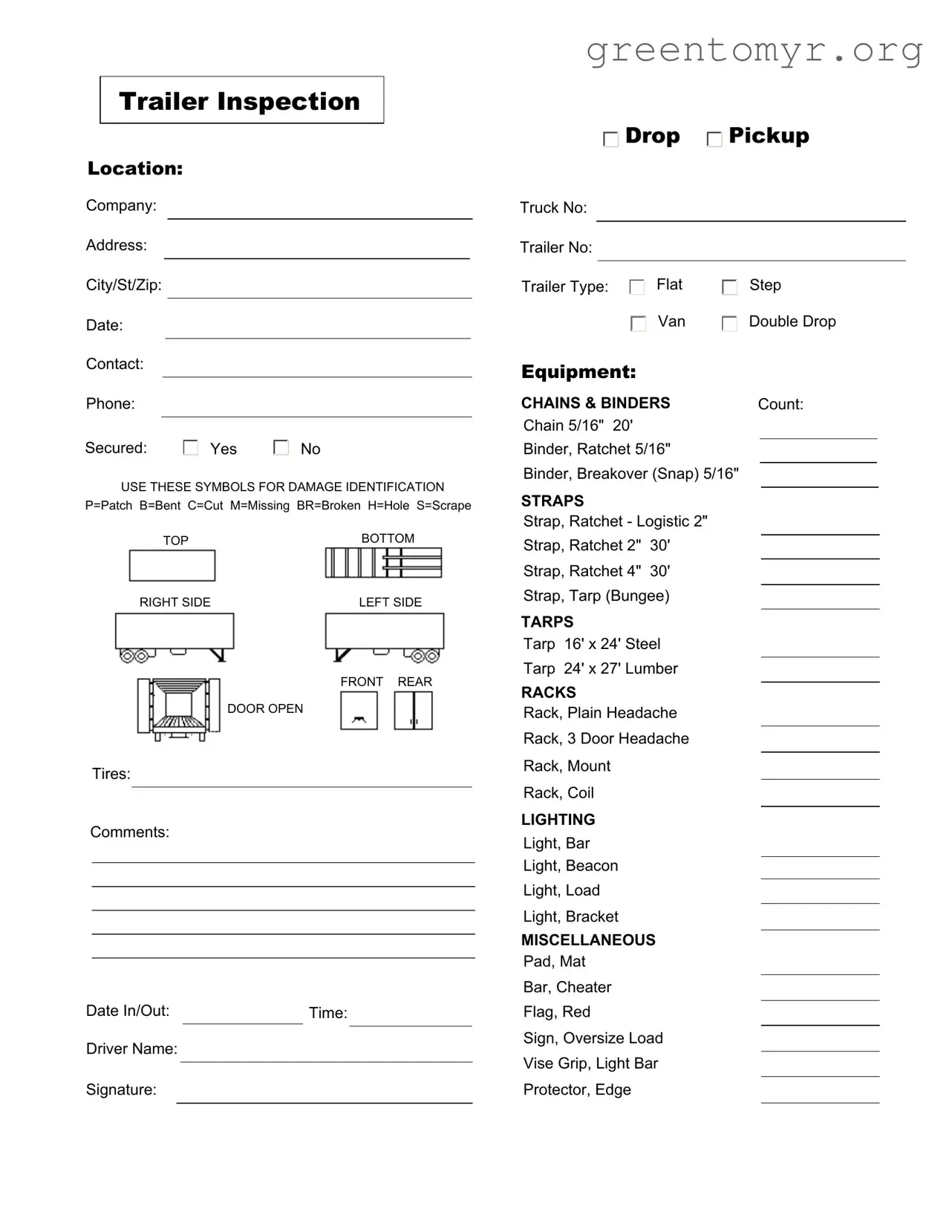
The Trailer Inspection form serves as a critical tool for ensuring the safety and functionality of trailers used in transportation. It captures essential details such as the inspection location, company information, and contact details, which help in tracking and accountability. The form includes specific identifiers like the truck and trailer numbers, along with the type of trailer and equipment being inspected. A section for damage identification utilizes symbols to indicate various issues, such as patches, bends, cuts, and missing components. Additionally, the form requires information about tires and includes a comments section for any observations made during the inspection. It also records the date and time of the inspection, along with the driver's name and signature, reinforcing the importance of proper documentation. Furthermore, the form lists various equipment types, including chains, binders, straps, tarps, racks, and lighting, ensuring that all necessary components are accounted for and in good condition. This comprehensive approach aids in maintaining safety standards and compliance in the transportation industry.
Trailer Inspection
Location:
Drop |
Pickup |
Company:
Address:
City/St/Zip:
Date:
Contact:
Truck No:
Trailer No:
Trailer Type:
Equipment:
Flat
Van
Step
Double Drop
Phone:
Secured: |
Yes |
No |
USE THESE SYMBOLS FOR DAMAGE IDENTIFICATION P=Patch B=Bent C=Cut M=Missing BR=Broken H=Hole S=Scrape
TOPBOTTOM
RIGHT SIDE |
LEFT SIDE |
FRONT REAR
DOOR OPEN
Tires:
Comments:
Date In/Out: |
|
Time: |
|
|
|
Driver Name:
Signature:
CHAINS & BINDERS |
Count: |
|
||
Chain 5/16" 20' |
|
|
|
|
Binder, Ratchet 5/16" |
|
|
|
|
|
|
|
||
Binder, Breakover (Snap) 5/16" |
|
|
|
|
|
|
|
||
STRAPS |
|
|
|
|
|
|
|
|
|
Strap, Ratchet - Logistic 2" |
|
|
|
|
Strap, Ratchet 2" |
30' |
|
|
|
|
|
|
||
Strap, Ratchet 4" |
30' |
|
|
|
|
|
|
||
Strap, Tarp (Bungee)
TARPS
Tarp 16' x 24' Steel
Tarp 24' x 27' Lumber
RACKS
Rack, Plain Headache
Rack, 3 Door Headache
Rack, Mount
Rack, Coil
LIGHTING
Light, Bar
Light, Beacon
Light, Load
Light, Bracket
MISCELLANEOUS
Pad, Mat
Bar, Cheater
Flag, Red
Sign, Oversize Load
Vise Grip, Light Bar
Protector, Edge
| Fact Name | Description |
|---|---|
| Inspection Location | The form requires the specific location where the trailer inspection takes place, ensuring clarity on where the inspection is conducted. |
| Company Information | Details about the pickup company, including the address, city, state, and zip code, are essential for identification and record-keeping. |
| Date of Inspection | The date field is crucial for tracking when the inspection occurred, aiding in maintenance schedules and compliance checks. |
| Contact Information | A contact person's name and phone number are necessary for follow-up questions or concerns regarding the inspection. |
| Trailer Details | Information about the trailer number, type, and equipment is collected to ensure accurate identification of the trailer being inspected. |
| Damage Identification | The form includes symbols (P, B, C, M, BR, H, S) for identifying various types of damage, making it easier to communicate issues visually. |
| Tires Section | A dedicated section for tire inspection helps ensure that safety standards are met and that the trailer is roadworthy. |
| Chains and Binders | Count and type of chains and binders are recorded, ensuring that all necessary equipment for securing loads is accounted for. |
| Governing Laws | State-specific forms may reference governing laws that regulate trailer inspections, ensuring compliance with local regulations. |
Completing the Trailer Inspection form is an essential step in ensuring safety and compliance. The following instructions will guide you through the process of filling out the form accurately. Each section is important, so take your time to provide the necessary information.
The Trailer Inspection form is designed to document the condition of a trailer before and after use. It helps ensure that all equipment is safe and compliant with regulations. By recording details such as damage, equipment type, and contact information, the form serves as a vital tool for maintaining safety standards in transportation.
When completing the Trailer Inspection form, you should provide the following information:
The form includes specific symbols for identifying different types of damage. Use the following symbols to mark any issues:
Mark the relevant areas on the form, such as the top, bottom, sides, front, rear, and door, to clearly indicate where the damage is located.
During the inspection, you should verify the condition and presence of various equipment, including:
Ensure that all equipment is functional and meets safety standards before proceeding with transport.
If you discover any damage during the inspection, document it thoroughly on the form. Use the damage identification symbols to mark the specific issues. Depending on the severity of the damage, you may need to take the trailer out of service until repairs are made. It's important to report the findings to the appropriate personnel immediately to ensure safety and compliance.
Filling out a Trailer Inspection form may seem straightforward, but many individuals make common mistakes that can lead to confusion or delays. One frequent error occurs when people forget to include the trailer number. This number is crucial for tracking and identification purposes. Without it, the inspection may not be valid, and the trailer could be misidentified during future checks.
Another common mistake is neglecting to specify the trailer type. Each type of trailer has different requirements and safety checks. If the type isn’t clearly indicated, it can lead to improper inspections or miscommunication with the inspection team.
Many individuals also overlook the importance of providing accurate contact information. Failing to include a phone number or email can hinder communication if inspectors need to follow up with questions. This simple oversight can create unnecessary delays in the inspection process.
In addition, some people mistakenly leave the damage identification symbols blank or unclear. Properly marking damage using the provided symbols is essential. If the symbols are not used correctly, it can result in misinterpretations of the trailer's condition, potentially leading to safety issues.
Another frequent error is not specifying whether the trailer is secured. This is a vital detail that affects safety during transport. If this section is left unchecked, it may imply that the trailer is unsecured, which can raise red flags during inspections.
People often forget to include comments about the inspection. Comments can provide valuable context about the condition of the trailer or any unusual observations. Without this information, inspectors may miss critical details that could affect safety and compliance.
Some individuals fail to fill in the date in/out and time fields. This information is essential for record-keeping and helps track when the trailer was last inspected. Omitting these details can complicate future inspections and maintenance schedules.
Lastly, signatures are sometimes missing. A signature is not just a formality; it signifies that the inspection has been completed and that the information provided is accurate. Without a signature, the form may be considered incomplete, leading to further complications.
When managing the logistics of transporting goods, various forms and documents play crucial roles in ensuring compliance and safety. The Trailer Inspection form is just one part of a comprehensive system designed to facilitate smooth operations. Below is a list of other essential documents that are often used alongside the Trailer Inspection form.
Understanding these documents and their purposes is vital for anyone involved in the transportation industry. Each form plays a unique role in promoting safety, compliance, and efficiency in logistics operations. By utilizing these documents effectively, stakeholders can help ensure a smoother and more reliable transportation process.
The Trailer Inspection form serves as a vital document for ensuring safety and compliance. Here are eight other documents that share similarities with it:
When filling out the Trailer Inspection form, attention to detail is crucial. Here are five important dos and don'ts to ensure accuracy and clarity in your inspection report.
By following these guidelines, you can help ensure that the Trailer Inspection form is filled out correctly and effectively. This not only supports safety but also enhances communication among team members.
Understanding the Trailer Inspection form is crucial for ensuring safety and compliance. However, several misconceptions can lead to confusion. Here are four common misconceptions:
Addressing these misconceptions can lead to better safety practices and compliance with regulations in trailer operations.
When filling out and using the Trailer Inspection form, keep the following key takeaways in mind:
By following these guidelines, you can ensure that the Trailer Inspection form is filled out correctly and effectively used, contributing to safer transportation practices.