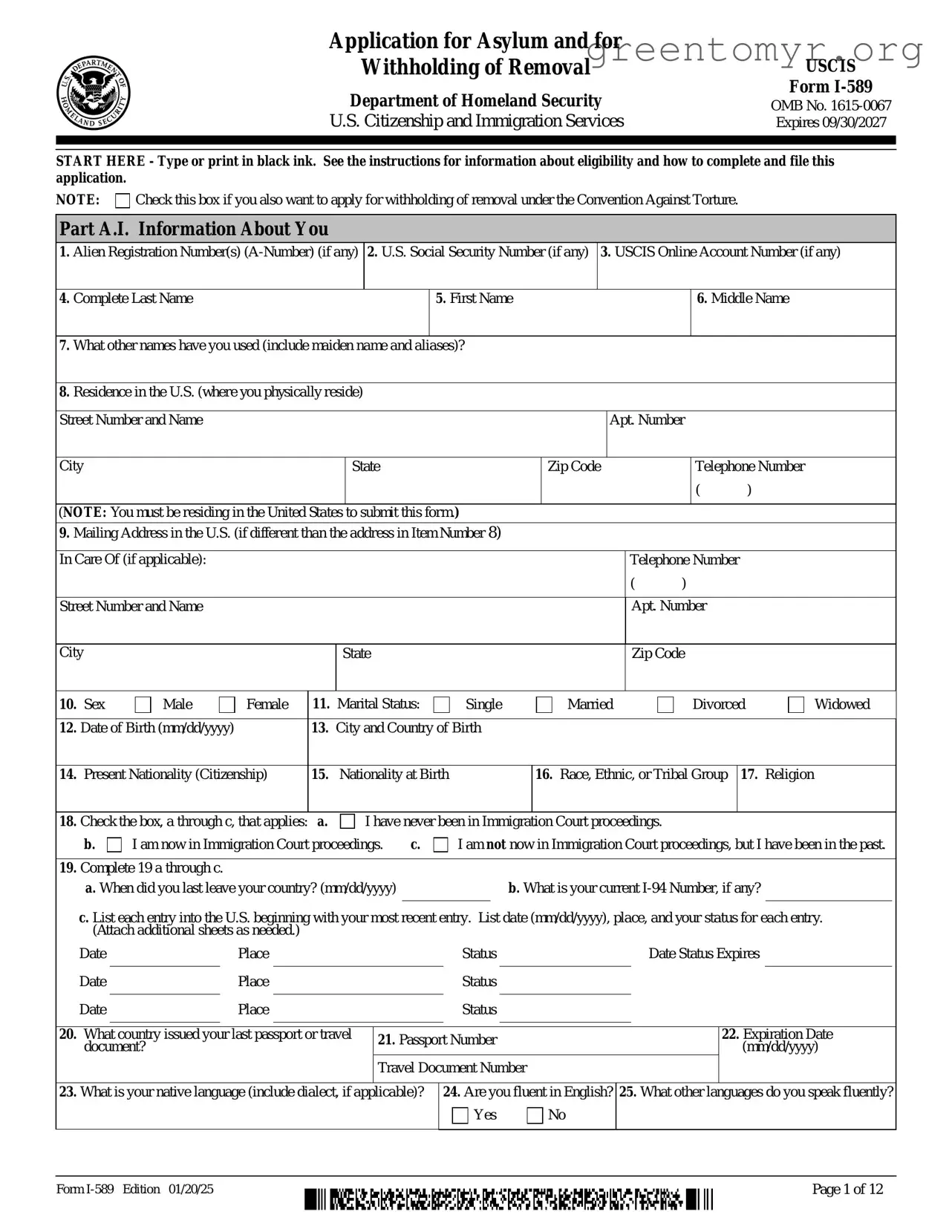
The USCIS I-589 form plays a crucial role in the asylum process for individuals seeking protection in the United States. This application allows individuals to request asylum based on a well-founded fear of persecution in their home country. It serves as a formal declaration of their intent to seek refuge and outlines the reasons for their fear, which may stem from factors such as race, religion, nationality, political opinion, or membership in a particular social group. Completing the I-589 form accurately is essential, as it initiates the legal proceedings that will determine the applicant's eligibility for asylum. Furthermore, the form must be submitted within one year of arrival in the U.S., unless certain exceptions apply. Applicants must also provide detailed personal information, including their immigration history and any previous encounters with law enforcement. The process can be complex and emotionally taxing, but understanding the components of the I-589 form can empower individuals to navigate their asylum claims more effectively.
|
Application for Asylum and for |
|
|
|
Withholding of Removal |
USCIS |
|
|
Department of Homeland Security |
Form |
|
|
OMB No. |
|
|
|
U.S. Citizenship and Immigration Services |
Expires 09/30/2027 |
|
|
|
|
|
|
|
|
|
START HERE - Type or print in black ink. See the instructions for information about eligibility and how to complete and file this application.
NOTE: |
Check this box if you also want to apply for withholding of removal under the Convention Against Torture. |
Part A.I. Information About You
1. |
Alien Registration Number(s) |
2. U.S. Social Security Number (if any) 3. USCIS Online Account Number (if any) |
|
4. |
Complete Last Name |
5. First Name |
6. Middle Name |
7.What other names have you used (include maiden name and aliases)?
8.Residence in the U.S. (where you physically reside)
Street Number and Name |
|
|
Apt. Number |
|
|||
|
|
|
|
|
|
||
City |
State |
Zip Code |
|
|
Telephone Number |
||
|
|
|
|
|
|
( |
) |
|
|
|
|
|
|
|
|
(NOTE: You must be residing in the United States to submit this form.) |
|
|
|
|
|
|
|
9. Mailing Address in the U.S. (if different than the address in Item Number 8) |
|
|
|
|
|
|
|
|
|
|
|
|
|
||
In Care Of (if applicable): |
|
|
|
Telephone Number |
|
||
|
|
|
|
( |
) |
|
|
|
|
|
|
|
|
||
Street Number and Name |
|
|
|
Apt. Number |
|
||
City
State
Zip Code
10. |
Sex |
|
Male |
Female |
11. |
Marital Status: |
|
|
Single |
|
|
Married |
|
Divorced |
|
|
Widowed |
|||||
|
|
|
|
|
||||||||||||||||||
|
|
|
|
|
|
|
|
|
|
|
|
|
|
|
|
|
|
|
|
|
|
|
12. |
Date of Birth (mm/dd/yyyy) |
|
13. |
City and Country of Birth |
|
|
|
|
|
|
|
|||||||||||
|
|
|
|
|
|
|
|
|
|
|
|
|
||||||||||
14. |
Present Nationality (Citizenship) |
15. |
Nationality at Birth |
|
16. |
Race, Ethnic, or Tribal Group |
17. |
Religion |
||||||||||||||
|
|
|
|
|
|
|
|
|
|
|
|
|
|
|||||||||
18. |
Check the box, a through c, that applies: |
a. |
|
|
I have never been in Immigration Court proceedings. |
|
|
|
|
|
||||||||||||
|
b. |
|
I am now in Immigration Court proceedings. |
c. |
|
|
I am not now in Immigration Court proceedings, but I have been in the past. |
|||||||||||||||
|
|
|
|
|||||||||||||||||||
19.Complete 19 a through c.
a. When did you last leave your country? (mm/dd/yyyy)b. What is your current
c. List each entry into the U.S. beginning with your most recent entry. List date (mm/dd/yyyy), place, and your status for each entry. |
||||||||||||
(Attach additional sheets as needed.) |
|
|
|
|
|
|
|
|
||||
Date |
Place |
|
|
Status |
Date Status Expires |
|||||||
|
|
|
|
|
|
|
|
|
|
|
|
|
Date |
Place |
|
|
Status |
|
|
|
|
||||
|
|
|
|
|
|
|
|
|
|
|
|
|
Date |
Place |
|
|
Status |
|
|
|
|
||||
|
|
|
|
|
|
|
|
|
|
|
|
|
|
|
|
|
|
|
|
|
|
||||
20. What country issued your last passport or travel |
21. |
Passport Number |
|
22. Expiration Date |
||||||||
document? |
|
|
|
|
(mm/dd/yyyy) |
|||||||
|
|
|
|
|
|
|
|
|||||
|
|
|
|
|
Travel Document Number |
|
|
|
|
|||
23.What is your native language (include dialect, if applicable)? 24. Are you fluent in English? 25. What other languages do you speak fluently?
Yes No
Form |
Page 1 of 12 |

Part A.II. Information About Your Spouse and Children
|
For EOIR use only. |
|
|
|
For |
Action: |
|
|
|
|
Decision: |
|
|
|
||||||||
|
|
|
|
|
USCIS |
Interview Date: |
|
|
|
|
|
Approval Date: |
|
|
|
|
||||||
|
|
|
|
use only. Asylum Officer ID No.: |
|
|
|
|
Denial Date: |
|
|
|
|
|||||||||
|
|
|
|
|
|
|
|
|
|
|
|
|
|
Referral Date: |
|
|
|
|||||
|
|
|
|
|
|
|
|
|
|
|
|
|
|
|
|
|
|
|
|
|
|
|
Your spouse |
I am not married. (Skip to Your Children below.) |
|
|
|
|
|
|
|
|
|
||||||||||||
|
|
|
|
|
|
|
|
|
|
|
|
|
|
|
||||||||
1. |
Alien Registration Number |
|
2. |
|
Passport/ID Card Number |
3. |
Date of Birth (mm/dd/yyyy) |
4. U.S. Social Security Number |
||||||||||||||
|
(if any) |
|
|
|
|
(if any) |
|
|
|
|
|
|
|
|
(if any) |
|
|
|
||||
|
|
|
|
|
|
|
|
|
|
|
|
|
|
|
|
|
|
|
|
|
|
|
5. |
Complete Last Name |
|
|
|
6. |
|
First Name |
7. |
Middle Name |
|
8. Other names used (include |
|||||||||||
|
|
|
|
|
|
|
|
|
|
|
|
|
|
|
|
maiden name and aliases) |
||||||
|
|
|
|
|
|
|
|
|
|
|
|
|
|
|
|
|
|
|
|
|
|
|
9. |
Date of Marriage (mm/dd/yyyy) |
|
|
|
10. |
Place of Marriage |
|
|
11. City and Country of Birth |
|
|
|
||||||||||
|
|
|
|
|
|
|
|
|
|
|
|
|
|
|
|
|
|
|
|
|||
12. Nationality (Citizenship) |
|
|
|
|
|
|
13. Race, Ethnic, or Tribal Group |
14. Sex |
|
|
|
|||||||||||
|
|
|
|
|
|
|
|
|
|
|
|
|
|
|
|
|
Male |
|
Female |
|||
|
|
|
|
|
|
|
|
|
|
|
|
|
|
|
|
|
|
|||||
|
|
|
|
|
|
|
|
|
|
|
|
|
|
|
|
|
|
|
|
|
|
|
15.Is this person in the U.S.?
|
Yes (Complete Blocks 16 to 24.) |
No (Specify location): |
|
|
|
|
|
|
|
|||
|
|
|
|
|
|
|
|
|
|
|
||
|
|
|
|
|
|
|
|
|
|
|||
16. |
Place of last entry into the |
17. |
Date of last entry into the |
18. |
19. Status when last admitted |
|
||||||
|
U.S. |
|
U.S. |
(mm/dd/yyyy) |
|
|
|
|
|
(Visa type, if any) |
|
|
|
|
|
|
|
|
|
|
|
|
|||
20. |
What is your spouse's |
21. |
What is the expiration date of his/her |
22. Is your spouse in Immigration |
23. If previously in the U.S., date of |
|
||||||
|
current status? |
|
authorized stay, if any? (mm/dd/yyyy) |
|
Court proceedings? |
previous arrival (mm/dd/yyyy) |
|
|||||
|
|
|
|
|
|
|
|
Yes |
|
No |
|
|
|
|
|
|
|
|
|
|
|
|
|
||
24.If in the U.S., is your spouse to be included in this application? (Check the appropriate box.) Yes
No
Your Children. List all of your children, regardless of age, location, or marital status.
I do not have any children. (Skip to Part A.III., Information about your background.)
I have children. Total number of children:.
(NOTE: Use Form
1. Alien Registration Number |
2. |
Passport/ID Card Number |
|
3. Marital Status (Married, Single, |
4. |
|
U.S. Social Security Number |
|||||||||||||
(if any) |
|
|
(if any) |
|
Divorced, Widowed) |
|
(if any) |
|
|
|
||||||||||
|
|
|
|
|
|
|
|
|
|
|
|
|
|
|
|
|
|
|
||
5. Complete Last Name |
|
6. |
First Name |
|
7. Middle Name |
|
|
|
|
8. |
|
Date of Birth (mm/dd/yyyy) |
||||||||
|
|
|
|
|
|
|
|
|
|
|
|
|
|
|
|
|
|
|
||
9. City and Country of Birth |
|
10. Nationality (Citizenship) |
|
11. Race, Ethnic, or Tribal Group |
12. Sex |
|
|
|
||||||||||||
|
|
|
|
|
|
|
|
|
|
|
|
|
|
|
|
|
Male |
|
Female |
|
|
|
|
|
|
|
|
|
|
|
|
|
|
|
|
|
|
|
|||
|
|
|
|
|
|
|
|
|
|
|
|
|
|
|
|
|
|
|
|
|
13. Is this child in the U.S. ? |
|
|
Yes (Complete Blocks 14 to 21.) |
|
No (Specify location): |
|
|
|
|
|
|
|
||||||||
|
|
|
|
|
|
|
|
|
||||||||||||
|
|
|
|
|
|
|
|
|
|
|
|
|
|
|
|
|
|
|
|
|
|
|
|
|
|
|
|
|
|
|
|
|
|
|
|
|
|
|
|
|
|
14. Place of last entry into the U.S. |
|
15. Date of last entry into the |
|
16. |
17. Status when last admitted |
|||||||||||||||
|
|
|
|
|
U.S. (mm/dd/yyyy) |
|
|
|
|
|
|
|
|
(Visa type, if any) |
||||||
|
|
|
|
|
|
|
|
|
|
|
|
|
|
|
|
|
||||
18. What is your child's current status? |
|
|
19. What is the expiration |
date of his/her |
20. Is your child in |
Immigration Court proceedings? |
||||||||||||||
|
|
|
|
|
|
authorized stay, if any? (mm/dd/yyyy) |
|
|
|
Yes |
|
|
|
No |
|
|
|
|||
|
|
|
|
|
|
|
|
|
|
|
|
|
|
|
||||||
|
|
|
|
|
|
|
|
|
|
|
|
|
|
|
|
|
|
|
||
|
|
|
|
|
|
|
|
|
|
|
|
|
|
|
|
|
|
|
|
|
21. If in the U.S., is this child to be included in this application? (Check the appropriate box.) |
|
|
|
|
|
|
|
|
|
|
|
|||||||||
Yes |
|
|
|
|
|
|
|
|
|
|
|
|
|
|
|
|
|
|
||
No |
|
|
|
|
|
|
|
|
|
|
|
|
|
|
|
|
|
|
||
|
|
|
|
|
|
|
|
|
|
|
|
|
|
|
|
|
|
|
|
|
|
|
|
|
|
|
|
|
|
|
|
|
|
|
|
|
|
||||
Form |
|
|
|
|
|
|
|
|
|
|
|
|
|
|
|
Page 2 of 12 |
||||
| Fact Name | Description |
|---|---|
| Purpose | The I-589 form is used to apply for asylum in the United States, allowing individuals to seek protection from persecution. |
| Eligibility | Individuals who fear persecution due to race, religion, nationality, political opinion, or membership in a particular social group may qualify. |
| Filing Deadline | Applicants must file the I-589 form within one year of arriving in the U.S., although exceptions may apply. |
| Where to File | The completed form should be submitted to the appropriate USCIS service center based on the applicant's location. |
| Interview Requirement | After filing, applicants will typically have an interview with an asylum officer to discuss their claims. |
| Legal Representation | While not required, having legal representation can significantly enhance an applicant's chances of a successful outcome. |
After obtaining the USCIS I-589 form, you are ready to fill it out. This form is essential for those seeking asylum or withholding of removal in the United States. Follow these steps carefully to ensure accurate completion.
Once you have completed the form, gather any necessary supporting documents. Ensure that everything is organized before submitting your application to USCIS.
The USCIS I-589 form is the application for asylum and for withholding of removal. It allows individuals who are in the United States and fear persecution in their home country to seek protection. This form is essential for those who wish to apply for asylum based on their experiences or fears of persecution due to race, religion, nationality, political opinion, or membership in a particular social group.
Any individual who is physically present in the United States and believes they have a credible fear of persecution can file the I-589 form. This includes:
Generally, you must file the I-589 form within one year of your arrival in the United States. However, there are some exceptions to this rule. If you qualify for an exception, you may still be able to apply after the one-year deadline. It's important to provide a detailed explanation of any delays in your application.
When submitting the I-589 form, it is crucial to include supporting documents. These may include:
Make sure to provide copies of documents, not originals, as USCIS does not return submitted materials.
After submitting the I-589 form, you will receive a receipt notice from USCIS. This notice confirms that your application is being processed. You may be scheduled for an interview, where you will have the opportunity to present your case. During this process, it’s essential to be prepared and provide any additional information requested by USCIS.
Filling out the USCIS I-589 form can be a daunting task. Many individuals make common mistakes that can delay their application or even lead to a denial. Understanding these pitfalls can help applicants navigate the process more smoothly.
One frequent mistake is incomplete information. Applicants often leave sections blank or fail to provide necessary details. Each question is important, and missing information can raise red flags. It’s crucial to review the entire form and ensure every section is filled out completely.
Another common error is failing to sign the form. It might seem simple, but many forget to sign or date their application. A missing signature can result in the application being rejected outright. Always double-check that the form is signed before submission.
Some applicants also struggle with providing inconsistent information. Discrepancies between the I-589 form and other documents can lead to confusion and suspicion. It’s vital to ensure that all information matches across different forms and supporting documents.
Additionally, not submitting required supporting documents is a mistake that can hinder an application. The I-589 requires various pieces of evidence to support claims. Failing to include these documents can weaken the case. Make a checklist of all necessary documents and ensure they are submitted with the application.
Finally, many individuals underestimate the importance of keeping copies of everything. After submitting the I-589, it’s essential to have a record of what was sent. This can be invaluable if questions arise later or if any issues need to be addressed. Always keep a copy of the completed form and all supporting materials.
When applying for asylum in the United States using the USCIS I-589 form, several other documents may be necessary to support your application. Each of these documents plays a vital role in providing evidence and context for your case. Below is a list of commonly used forms and documents that accompany the I-589.
Gathering these documents can be crucial for a successful asylum application. Each piece of information helps paint a clearer picture of your situation and strengthens your case. Make sure to review all requirements thoroughly to ensure that your application is complete and compelling.
The USCIS I-589 form is primarily used for individuals seeking asylum in the United States. However, there are several other documents that share similarities with the I-589 in terms of purpose, structure, or the information required. Here are seven such documents:
Understanding these documents can help individuals navigate the complex immigration process more effectively. Each form plays a crucial role in ensuring that those seeking protection or status in the U.S. can present their cases appropriately.
When filling out the USCIS I-589 form, it is crucial to approach the process with care. Here are some important dos and don'ts to consider.
By following these guidelines, you can help ensure a smoother application process. Take your time and seek assistance if needed.
The USCIS I-589 form is used to apply for asylum in the United States. However, several misconceptions exist regarding this form and the process surrounding it. Below is a list of common misconceptions along with explanations to clarify the facts.
Filling out the USCIS I-589 form can be a crucial step for those seeking asylum in the United States. Here are some key takeaways to keep in mind:
Understanding these points can help streamline the process and enhance the chances of a successful asylum application.