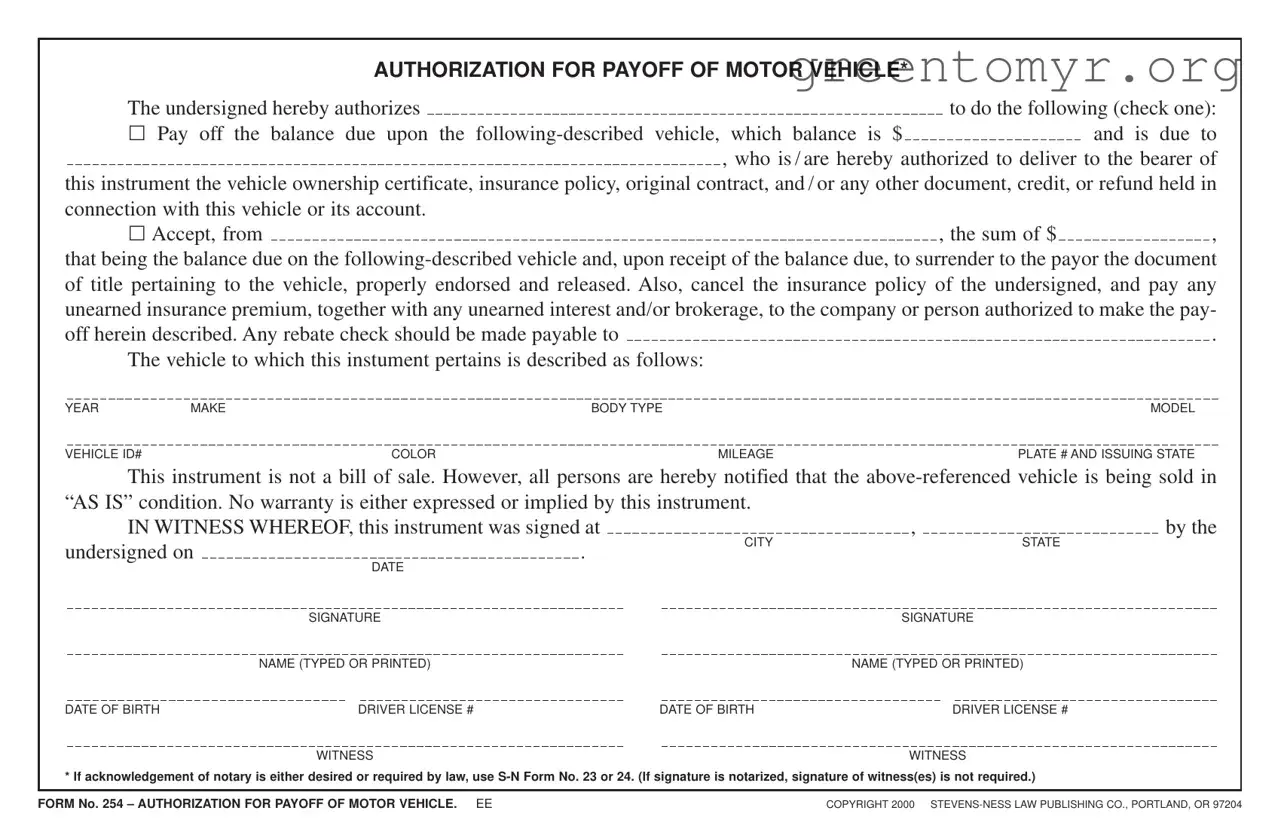
The Vehicle Payoff Authorization form plays a crucial role in the process of settling the financial obligations associated with a motor vehicle. When a vehicle owner decides to pay off their auto loan or sell their vehicle, this form serves as a formal agreement that allows for the transfer of ownership and the necessary documentation. It outlines the specific actions authorized by the vehicle owner, such as paying off the remaining balance due on the vehicle or accepting a payment from a buyer. The form includes essential details about the vehicle itself, including its make, model, year, and identification number, ensuring clarity in the transaction. Furthermore, it addresses the cancellation of any insurance policies related to the vehicle, directing that any unearned premiums be returned to the appropriate party. Importantly, the form emphasizes that the vehicle is sold in “AS IS” condition, indicating that no warranties are implied or expressed. By signing this document, individuals acknowledge their understanding of these terms, facilitating a smoother transaction process and protecting the interests of all parties involved.

|
|
|
|
|
AUTHORIZATION FOR PAYOFF OF MOTOR VEHICLE* |
|
|
|
|
|
|
||||||||||||||||||
|
|
The undersigned hereby authorizes |
|
|
|
|
|
|
|
|
|
|
|
|
|
to do the following (check one): |
|||||||||||||
|
|
A Pay |
off the balance due upon the |
balance is $ |
and is due to |
||||||||||||||||||||||||
|
|
|
|
|
|
|
|
|
|
|
|
, who is / are hereby authorized to deliver to the bearer of |
|||||||||||||||||
|
|
|
|
|
|
|
|
|
|
|
|
||||||||||||||||||
this instrument the vehicle ownership certificate, insurance policy, original contract, and / or any other document, credit, or refund held in |
|||||||||||||||||||||||||||||
connection with this vehicle or its account. |
|
|
|
|
|
|
|
|
|
|
|
|
|
|
|
|
|
|
|
|
|
|
|
|
|||||
|
|
A Accept, from |
|
|
|
|
|
|
|
|
|
|
|
|
, the sum of $ |
|
|
|
|
, |
|||||||||
|
|
|
|
|
|
|
|
|
|
|
|
|
|
|
|
||||||||||||||
that being the balance due on the |
|||||||||||||||||||||||||||||
of title pertaining to the vehicle, properly endorsed and released. Also, cancel the insurance policy of the undersigned, and pay any |
|||||||||||||||||||||||||||||
unearned insurance premium, together with any unearned interest and/or brokerage, to the company or person authorized to make the pay- |
|||||||||||||||||||||||||||||
off herein described. Any rebate check should be made payable to |
|
|
|
|
|
|
|
|
|
|
|
|
|
. |
|||||||||||||||
|
|
The vehicle to which this instument pertains is described as follows: |
|
|
|
|
|
|
|
|
|
|
|
|
|
|
|
|
|
|
|
||||||||
YEAR |
MAKE |
BODY TYPE |
|
|
|
|
|
|
|
|
|
|
|
|
|
MODEL |
|||||||||||||
VEHICLE ID# |
|
|
COLOR |
|
|
|
|
|
MILEAGE |
|
|
|
|
|
|
|
|
PLATE # AND ISSUING STATE |
|||||||||||
|
|
This instrument is not a bill of sale. However, all persons are hereby notified that the |
|||||||||||||||||||||||||||
“AS IS” condition. No warranty is either expressed or implied by this instrument. |
|
|
|
|
|
|
|
|
|
|
|
|
|
|
|
|
|
||||||||||||
|
|
IN WITNESS WHEREOF, this instrument was signed at |
|
|
|
CITY |
|
|
, |
|
|
|
|
|
STATE |
|
|
by the |
|||||||||||
|
|
|
|
|
|
|
|
|
|
|
|||||||||||||||||||
undersigned on |
. |
|
|
|
|
|
|
|
|
|
|
|
|
|
|
|
|
|
|
|
|||||||||
|
|
|
|
|
|
|
|
|
|
|
|
|
|
|
|
|
|
|
|
|
|
|
|||||||
|
|
|
|
|
DATE |
|
|
|
|
|
|
|
|
|
|
|
|
|
|
|
|
|
|
|
|
|
|
|
|
|
|
|
SIGNATURE |
|
|
|
|
|
|
|
SIGNATURE |
|
|
|
|
|
|
||||||||||||
|
|
|
NAME (TYPED OR PRINTED) |
|
|
|
|
|
|
|
NAME (TYPED OR PRINTED) |
|
|
|
|
|
|
||||||||||||
|
|
|
|
|
|
|
|
|
|
|
|
|
|
|
|
|
|
|
|
|
|
|
|
|
|
|
|
|
|
DATE OF BIRTH |
|
|
DRIVER LICENSE # |
|
|
DATE OF BIRTH |
|
|
|
|
|
|
DRIVER LICENSE # |
|
|
|
|
|
|
||||||||||
|
|
|
WITNESS |
|
|
|
|
|
|
|
|
|
WITNESS |
|
|
|
|
|
|
||||||||||
* If acknowledgement of notary is either desired or required by law, use |
|
|
|
|
|
|
|||||||||||||||||||||||
|
|
|
|
|
|||||||||||||||||||||||||
FORM No. 254 – AUTHORIZATION FOR PAYOFF OF MOTOR VEHICLE. |
EE |
|
|
COPYRIGHT 2000 |
|||||||||||||||||||||||||
| Fact Name | Description |
|---|---|
| Purpose | The Vehicle Payoff Authorization form allows a vehicle owner to authorize a third party to pay off the remaining balance on a vehicle loan. |
| Components | The form includes sections for vehicle details, payment amounts, and authorizations for title transfer and insurance cancellation. |
| Legal Status | This form is not a bill of sale. It serves as an authorization for payoff, and the vehicle is sold "AS IS," without warranties. |
| State Variability | Different states may have specific requirements for vehicle payoff forms, including notarization and additional disclosures. |
| Notary Requirement | Some states require notarization for the form to be valid. If needed, a specific notary acknowledgment form should be used. |
| Governing Laws | State laws govern the use and requirements of this form. For example, California Civil Code § 2983.3 outlines specific requirements for vehicle financing documents. |
| Completion | The form must be completed with accurate vehicle information and signatures from all relevant parties to ensure its validity. |
Once you have completed the Vehicle Payoff Authorization form, you will be ready to submit it to the appropriate parties involved in the vehicle payoff process. This form is crucial for authorizing the payoff and ensuring that all necessary documents are handled properly.
The Vehicle Payoff Authorization form is a document that allows an individual to authorize a third party to either pay off the remaining balance on a vehicle loan or accept payment for the vehicle. This form ensures that the necessary documents related to the vehicle are handled appropriately during the transaction.
This form should be completed by the vehicle owner or the individual responsible for the vehicle loan. It is essential for anyone who is transferring ownership or paying off a vehicle to ensure that the transaction is legally recognized and documented.
The form requires several key pieces of information, including:
Once the form is completed and signed, it should be submitted to the relevant parties, such as the lender or the person buying the vehicle. This will initiate the process of paying off the loan or transferring ownership. The lender will then provide the necessary documents to complete the transaction.
No, the Vehicle Payoff Authorization form is not a bill of sale. It serves solely as an authorization for payment and does not imply any warranty or guarantee regarding the vehicle's condition. The vehicle is sold "AS IS," meaning that the buyer accepts it without any assurances from the seller.
Yes, the form includes provisions for canceling the insurance policy associated with the vehicle. Upon completion of the transaction, any unearned insurance premiums will be refunded to the appropriate party as specified in the form.
If notarization is required or desired, it is recommended to use S-N Form No. 23 or 24. Notarization provides an extra layer of verification, ensuring that the signatures on the form are authentic. If the form is notarized, the signatures of witnesses are not necessary.
If you have additional questions regarding the Vehicle Payoff Authorization form, it is advisable to consult with a legal professional or contact your lender for clarification. They can provide guidance specific to your situation and ensure that all necessary steps are followed correctly.
Filling out the Vehicle Payoff Authorization form can be straightforward, but there are common mistakes that can lead to delays or complications. Here are five mistakes to avoid when completing this important document.
One frequent error is failing to provide the correct balance due on the vehicle. This amount should be clearly stated in the designated space. If you leave this blank or enter an incorrect figure, it can create confusion and may even result in the payoff not being processed correctly. Always double-check this amount with your lender before submitting the form.
Another mistake is neglecting to include all necessary vehicle details. The form requires specific information such as the year, make, model, Vehicle ID number, and color. Omitting any of these details can lead to delays in processing your authorization. Make sure to fill in every section accurately to ensure a smooth transaction.
Additionally, some people forget to sign the form. A signature is essential for the authorization to be valid. Without it, the request cannot be processed. It’s also important to ensure that the signature matches the name typed or printed on the form. This helps verify your identity and authority regarding the vehicle.
Another common oversight involves the cancellation of the insurance policy. The form specifies that the insurance policy should be canceled and any unearned premiums returned. If this step is overlooked, you may continue to incur unnecessary charges. Be sure to check this box and provide the necessary information for the insurance company.
Lastly, individuals often overlook the need for a witness signature. While it may not be required if the signature is notarized, having a witness can add an extra layer of legitimacy to the document. If you choose to skip this step, be aware of the potential implications. Always consider having a witness present to sign the form, ensuring that everything is in order.
The Vehicle Payoff Authorization form is an essential document in the process of settling the financial obligations related to a motor vehicle. Several other forms and documents may accompany this authorization to ensure a smooth transaction. Below is a list of commonly used forms that facilitate various aspects of vehicle payoff and transfer.
Each of these documents plays a critical role in ensuring that the vehicle payoff process is handled correctly and legally. Collectively, they help protect the interests of all parties involved, facilitating a smooth transition of ownership and financial responsibility.
The Vehicle Payoff Authorization form is a crucial document in the vehicle sale and payoff process. It shares similarities with several other important documents. Here’s a look at seven of them:
Understanding these documents can streamline the vehicle payoff process and ensure that all parties are protected. Each plays a unique role, yet they all contribute to a successful transaction.
When filling out the Vehicle Payoff Authorization form, there are key actions to take and avoid. Here’s a straightforward guide:
Following these guidelines will help ensure a smooth process when dealing with your vehicle payoff. Make sure to double-check your entries for accuracy and completeness.
Misconception 1: The Vehicle Payoff Authorization form is a bill of sale.
This form is not a bill of sale. It serves as a document to authorize the payoff of a vehicle's balance, but it does not transfer ownership in the same way a bill of sale does.
Misconception 2: Signing this form guarantees a refund for any unearned premiums.
While the form mentions the cancellation of insurance and potential refunds, it does not guarantee that a refund will be issued. The actual refund depends on the insurance company's policies.
Misconception 3: The form provides a warranty for the vehicle.
The Vehicle Payoff Authorization explicitly states that the vehicle is sold in “AS IS” condition. No warranties, either expressed or implied, are provided.
Misconception 4: You must have a notary present to complete the form.
A notary is only needed if required by law or desired for additional verification. The form can be signed without a notary.
Misconception 5: The form is only for vehicles with outstanding loans.
This form can be used for any vehicle payoff situation, not just those with loans. It applies to any balance due on the vehicle.
Misconception 6: The Vehicle Payoff Authorization form is a standard document for all states.
While it may be widely used, laws and requirements can vary by state. It is essential to check local regulations to ensure compliance.
Misconception 7: The form can be used to authorize anyone to pay off the vehicle.
Authorization is limited to the individuals or entities specifically mentioned in the form. It does not grant blanket authority to any person.
When filling out and using the Vehicle Payoff Authorization form, keep these key takeaways in mind: