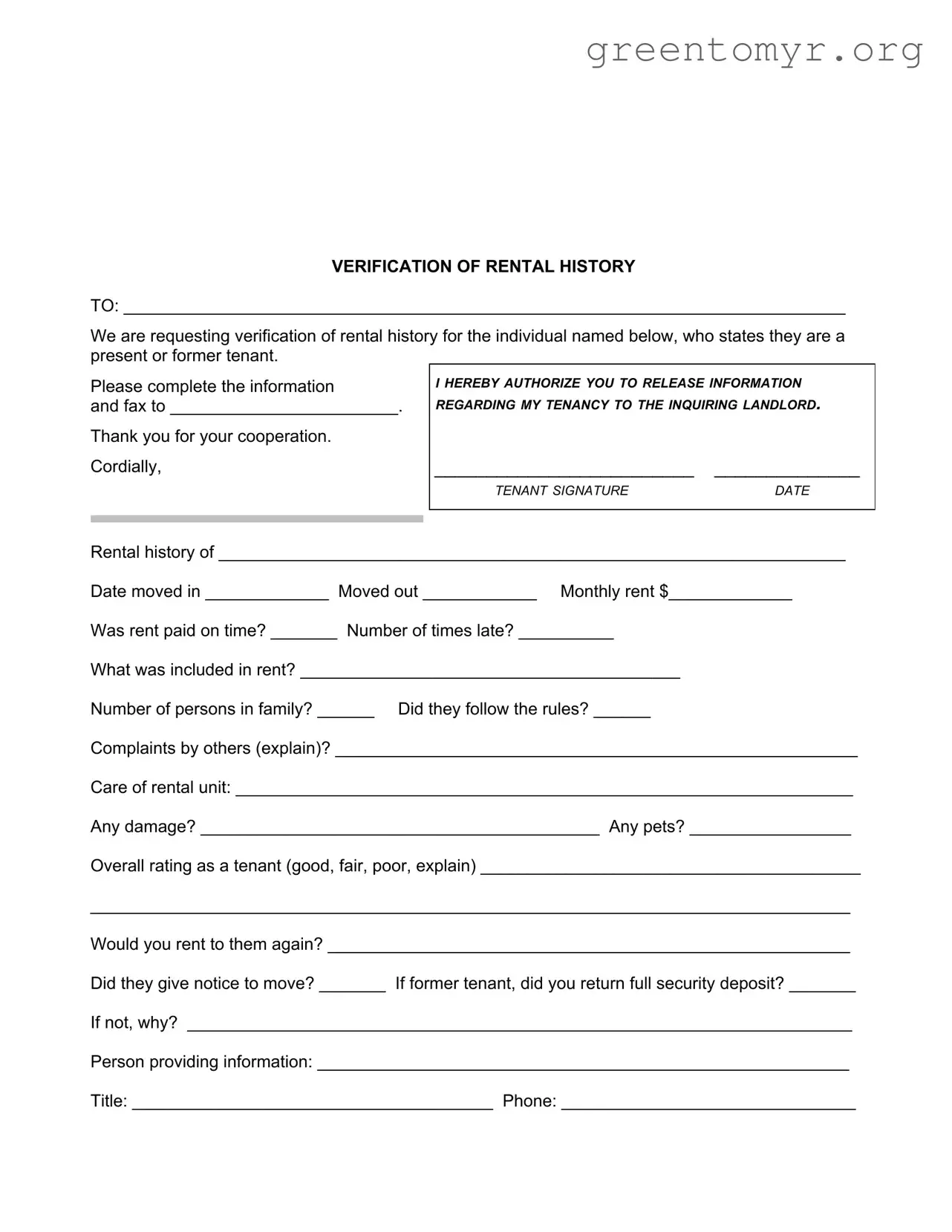
The Verification Rental form is an essential document that facilitates the process of confirming a tenant's rental history. This form is typically used by landlords or property managers to gather important information about a current or former tenant's residency. It includes a series of questions designed to assess various aspects of the tenant's behavior and responsibilities while renting the property. Key elements of the form include the tenant's move-in and move-out dates, monthly rent amount, and payment history. Additionally, it seeks to understand the tenant's adherence to rental rules, any complaints from neighbors, and the overall condition of the rental unit. The form also prompts the landlord to evaluate whether they would rent to the individual again and to provide details about the return of the security deposit. By collecting this information, landlords can make informed decisions regarding future rental agreements, ensuring a smoother leasing process for everyone involved.
VERIFICATION OF RENTAL HISTORY
TO: ____________________________________________________________________________
We are requesting verification of rental history for the individual named below, who states they are a present or former tenant.
Please complete the information |
|
I HEREBY AUTHORIZE YOU TO RELEASE INFORMATION |
|
|
|
|
|
and fax to ________________________. |
|
REGARDING MY TENANCY TO THE INQUIRING LANDLORD. |
|
Thank you for your cooperation. |
|
|
|
Cordially, |
|
_________________________ |
______________ |
|
|
TENANT SIGNATURE |
DATE |
|
|
|
|
|
|
|
|
|
|
|
|
Rental history of __________________________________________________________________
Date moved in _____________ Moved out ____________ Monthly rent $_____________
Was rent paid on time? _______ Number of times late? __________
What was included in rent? ________________________________________
Number of persons in family? ______ Did they follow the rules? ______
Complaints by others (explain)? _______________________________________________________
Care of rental unit: _________________________________________________________________
Any damage? __________________________________________ Any pets? _________________
Overall rating as a tenant (good, fair, poor, explain) ________________________________________
________________________________________________________________________________
Would you rent to them again? _______________________________________________________
Did they give notice to move? _______ If former tenant, did you return full security deposit? _______
If not, why? ______________________________________________________________________
Person providing information: ________________________________________________________
Title: ______________________________________ Phone: _______________________________
| Fact Name | Description |
|---|---|
| Purpose | The Verification of Rental History form is used to confirm a tenant's rental history for prospective landlords. |
| Authorization | The tenant must sign the form, authorizing the release of their rental information. |
| Information Required | The form requests details about the tenant's rental period, payment history, and overall conduct. |
| Completion Method | The form should be completed by the current or former landlord and returned via fax. |
| State-Specific Laws | In states like California, the form must comply with the California Civil Code § 1942.5 regarding tenant rights. |
| Privacy Considerations | Landlords must handle the information with care, respecting the tenant's privacy rights. |
| Additional Details | Landlords are encouraged to provide a fair assessment of the tenant, including any complaints or issues. |
| Final Assessment | The form includes a section for the landlord's overall rating of the tenant and their willingness to rent to them again. |
After completing the Verification Rental form, it will be sent to the landlord or property manager for their input. They will provide the necessary details about the tenant's rental history. Follow these steps to fill out the form correctly.
The Verification Rental form is designed to collect information about a tenant's rental history. It helps landlords verify claims made by potential tenants regarding their past rental experiences. By obtaining this information, landlords can make informed decisions about whether to approve a rental application.
The form is typically filled out by the landlord or property manager of the tenant's previous rental property. The current or former tenant authorizes the release of this information by signing the form, ensuring that their rental history can be shared with the inquiring landlord.
The form requests a variety of details, including:
This form provides a comprehensive view of a tenant's past behavior. It allows landlords to assess whether a potential tenant is reliable, responsible, and a good fit for their property. By reviewing the responses, landlords can weigh the risks and benefits of renting to that individual.
If a landlord refuses to fill out the Verification Rental form, it may raise concerns for the prospective tenant. However, it could also indicate that the landlord is unwilling to share information for various reasons, such as privacy concerns or a lack of records. In such cases, the tenant may need to provide alternative references or documentation to support their rental application.
Yes, tenants have the right to dispute any information that they believe is inaccurate. If a tenant feels that the details provided by a previous landlord are incorrect or misleading, they should communicate directly with the landlord to address the issue. Additionally, tenants can provide their own documentation or references to counter any negative claims made on the form.
Completing the Verification of Rental History form can be straightforward, but several common mistakes can lead to complications. One frequent error is leaving sections of the form blank. Each part of the form is designed to gather specific information about the tenant's rental history. If any section is not filled out, it can delay the verification process or result in incomplete information being provided to the inquiring landlord.
Another mistake is providing inaccurate information. For example, if the dates of tenancy are incorrect, it can create confusion and mistrust. It is essential to double-check that the dates moved in and moved out are accurate. Additionally, the monthly rent amount should reflect what was actually charged. Inaccuracies can lead to misunderstandings and may even affect the tenant’s chances of securing a new rental.
Failing to answer questions fully is another common issue. Some sections, like "Did they follow the rules?" or "Complaints by others," require detailed responses. Providing vague answers can leave the inquiring landlord with more questions than answers. Clear and concise explanations are important for a comprehensive understanding of the tenant’s behavior and reliability.
Lastly, neglecting to include contact information for the person providing the verification can hinder the process. The landlord needs a way to follow up if they have further questions. Ensure that the title and phone number are included, making it easier for the inquiring landlord to reach out for additional information if necessary.
When seeking to verify a potential tenant's rental history, several additional forms and documents can enhance the process. Each of these documents serves a specific purpose and can provide valuable insights into the applicant's background. Below is a list of commonly used forms that may accompany the Verification of Rental History form.
Using these forms and documents together with the Verification of Rental History form can create a clearer picture of a potential tenant. By gathering comprehensive information, landlords can make informed decisions and foster positive rental relationships.
Rental Application Form: Similar to the Verification Rental form, a rental application collects information about a prospective tenant's rental history, employment, and financial status. Both documents aim to assess the tenant's reliability.
Tenant Reference Letter: This letter provides insights from previous landlords about a tenant's behavior and reliability. Like the Verification Rental form, it focuses on the tenant's history and their adherence to rental agreements.
Lease Agreement: A lease outlines the terms and conditions of renting a property. While it is more formal, it shares the purpose of documenting tenant responsibilities and expectations, similar to the information gathered in the Verification Rental form.
Credit Report Authorization: This document allows landlords to check a tenant's credit history. It serves a similar purpose in evaluating a tenant's financial responsibility as the Verification Rental form does for rental history.
Eviction Record Request: This request seeks information about any past evictions. It is similar in that it helps landlords assess a tenant's reliability and history, much like the Verification Rental form.
Employment Verification Form: This form confirms a tenant's employment status and income. Both documents aim to provide a complete picture of a tenant's ability to pay rent.
Security Deposit Receipt: This document confirms the amount of security deposit paid by the tenant. It relates to the Verification Rental form by addressing the financial responsibilities and history of the tenant.
Move-In Inspection Checklist: This checklist documents the condition of the rental unit at move-in. It complements the Verification Rental form by providing context about the tenant's care of the property.
Notice to Vacate: This document informs a landlord of a tenant's intention to leave. It is similar in that it addresses the tenant's compliance with rental agreements and their communication with the landlord.
Rental History Report: This report compiles information from multiple landlords about a tenant's past rentals. It serves a similar purpose as the Verification Rental form by summarizing a tenant's history and reliability.
When filling out the Verification Rental form, consider the following guidelines:
Here are five common misconceptions about the Verification Rental form:
When filling out and using the Verification of Rental form, consider these key takeaways: