Traveling with your pet can be an exciting adventure, but it also comes with its own set of responsibilities. One important aspect of this journey is the Veterinary Certificate Travel form, which is essential for ensuring that your furry friend is healthy and ready to fly. This form is required by most airlines for both domestic and international travel and must be signed by a licensed veterinarian within ten days of your departure. It includes crucial details about your pet, such as their species, breed, and vaccination status, particularly regarding rabies. Additionally, it certifies that your pet is free from fleas, ticks, and parasites, as well as any diseases that could be transmitted to humans. While the certification itself is not mandatory, filling out this form completely and accurately is vital for a smooth travel experience. Remember to provide your veterinarian's signature and stamp, confirming that they are licensed in your state or province. As you prepare for your trip, keep in mind that some airlines may also require an acclimation certificate during colder months, adding another layer to your travel preparations.
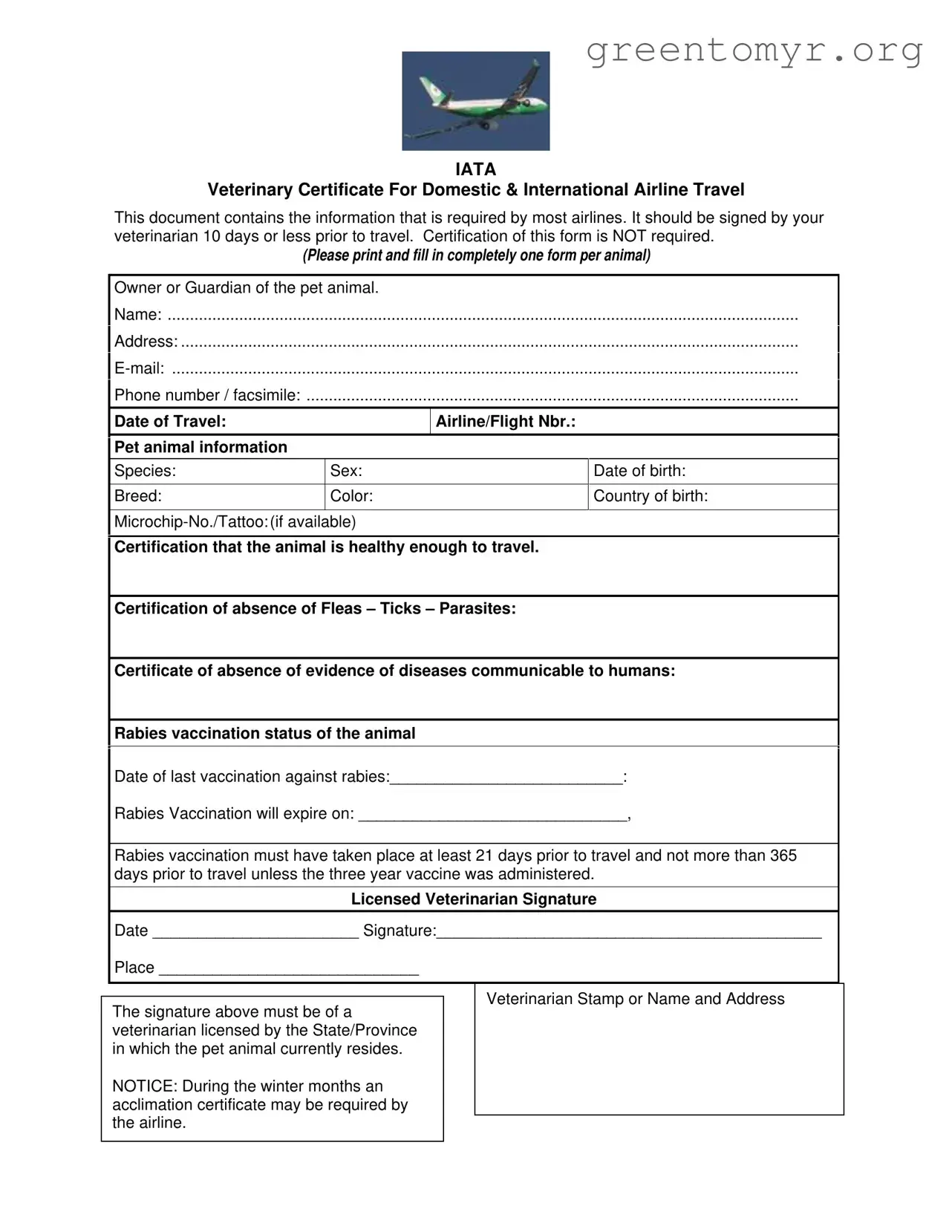
IATA
Veterinary Certificate For Domestic & International Airline Travel
This document contains the information that is required by most airlines. It should be signed by your veterinarian 10 days or less prior to travel. Certification of this form is NOT required.
(Please print and fill in completely one form per animal)
Owner or Guardian of the pet animal.
Name: .............................................................................................................................................
Address: ..........................................................................................................................................
Phone number / facsimile: ..............................................................................................................
Date of Travel:
Pet animal information
Airline/Flight Nbr.:
Species:
Breed:
Sex:
Color:
Date of birth:
Country of birth:
Certification that the animal is healthy enough to travel.
Certification of absence of Fleas – Ticks – Parasites:
Certificate of absence of evidence of diseases communicable to humans:
Rabies vaccination status of the animal
Date of last vaccination against rabies:__________________________:
Rabies Vaccination will expire on: ______________________________,
Rabies vaccination must have taken place at least 21 days prior to travel and not more than 365 days prior to travel unless the three year vaccine was administered.
Licensed Veterinarian Signature
Date _______________________ Signature:___________________________________________
Place _____________________________
Veterinarian Stamp or Name and Address
The signature above must be of a veterinarian licensed by the State/Province in which the pet animal currently resides.
NOTICE: During the winter months an acclimation certificate may be required by the airline.
| Fact Name | Description |
|---|---|
| Purpose | The IATA Veterinary Certificate is necessary for both domestic and international airline travel with pets, ensuring compliance with airline requirements. |
| Veterinarian Signature | This form must be signed by a licensed veterinarian within 10 days prior to travel to confirm the pet's health status. |
| Rabies Vaccination | Rabies vaccination must occur at least 21 days before travel and not more than 365 days prior unless a three-year vaccine was administered. |
| State-Specific Requirements | Each state may have specific regulations governing pet travel. For example, California requires compliance with the California Code of Regulations, Title 17, Section 2606. |
| Acclimation Certificate | During winter months, airlines may require an acclimation certificate to ensure the pet can safely travel in cold temperatures. |
Filling out the Veterinary Certificate Travel form is an important step in ensuring your pet can travel safely and legally. After completing the form, you will need to have it signed by a licensed veterinarian. This should be done within 10 days of your travel date. Make sure to keep a copy for your records.
Once the form is completed and signed, keep it with you during your travels. This will help ensure a smooth journey for both you and your pet.
The Veterinary Certificate Travel form is a document required by most airlines for the transportation of pets, both domestically and internationally. It provides essential information about the pet, including its health status and vaccination history. This form must be completed and signed by a licensed veterinarian within 10 days of travel.
Pet owners or guardians are responsible for filling out the form. Each animal traveling must have its own completed certificate. It is crucial to provide accurate information about the pet, including its species, breed, and health status.
The form should be signed by a licensed veterinarian no more than 10 days prior to the travel date. This ensures that the health information provided is current and reflects the pet's condition close to the time of travel.
The form requires several pieces of information, including:
Completing this information accurately is essential for smooth travel.
No, certification of the form itself is not required. However, it must be filled out completely and signed by a licensed veterinarian. This signature verifies the health status of the pet and confirms that it meets the airline's travel requirements.
If your pet has not been vaccinated against rabies, it may not be eligible for travel, especially for international flights. It is essential to consult with a veterinarian about the vaccination requirements and ensure that your pet receives the rabies vaccine at least 21 days prior to travel, as required by most airlines.
Yes, during winter months, airlines may require an acclimation certificate. This document certifies that the pet can withstand the temperatures they may encounter during travel. It is advisable to check with the airline for specific requirements related to winter travel.
If you have further questions regarding the Veterinary Certificate Travel form, it is best to consult with your veterinarian or contact the airline directly. They can provide detailed information and guidance tailored to your specific situation, ensuring that your pet's travel experience is as smooth as possible.
When filling out the Veterinary Certificate Travel form, many pet owners encounter common pitfalls that can lead to complications during travel. Understanding these mistakes can help ensure a smoother journey for both the pet and its owner.
One frequent error is leaving the owner or guardian's information incomplete. It’s crucial to provide a full name, address, email, and phone number. Missing or incorrect details can create confusion and may hinder communication in case of emergencies.
Another mistake is neglecting to specify the date of travel. This date is essential for airlines to determine the validity of the vaccination records and health certifications. Failing to include it can result in delays or even denial of travel.
Many pet owners also overlook the microchip number or tattoo section. If the pet has a microchip, this information should be provided. It helps in identifying the animal and ensures that the correct pet is traveling, especially if there are any issues during transit.
Additionally, some people forget to obtain the necessary certifications regarding the pet’s health. The form requires confirmation that the animal is healthy enough to travel and free from fleas, ticks, and parasites. Missing these certifications can lead to the pet being denied boarding.
Another common oversight involves the rabies vaccination status. Pet owners must ensure that the vaccination is up to date and that the dates are accurately recorded. The vaccination must have occurred at least 21 days prior to travel, and the expiration date should be clearly stated. Incorrect or missing vaccination information can result in serious travel complications.
Some individuals may also forget to have the form signed by a licensed veterinarian. The signature must come from a veterinarian licensed in the state where the pet resides. Without this signature, the form may not be considered valid by the airline.
Lastly, during winter months, an acclimation certificate may be required by the airline. Failing to check for this requirement can lead to last-minute surprises, which can be stressful for both the pet and the owner.
By being aware of these common mistakes, pet owners can ensure that their Veterinary Certificate Travel form is completed accurately. This attention to detail can significantly enhance the travel experience for everyone involved.
The Veterinary Certificate Travel form is essential for pet owners planning to travel with their animals, particularly by air. However, several additional documents may also be required to ensure compliance with airline policies and regulations. Below is a list of commonly used forms that accompany the Veterinary Certificate Travel form.
Ensuring that all necessary documents are prepared and submitted can facilitate a smoother travel experience for both the pet and the owner. It is advisable to check with the airline and destination country for any additional requirements that may apply.
The Veterinary Certificate Travel form is essential for pet owners planning to travel with their animals. It ensures that all necessary health information is documented and verified by a licensed veterinarian. Similar documents serve comparable purposes in various contexts. Here are four such documents:
When filling out the Veterinary Certificate Travel form, it is important to follow specific guidelines to ensure a smooth process. Below is a list of things you should and shouldn't do.
Understanding the Veterinary Certificate Travel form is crucial for pet owners planning to travel with their animals. Here are ten common misconceptions about this important document:
By understanding these misconceptions, pet owners can better prepare for traveling with their animals. Proper documentation ensures a smoother journey for both pets and their owners.
When preparing to travel with your pet, it's essential to understand the requirements of the Veterinary Certificate Travel form. Here are some key takeaways to keep in mind:
By following these guidelines, you can ensure a smoother travel experience for both you and your pet.